Free digital copy
Get Speciality Food magazine delivered to your inbox FREE
Get your free copy

Since the Covid lockdowns there’s been a notable shift in the way Brits spend their money – and their leisure time.
Consumers, especially Millennials and Gen-Z, crave experiences, storytelling and ‘realness’ above all else in a world increasingly driven by influencers, AI and living online.
This has led to a boom in British agritourism, with the IMARC Group predicting the market for on-farm experiences will grow from $73.2 billion in 2024, to $205.6 billion by 2033, and Grand View Research expecting a CAGR rate of 11.9% between 2025 and 2030.
From farm stays and farm visits, to PYO and wine and cider tours, the growing agritourism sector gives the public access to authentic, tangible moments, often with sustainability (something else they value) playing a central role.
A burgeoning market in the industry is cheese tourism, with more and more cheesemakers opening their doors, warmly welcoming customers and giving them a window into their worlds.
Quicke’s, Devon
Experience: Cheese tours
Quicke’s launched its cheese tours a decade ago in a bid to share its story with a wider audience, says Rachael Kinsella from the maker’s marketing team. “The tours give our visitors the chance to see the fields where our cows graze, step inside our cheese dairy, explore our ageing rooms, and enjoy a guided tasting of our handcrafted clothbound cheeses.”
They’re a brilliant way, Rachael adds, to connect visitors more deeply not only with the food they eat, but also with the cheesemaking process. “Now, more than ever, people are curious about where their food comes from, and we love offering this behind-the-scenes experience,” she adds, saying the tours are an “incredibly powerful” sales tool as well. “Every time we do a show, we get people coming up to us to say that they visited our farm on a cheese tour and have been buying Quicke’s cheese ever since!”
Tour attendees are always delighted to meet 14th generation Quicke, Mary, when they arrive, who gives a talk, before they’re taken to the cheesemaking rooms, where they can sample Quicke’s cheeses at all stages, from fresh curds, to young Cheddars. The tour also includes a visit to the ageing rooms, where cheeses mature for up to two years, followed by a talk from one of the farm team and the chance to visit cows grazing nearby.
“Last, but by no means least,” adds Rachael, “there’s a guided tasting of our range of handcrafted, clothbound cheeses. The experience is rounded off with lunch just down the road at the Beer Engine pub.”
Cheese tours at Quicke’s have become so popular the team adds more dates each year, running from April to September, when the weather is usually on their side. “This not only makes for a much more enjoyable walk,” Rachael explains, “but also means we can welcome visitors who are holidaying in the South West during the peak tourist season.”
She heartily recommends other cheesemakers jumping on the agritourism train. “It’s a fantastic way for people to connect with the craft, understand the care and skill that goes into every cheese, and appreciate the story behind the product. Visitors love to see, smell and taste the process in action. It really does build brand loyalty, inspires word-of-mouth, and can create lifelong customers.”
Steve Parker Cheese & Wine, London
Experience: Big Cheese Walks
“I have, over the years, realised that people prefer experiences to gifts,” says cheese expert and author, Steve Parker. “If I said to you, ‘what did your brother or sister buy you for Christmas three years ago?’ you’d probably have no idea, but if I said, ‘do you remember that theatre tour you did at Drury Lane?’ you’ll remember it.”
Experiences, and the act of sharing and talking about food, bring people together, Steve adds. “And it also became abundantly clear to me, when I opened my cheese shop, that people love cheese. They almost have quite a weird obsession with it.”
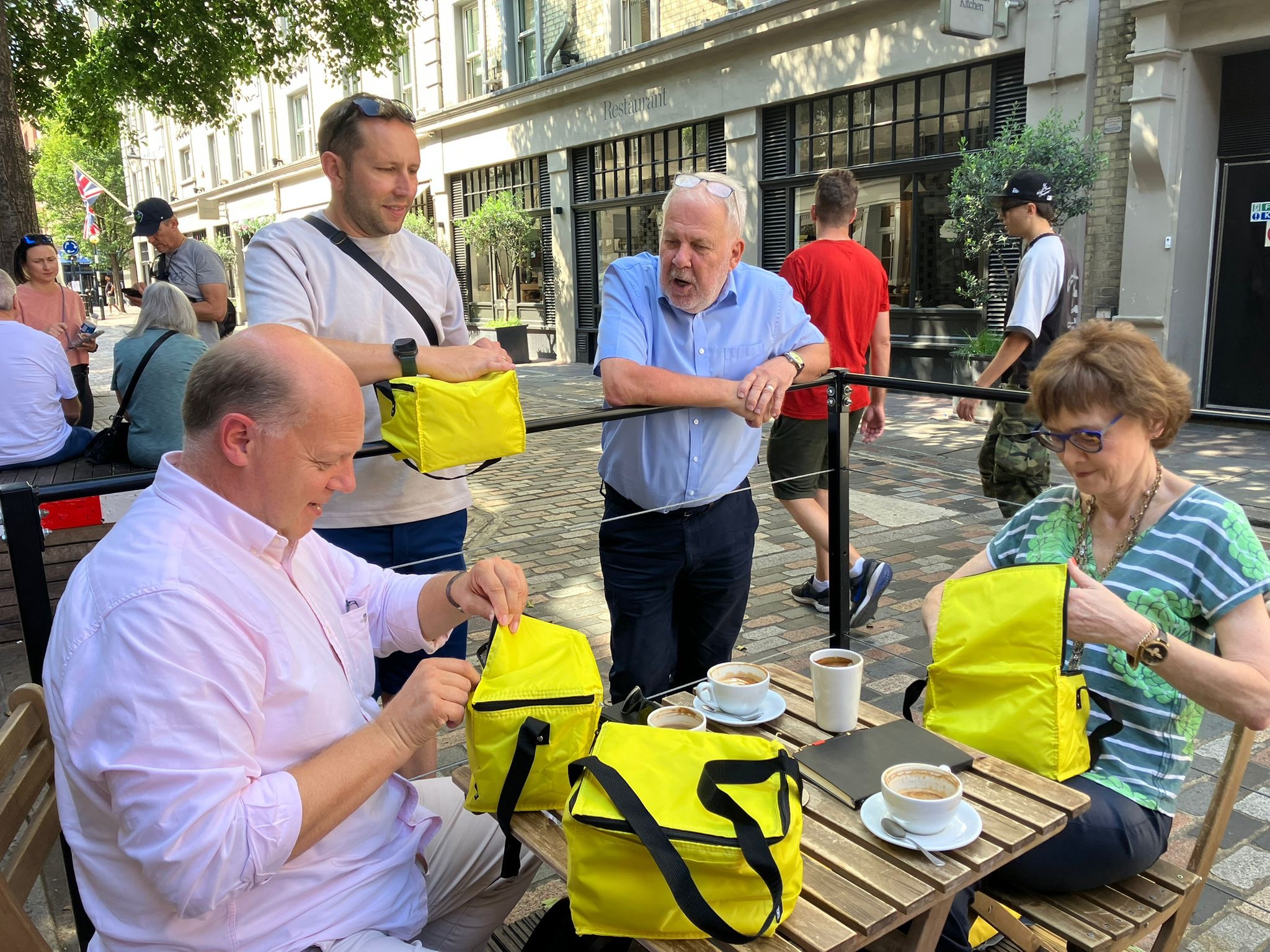
Understanding these three things led Steve to launch his Big Cheese Walk series, with a choice of three starting points in London – Chelsea, The City, and the West End. “What I’m doing,” he explains, “is taking people on an expertly curated and expertly guided tour. We meet in a really nice venue where I buy you coffee or tea, then I give you your own personal cheese-tasting kit – a bright yellow cold bag, a small cheeseboard, knife, wet wipes, a bottle of water, pack of Peter’s Yard crackers, waxed paper and a copy of my British Cheese Notebook.”
The tour then heads off, visiting four to five cheesemongers or delis, where visitors can try samples before Steve buys some cheese - “always British, with only one exception” - before sitting down nearby, cutting up and communally sharing the purchases, as he talks about each variety.
“Along the way there’s a lot of history and background. So at Neal’s Yard Dairy I can explain how John Cleese was one of the first people to go there. We walk past where weddings in Bridgerton took place, and where the first iron curtain was installed in London” he adds, saying that people enjoy his knowledge not only of the areas they visit, but of the cheeses and cheesemakers. “None of it is scripted. It’s just me talking. I can tell people about how cheese judging works, why one cheese is considered better than another, why Shropshire Blue is orange. I’m confident I can answer pretty much anything!”
Held in small groups, the tours are two hours long, and a maximum of two miles. They end at a final venue where everyone can tuck into a cheeseboard with a drink. The experiences attract lots of tourists from outside of London, as well as food enthusiasts, Steve says.
“I love it. I love the fact people will learn something new on every walk. I see it as taking friends out to share my knowledge rather than being a tour guide.”
Abbey Farm Cottage, North Yorkshire
Experience: Cheesemaking
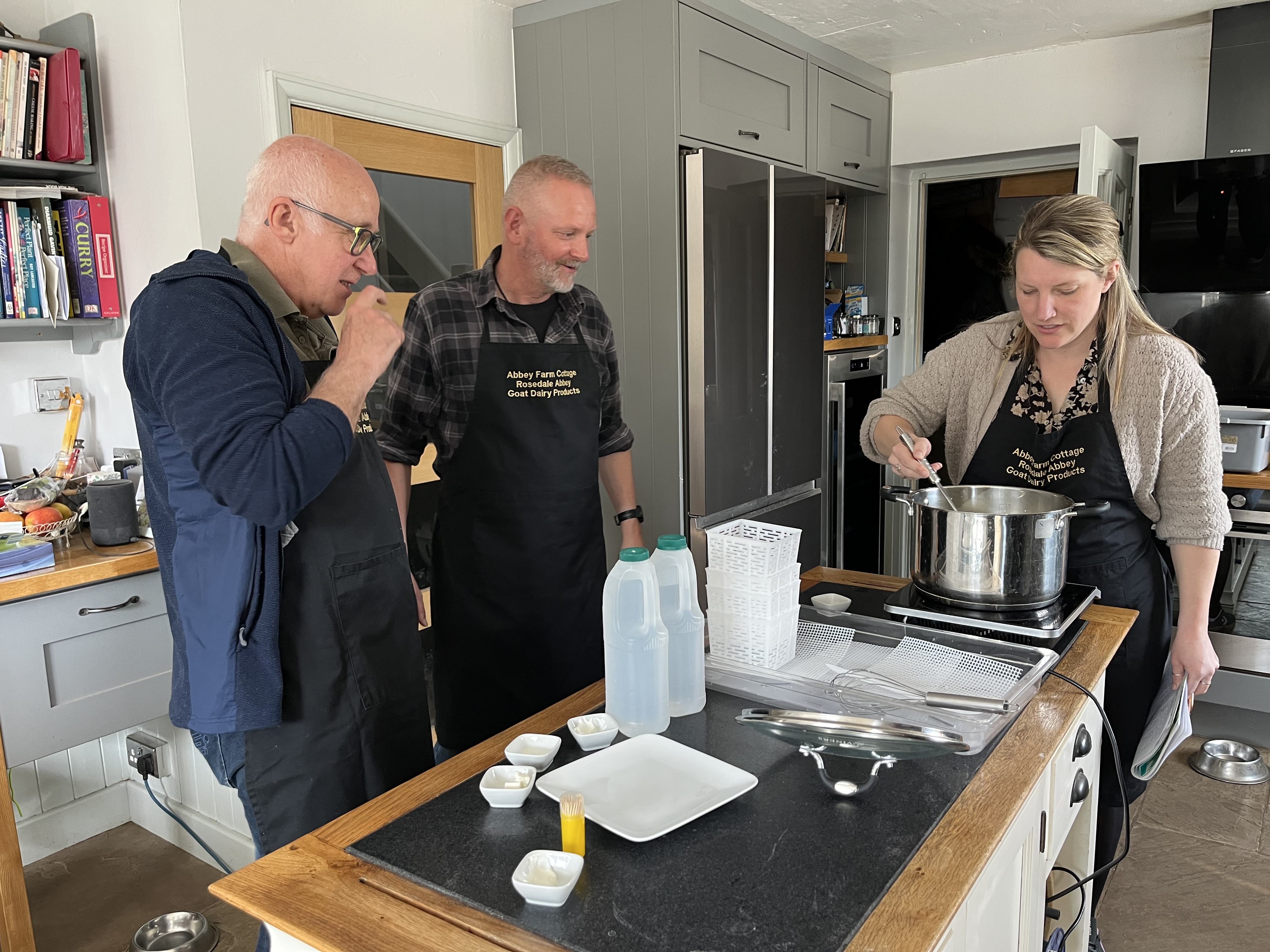
Suzie and Jonty Birrell-Gray moved to the North York Moors in 2019 to pursue their dream of making artisan cheeses and farming sustainably. Today, as well as making award-winning Rosedale Goats’ Cheese, they offer cheesemaking days and weekends, to “impart our knowledge and help people realise they can make cheese at home using everyday equipment”, Suzie says.
A typical day begins with a hot drink and introductions, before cracking on with the business of heating the farm’s raw goats’ milk to pasteurisation, giving it time to cool down for use later.
“Then we kick off with a feta and get that going, moving onto a halloumi. At the end of the day everyone ends up with a feta, halloumi, chevre, ricotta and labneh. We swap and change between the different stages throughout the day, stopping for a break at lunchtime with a talk on our cheeses, going back into cheesemaking afterwards.”
In the early afternoon visitors experience a tutored tasting of the farm’s cheeses, before heading home with a “party bag” of what they’ve made and a recipe card.
“We do weekends as well because we have accommodation,” adds Suzie. “You can do a goat experience on the Friday, cheesemaking on Saturday, and goat yoga on a Sunday! We offer that one weekend a month.”
Uptake, she says, has been “phenomenal”. “A group of friends who came recently adored it. They didn’t expect what they got and how much food was included. They thought they were getting a light lunch – my husband doesn’t ‘do’ light lunches!”
Showing people how to use what they’ve already got in their kitchens at home to make cheese is a big part of the appeal, Suzie thinks. “They love knowing they can use the skills they’ve learnt straight away. We often get pictures from people of what they’ve done, and we encourage that.”
Being able to try something different also feeds into the cheesemaking experience’s popularity. “People want to get out and do new activities, and they want to know the provenance of their food,” Suzie explains. “It’s dead simple to make halloumi if you know how. It can be made on a Wednesday and eaten the next day. Although we use raw milk, we do give lots of tips of how to use what you can get from the supermarket. I have to say, people are shocked when they taste our milk. Everyone thinks goats’ milk will be disgusting but it’s not – it’s fresh and clean, that’s one of the biggest surprises for them.”
Teesdale Cheesemakers, County Durham
Experience: Cheesemaking, Cheese Cafe, Tours and Tastings, Glamping
The seed for cheese experiences at Teesdale was planted during the Covid years, says Allison Raper, who founded the business with her husband Jonathan. “During Covid, when people couldn’t travel and we didn’t have our glamping lodges open, we did tastings via Zoom. We sent out boxes and held online tastings and cheese parties. It just felt like that’s what people wanted to do – to have experiences – and that’s continued.”
Both Allison and Jonathan feel consumers are done with “stuff”. “You certainly come to a point in your life where you don’t really need anything and don’t want to consume as much. Even young people are feeling that way. When we opened the lodges, also having our cheese cafe, we felt like we could create this hub for cheese – it’s the core of our business and it felt natural to expand from cheesemaking to tours and tastings. Also, doing this has made us a destination for cheese. We’re in the middle of nowhere. You wouldn’t just come here for a cup of coffee!”
Interestingly, despite being busy, Allison says they’ve cut back on staff at the farm because they personally felt they were losing touch with the customers. “We’ve pulled it right back so we can be properly involved, doing a tour and tasting one Saturday a month, apart from the glampers who can book one during their stay.”
Visitors learn how cheese is made, and go through a tutored cheese and food pairing with a glass of wine. “That’s really nice because, as a consequence, people go home better informed how to put a cheeseboard together in terms of balance. The tasting used to be a separate thing, but since we’ve put it together we the tour, we’ve doubled our sales.”
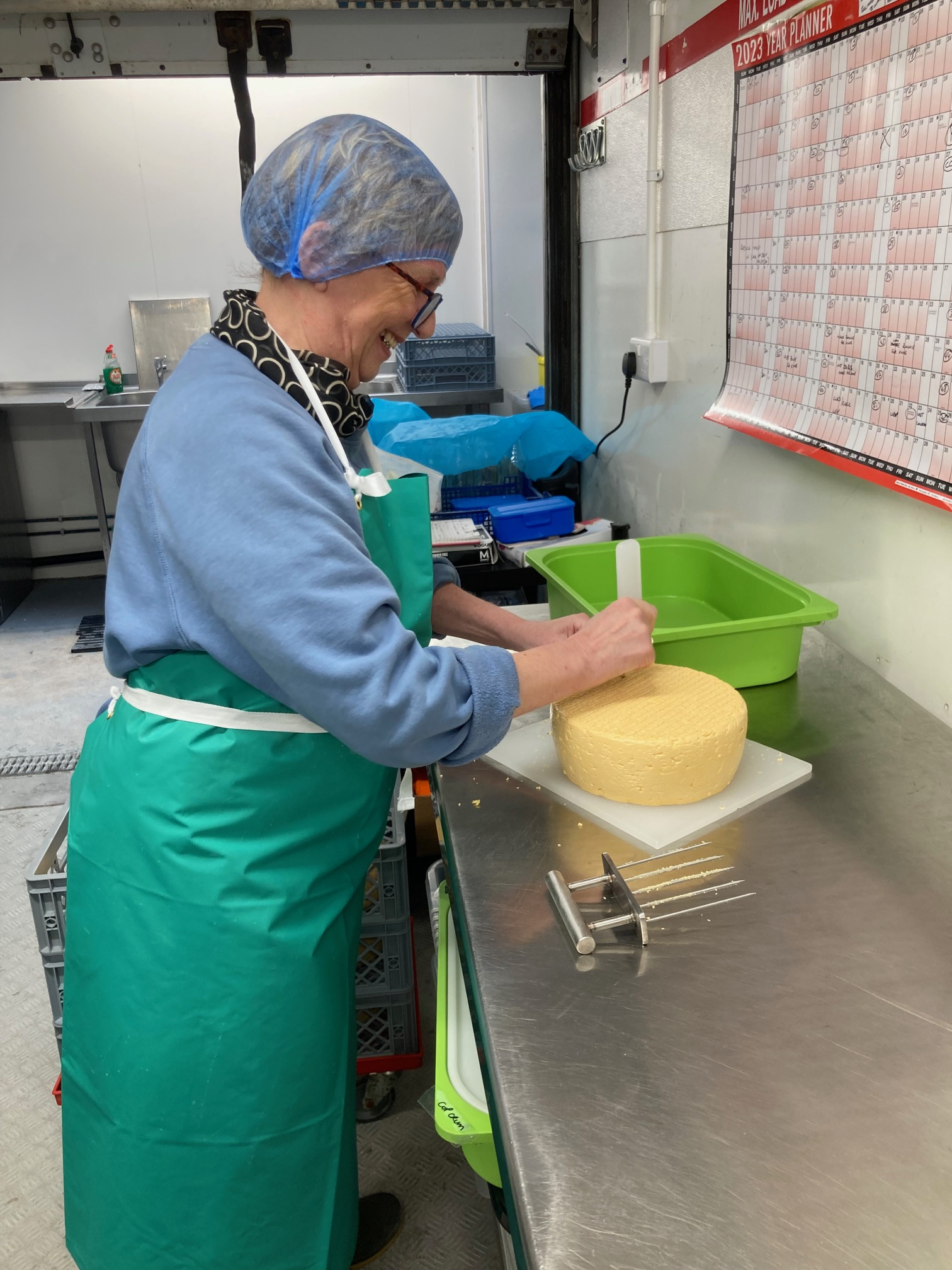
Those who really really adore cheese will sign up for the maker’s cheesemaking days where activities include pricking a blue cheese, and assisting making cheeses, as Allison talks through what to look and feel for, waxing and turning cheeses. “It’s very hands-on and interactive.”
Three glamping units are in situ on the 20 acre site. Allison says they could easily expand, but have no plans to. “You can kill a golden goose,” she laughs, revealing that the appeal of their business is its rural location and peace. “It’s just a lovely place to come for a quiet cheesy weekend!”
All kinds of customers find their way to Teesdale, she continues. “We thought it would be middle-aged, affluent people, because we make artisan cheese, by hand, in small batches – it’s not cheap. But we’re actually seeing quite a lot of young people and that’s interesting. Part of that might be because we’re adult only. We’re a quiet idyll over the hill where people can unplug and recharge with cheese during the day, and a wood-fired hot tub in the evening.”
Allison thinks consumers today are getting “jaded” by all the marketing thrown at them – seeing commercialism and online lives as being the major reasons for the agritourism boom. “People are craving authenticity. We source our milk from the family farm, our cheese is made and matured here, they can get a real taste of the local area here. People want something they can touch, feel and smell - ingredients with provenance and connection. Everyone who comes here enjoys it, and we get them coming back again and again. One couple has visited us three times this year so far!”
There is definitely a sense of ‘use it or lose it’ she feels, especially as lots of hospitality destinations close their doors. “People who enjoy what we do, want to support us, and that’s lovely.”
Burt’s Cheese, Cheshire
Experience: Cheesemaking
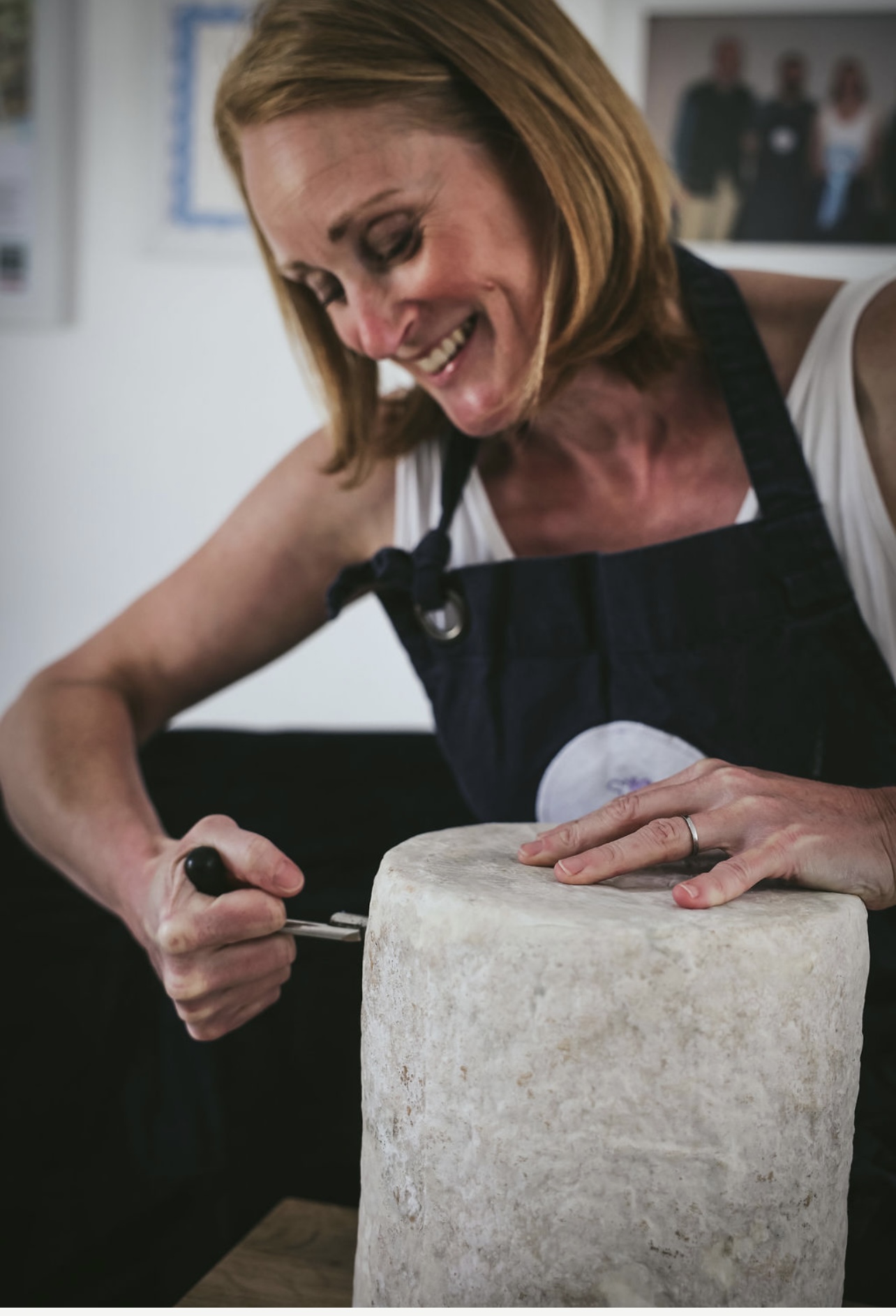
Burt’s Cheese founder, Claire Burt, says she relishes being able to teach others the art of cheesemaking during her courses - especially as she gets to see firsthand the spark in their eyes as they realise the connection between what they buy and where it comes from.
“I think dairy still has a little bit of magic around it,” she says. “It’s not something you necessarily would know how to make at home or would usually even try to make at home. People will bake bread or make cakes, but dairy has this mystery. Traditionally people would have made cheese in their farmhouse, but today everyone’s so removed from that. What we do is give them the opportunity to come and see the magic in action and to reconnect with cheese. Watching the milk go to curd, that transition, it’s so satisfying. People are genuinely interested in learning more.”
Claire began her classes three years ago, around the time energy prices had nearly doubled, and milk prices crept up. “I was looking for another revenue stream which wouldn’t add extra cost to the business. We had space and time, and it’s something I’d thought about in the past, but this was mostly driven by a need to look at how else we could make the business work.
“We moved to Bidley Dairy in 2023. It’s got a lovely cafe and a car park and toilet facilities. Being here meant we offered more of a destination. People can spend time with us, then go for a walk, have a coffee or an ice cream and visit the cows. It works really well.”
The Burt’s Cheese experience begins in the onsite cafe before leading small groups of no more than six to the workshop. “I try to get as much as possible into two-and-a-half hours,” says Claire. “We rennet a vat I’ve pre-started with starter culture so people can see the transformation. An hour later the curds are ready to cut – and that’s the best bit for most people.
“Then we do a clean break test, cut the curds and mould them, and I look after them, draining, salting, piercing and maturing so they’re ready to collect three weeks later – though we can send them out if people cover the post and packaging.”
In the session attendees also drain a lactic curd to take home at the end of the day, and to churn butter, seasoning pats with flavoured salts (again to take home). “We do a tasting of our cheese as well. It’s quite a lot,” Claire says
Feedback has been “fantastic” she adds, explaining that visitors enjoy the format and are always surprised by the bang they get for their buck.
High Weald Dairy, Sussex
Experience: Tours and Tastings
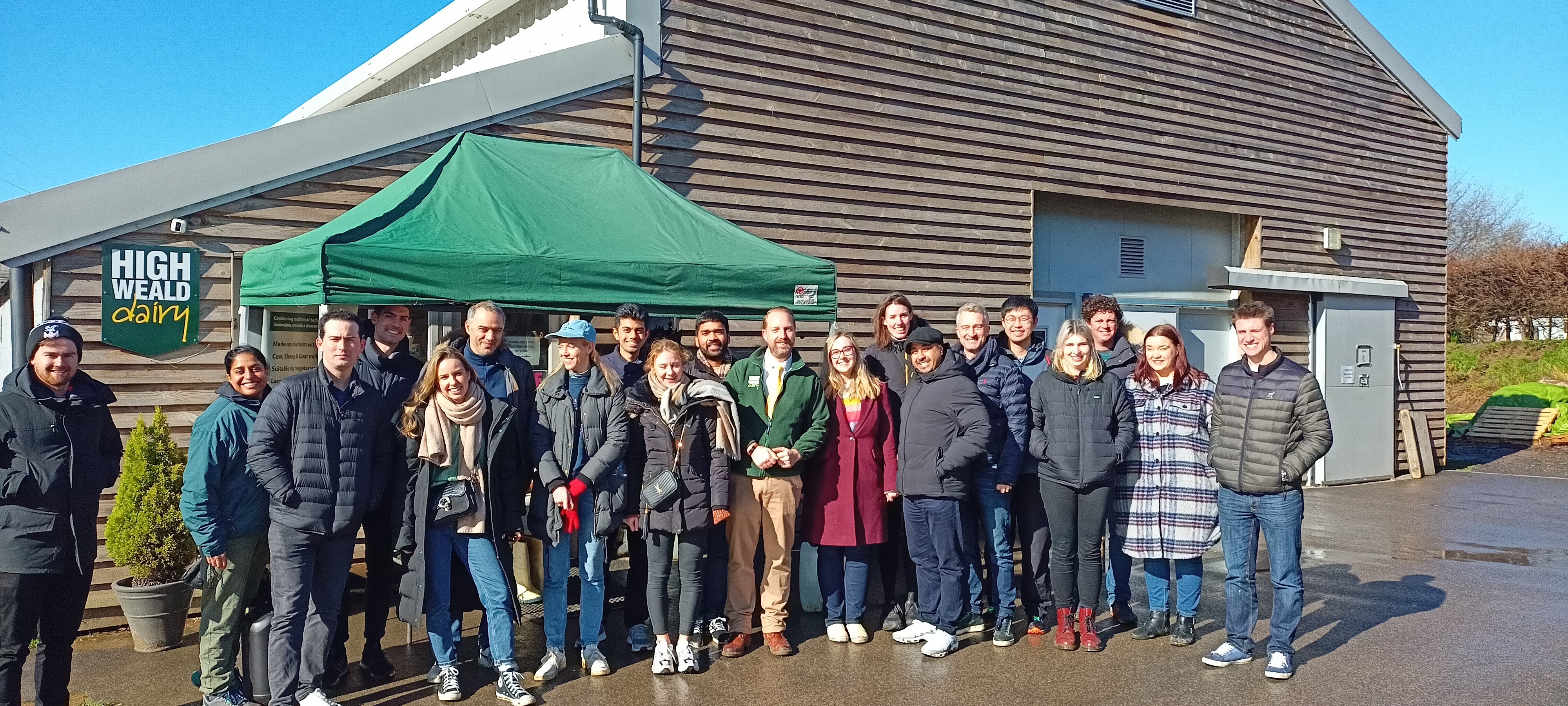
Head of cheese experiences is quite a title – and it’s one Steve Saunders of High Weald Dairy takes seriously. He says he loves taking visitors on tours, helping them to discover new things about the wonderous world of cheese, and seeing their faces light up when they tuck into samples.
Like others, cheese experiences were brought into the business just after Covid. “We were looking at how we could open our doors to people more. People, even after Brexit, wanted to know where their food is from, and I came up with the idea of a tour of the factory. There’s not many cheese factory’s open to the British public – it’s not the easiest thing to do – but I came up with a plan, the idea being it is a cross between knowledge, history and a lot of entertainment. I didn’t realise how popular it was going to be!”
Steve (who handily is also a toastmaster, which helps in his delivery of the tours) says he thrives off the buzz of public visits, which are often fully booked many weeks in advance.
On arrival there’s a briefing and lots of audience participation. “I love the interaction,” Steve smiles. “It’s not scripted or written down, the tour is all down to the group on the day and prompted by myself. I take them around the factory, showing them cheesemaking from our point of view – and how you can make something so incredible with just four ingredients, tasting throughout. We then go to the maturing room where they can see over 4,000 wheels being matured, learning about our signature cheese, Brighton Blue and taking a few selfies, before we head upstairs for a full tutored tasting around a big table, working through the cheeses we have, maybe relating them to recipes they can use them in or what would go with them on a cheeseboard.”
It’s never been so important for cheesemakers to engage with the public, Steve says. “It’s a huge passion of mine. Storytelling is such a big part of the British cheese industry and the cheese industry as a whole. Being able to meet the makers means it’s more tangible for people. They can see the processes and really understand what goes into cheesemaking, as well as what we’re up against with the pressures of farming and the hurdles we have to go through.”
Often those on the tours have been gifted vouchers as ‘the person who has everything’ and Steve thinks that a very positive thing. “They don’t necessarily know our cheeses, but then they end up being a customer of ours as well.”
Consumers, he agrees with others, are seeking out unique experiences, which is why cheese is flying in the agritourism world. “Whilst you can go to breweries and vineyards and different distilleries, cheese factory tours are still quite unique – there’s only a handful in the UK. One of the difficulties I thought we’d come up against was asking people to put on PPE – the hats and shoes – but that ends up being one of their highlights!”
Producers are very good at ‘hiding in the background’ he adds, “but by opening our doors we can share so much with customers and that can only be a good thing. A lot of people have come back to do ours two to three times.”
Wensleydale Creamery, Yorkshire
Experience: Demonstrations, Tours, Restaurant
Probably one of the best-known cheese-based activities in the UK, the Yorkshire Wensleydale Cheese Experience has become a vital part of the county’s agritourism scene.
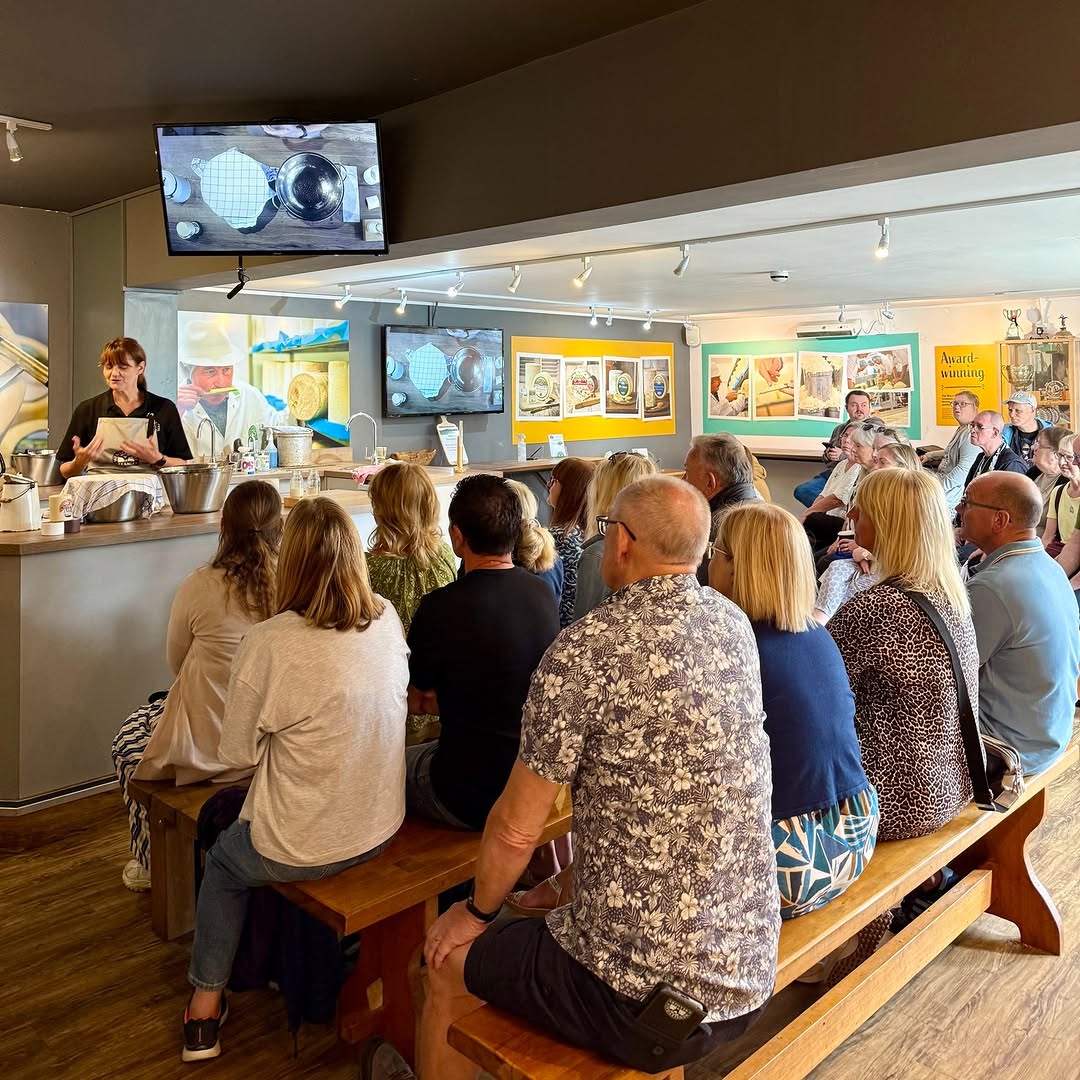
There are options available for all ages at the Visitor Centre, from live demonstrations, to pairings in the Taste of Yorkshire tasting room, and cheese-based dishes (including a popular Cheesy Afternoon Tea) in the onsite Calvert’s Restaurant or 1897 Coffee Shop.
“We’re continually looking at ways in which we can expand and evolve our cheese experience for guests,” says Wensleydale Creamery’s senior brand manager, Sandra Bell. “The introduction of our Taste of Yorkshire tasting room has given our visitors more opportunities to sample the cheese and learn about different accompaniments.
“With our links to Wallace & Gromit, and the launch of the recent film, this is also an area we have expanded on. The creamery is now home to giant, life-sized knitted figures of Yorkshire Wensleydale’s most famous fans, alongside Norbot – the creamery’s newest odd-jobbing robot companion.”
These new additions are proving popular with families, who are also enjoying the addition of a Find Feathers Trail Quiz, spotting the iconic character from the films hidden throughout the experience to uncover a secret word.
Sandra says advance bookings for the creamery have increased, and a more varied demographic is being attracted.
Continually looking at their offering means the team can ensure they’re giving visitors the best experience possible, she adds, saying the visitor centre is a valuable part of the business. “We attract visitors from across the UK and beyond to the Yorkshire Dales and surrounding areas. People love the opportunity to see first-hand the time-honoured traditions of Yorkshire Wensleydale and learn all about our history and process.”
The Cheese Bar, Various locations
Experience: Cheese restaurants
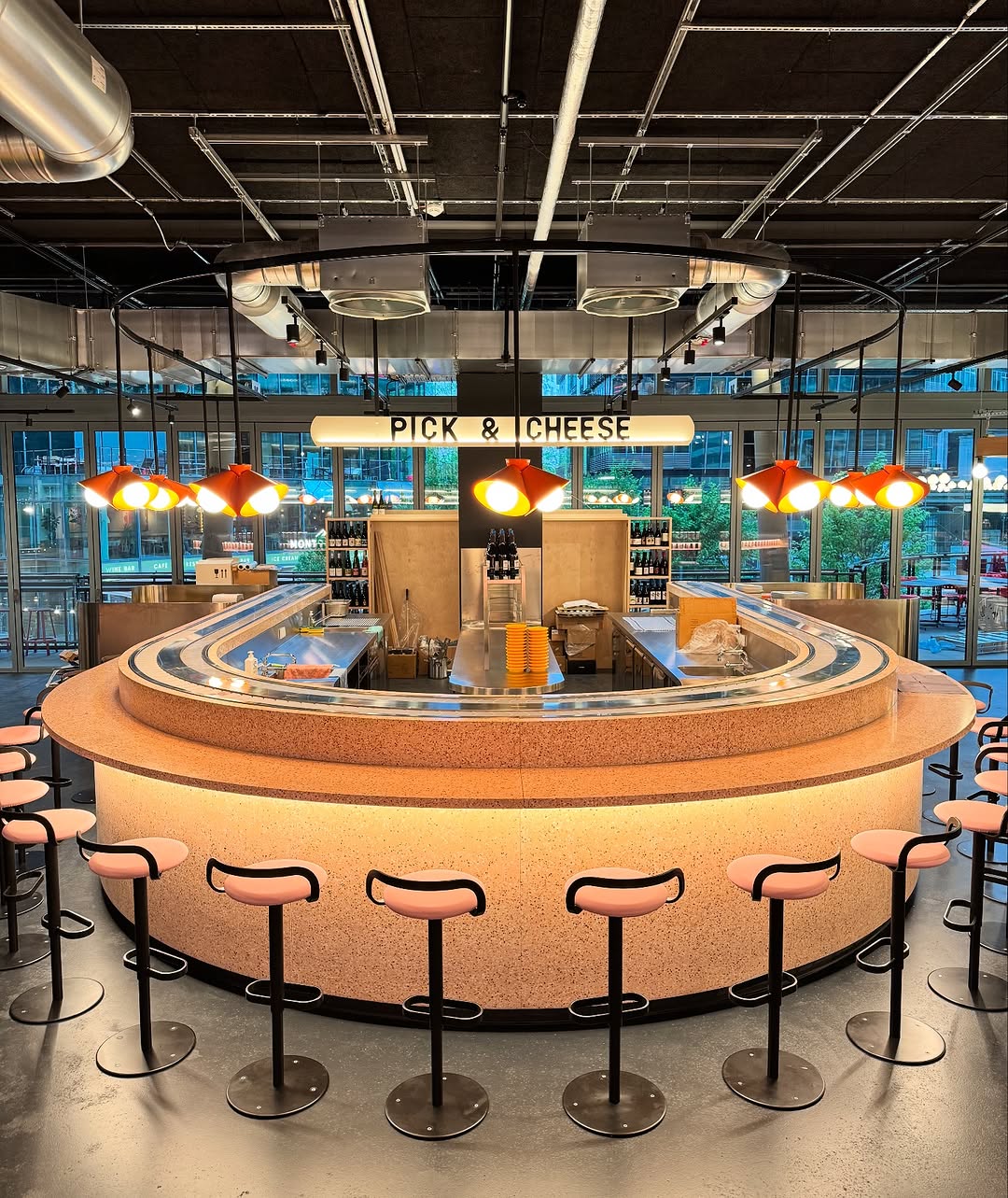
Mathew Carver is obsessed with cheese – in fact, his entire business revolves around it. Starting as a food truck selling grilled cheese sandwiches eight years ago, he’s gone on to create a fromage-based empire, including two Pick and Cheese destinations in London, a further recently opened in Berlin, The Cheese Barge (on a boat in Paddington) and Rind, attached to The Courtyard Dairy in Yorkshire.
Cheese-based dining experiences are seriously hot business right now, he thinks. “A lot of people love cheese,” Mathew says. “I think we’ve found a bit of a niche because not a lot of people are doing a cheese-focused concept, and our restaurants aren’t all carbon copies of each other.”
The main premise of each destination is to showcase largely British cheeses alongside pairings that make them sing, allowing diners to pick and choose (cheese) their way through interesting small plates – including Mathew’s favourites of butternut spaetzle with English Pecorino, sage butter and pine nuts, and St Ella goats’ cheese with Turkish delight – which he says is a delicious surprise for everyone who tries it.
Customers are, he adds, almost creating cheese pilgrimages around the restaurants, marrying their visit with perhaps a trip to local cheesemongers and delis. Customers are, he adds, becoming more adventurous around what they’re willing to try, including stronger cheeses, and whackier pairings.
“And we’re seeing people becoming more educated about artisanal British cheeses, they’re interested in where the cheese is made on the menu, and we have more and more people telling us they’ve tried a maker’s cheese before, or know the dairy. It’s an exciting thing.”
Adding Rind to The Courtyard Dairy site has proven an especially shrewd move, as consumers spend hours there buying cheese, visiting the cheese museum, and teasing their taste buds with anything from pizza to British Burrata with macerated Yorkshire rhubarb, preserved lemon, pangrattato and radicchio.
Could it be time to add a cheese restaurant to your business?
Brinkworth Dairy, Wiltshire
Experience: Cheese Tasting
Cheesemaker Ceri Cryer invites visitors to step behind the scenes and discover what makes her family-run dairy so special. The Cheese Tasting Experience is both intimate and engaging — a true celebration of British farmhouse cheesemaking.
The hour-long session begins with a warm welcome from Ceri, whose enthusiasm for her craft is infectious. Guests are guided through the working dairy, learning how milk from the family’s herd is transformed into a range of award-winning cheeses, yogurts, and ice cream. “It’s about connecting people with real food,” says Ceri. “When visitors see the care and skill that goes into every batch, it gives them a new appreciation for what handmade cheese really means.”
The tour leads into a guided tasting, where guests sample the dairy’s signature cheeses — including the buttery Wiltshire Loaf — along with seasonal varieties made on site. Each cheese is introduced with a story, a recipe idea, or a pairing suggestion, turning the experience into a lively, sensory adventure.
Ceri’s relaxed and welcoming style makes the experience feel more like joining friends around the kitchen table than a formal tasting. Visitors leave with a deeper understanding of the challenges and joys of small-scale British cheesemaking. “Even people who think they don’t like cheese usually find one they fall in love with,” she smiles.
It’s an authentic, family-run experience that showcases the heart of Wiltshire’s dairy heritage — and why agritourism in Britain has never tasted better.