Free digital copy
Get Speciality Food magazine delivered to your inbox FREE
Get your free copy

Blue cheese is a marvel. A miracle even. Its existence is thought to be entirely down to happenstance – legend of yore telling that it was discovered when a piece of cheese was unwittingly left in a damp cave, developing mottled blue veining, and taking on entirely new characteristics.
Our cheeseboards would be far less exciting without this discovery. Devoid of the piquancy, umami-ness and spice blue delivers. And of the creamy nature of these varieties, created over time as the penicillium roqueforti breaks down and softens the paste.
As Caroline Bell, co-owner of Yorkshire’s Shepherds Purse, says, it’s a cornerstone of the cheese landscape, representing both tradition and innovation.
Especially here in the UK. “Britain has some of the world’s most iconic blue cheeses, from Stilton with its PDO status, to the wave of artisan blues, like ours.”
Unlike Cheddar or even Cheshire, what people forget, says cheese expert Charlie Turnbull, is that blue cheese is a relatively new thing. “Up until around 100 years ago, outside of Roquefort and Bleu d’Auvergne in France, Dorset in the UK and Italy’s Gorgonzola, blue cheese really was unusual. They were a rare phenomenon. Go back 150 years ago and you wouldn’t encounter them outside where they were made. Up until the 1920s to 1950s we didn’t see the introduction of moulds to blue cheeses at all. They were from the natural cracking of the cheese and active encouragement. If you look back at Dorset Blue Vinny, they would run horse harnesses in the vat, which sounds disgusting now, but this is why blue cheeses were such difficult animals,” Charlie explains. “It really is very recent that it’s been mastered by cheesemakers.”
There are three styles of blue cheese, Charlie says, and wise cheesemongers should aim to offer at least one of each, enabling them to appeal to a wider range of shoppers.
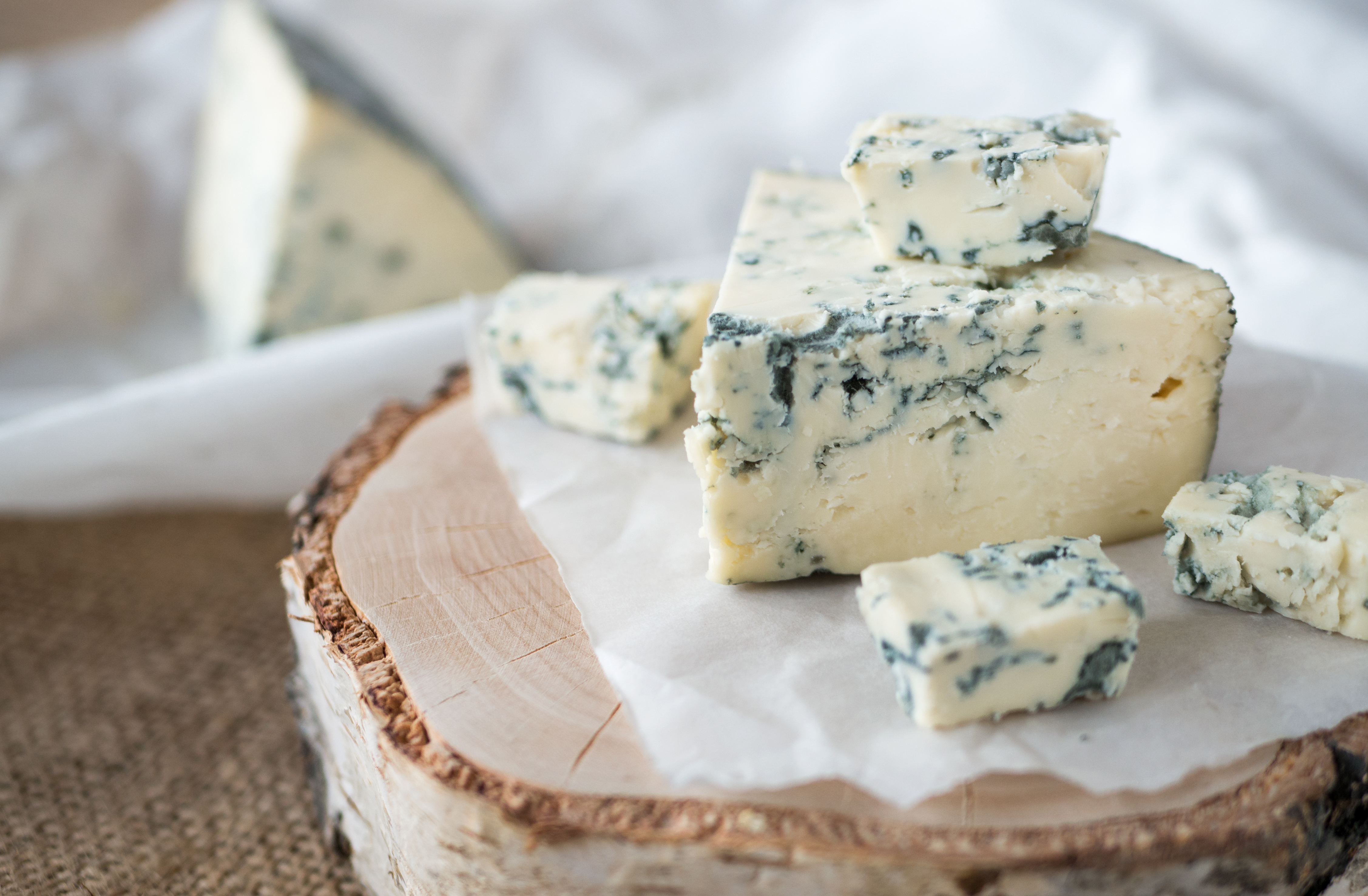
“You have the Gorgonzola style, the Stilton style and the Roquefort style. Roquefort is soft in nature and the mould presents in little pockets, like mini caves. Then in softer varieties, like Gorgonzola, the mould runs in vertical veins, sometimes breaking out. And in Stilton the blue is much more widespread, like webs. It crawls between the cracks of the curds. All lovely.”
While Britain is rightly proud of its stalwart blues, the traditional blue cheeses of continental Europe bring added pizzaz and intrigue to the counter, says author, cheese expert, and ambassador to the EU’s More Than Only Food & Drink campaign, Ned Palmer.
“Spicy, fondant-textured sheep’s milk Roquefort leads them all, and has a venerable history. It received the first ever product protection in the form of a royal charter from King Charles VI of France in 1407, and was the first cheese to get a modern AOC in 1925 - now recognised internationally as the PDO designation.”
Italy is justifiably famous for its cow’s milk Gorgonzola, Ned adds. While Spain, “has the rustic, farmy, mouth-tingling Cabrales, traditionally wrapped in ample leaves and aged in caves in the Picos de Europa mountains. All of these cheeses, with their long and rich traditions, have PDO status.”
These countries, Ned continues, have not let tradition get in the way of innovation, with modern, new-wave blue cheeses found in all of them.
Experimentation is on the rise in the EU, Ned says, picking out Italy, where flavoured blues are bang on trend at the moment. “One example is Tatie, from Veneto in Northeastern Italy - a cow’s milk cheese softened and sweetened with mascarpone, with bitterness and zing from the addition of a local Vermouth. Innovation paid off: Tatie won a Super Gold in the 2023 and 2024 World Cheese Awards.”
Northern Europe is less known for its traditional blues, but cheesemakers here are catching up fast, Ned explains. “Schleswig-Holstein in northern Germany is home to Friesisch, or Friesland Blue - a cow’s milk cheese with a blushing pink washed-rind which adds a gentle note of funk to the rich spicy paste. Norway won best cheese in the world at the 2016 World Cheese Awards for its Kraftkar - a cow’s milk whose spicy intensity is mellowed with its creamy texture and sweet flavour. And Sweden has a number of charmingly named blues, including Vera, a sweet-tasting sheep’s milk with a soft texture and a gentle herbaceous note.”
Pay attention and listen to cheese when you’re buying, says Charlie. As a rule, look for cheeses where the mould is blue to blue-green, not pale aquamarine. “People often forget to look at the curd. If it’s very white it will be too acidic and young. Blue moulds have the job of breaking down the cheese into something creamier. Take them too young and you could encounter a lack of flavour, sourness and, in some cases, bitterness.”
Besides checking the ‘blueness’ of blue cheeses, Stephen Fleming, founder of George & Joseph, says you need to inspect their condition. “You can tell a lot about blue cheeses, like Stilton, by the rind,” he explains. “We’ve had instances in the past where the rind is falling away from the cheese. That’s a clear sign something’s not right. And when I cut into the cheese, I expect the paste to be bright, with a good distribution of blue veining or marbling. Sometimes we’ve opened a cheese and there’s not been any blue.” On these occasions, don’t be afraid to go back to your supplier, he urges. “It’s OK to flag it up!”
Blue cheese, it has to be said, is undergoing a bit of a revival at the moment. Alongside soft goats’ and sheep’s milk cheeses, we’re seeing a number of new blues coming onto the market, as consumers seek out more interesting flavour profiles.
Without a doubt, the most runaway success within speciality cheese at the moment is being seen in softer, creamier blues, made in a continental style.
“We’ve found, no matter which feature blue cheese we recommend the most, consistent sales are from our Gorgonzola Dolce,” says Dylan Fourie, deli manager at Macknade, adding that Stilton comes in at a close second, “as it still offers a slightly crumbly and creamy texture and isn’t too overpowering.”
Blue cheese is “inspiring confidence” with consumers, agrees Caroline, who is seeing consumer trends shifting. “Younger customers, who once might have taught blue was ‘too much’, are becoming far more open to it – especially when shown quick, tasty ways to use it in everyday meals. A little crumble on a salad, stirred through pasta, or melted on a burger. It’s these small wins for flavour that help people fall in love with blue.”
Shepherds Purse’s biggest seller, she says, is Yorkshire Blue, first developed by her mum, Judy, in the 90s. “Creamy, mellow and beautifully balanced, it’s the perfect introduction to blue cheese, while also being loved by those who enjoy a softer style.”
Dominique Delacour, head of UK marketing at Tom Walker & Sons, says the business is experiencing high demand for blue cheeses that combine flavour and convenience. “Smaller formats that help preserve quality are performing well,” she adds, “particularly when tied to provenance and heritage – factors that remain key for today’s more discerning customer.”
Dominique agrees that softer blues, such as Cambozola and Montagnolo, are leading the charge, driving much of the category’s momentum. Tom Walker & Sons saw its sales in these products uplift by 18% between June and August this year, compared to 2024. “Their creamier texture makes them approachable and versatile, appealing to consumers who may be hesitant about stronger styles, but still want depth of flavour.”
Montagnolo is a strong performer for both Dylan (who calls it a ‘gateway blue’) and Stephen, who adds that it’s one of George & Joseph’s biggest sellers, apart from at Christmas when scooping Gorgonzola ramps up in demand. “We scoop it into pots, so you get this fantastic bit of theatre at the counter. As soon as one person does it, everyone else wants it as well!”
Latching on to the concept of softer blues are Gen-Z, who are tentatively stepping into the blue cheese world. Clawson Farms, as part of its five-point business strategy, is heavily putting focus on building brand loyalty with these younger cheese consumers, says CEO Bill Mathieson.
In addition to working with influencers such as Aidy Smith (who created a Stilton cocktail that went viral on socials), Bill says the maker is launching new 50g packs to encourage experimentation. “We are also looking at how we evolve our recipe. We’ve done quite a bit of work in the last year or so to make it a little bit creamier and to dull the strength back a bit without doing anything too radical on our own brand.”
Development of Clawson Farms’ 1912 label is ongoing too. “We’re balancing what Clawson Farms is renowned for – world champion cheese – testing the Gen Z market with a creamier Stilton to see what happens,” Bill explains. “We think if we can get the younger generation on that and Shropshire Blue, then they will, over time, migrate through the blue cheese category. We’re really excited about that.”
One of the most satisfying things for cheesemongers is helping customers discover their new favourite cheese – and enabling them to get out of their comfort zones.
Blue cheese is a variety some consumers struggle with, but it’s a case of gently does it at the counter, say our experts.
“Blue cheese sells best when people taste it,” explains Caroline. “We actively support farm shops and cheese shops by going in to do tastings, and when we have time to engage directly with customers, it really works! They’re often surprised at just how much they enjoy it. Our focus on mellow, balanced, creamy flavours helps this, I think.”
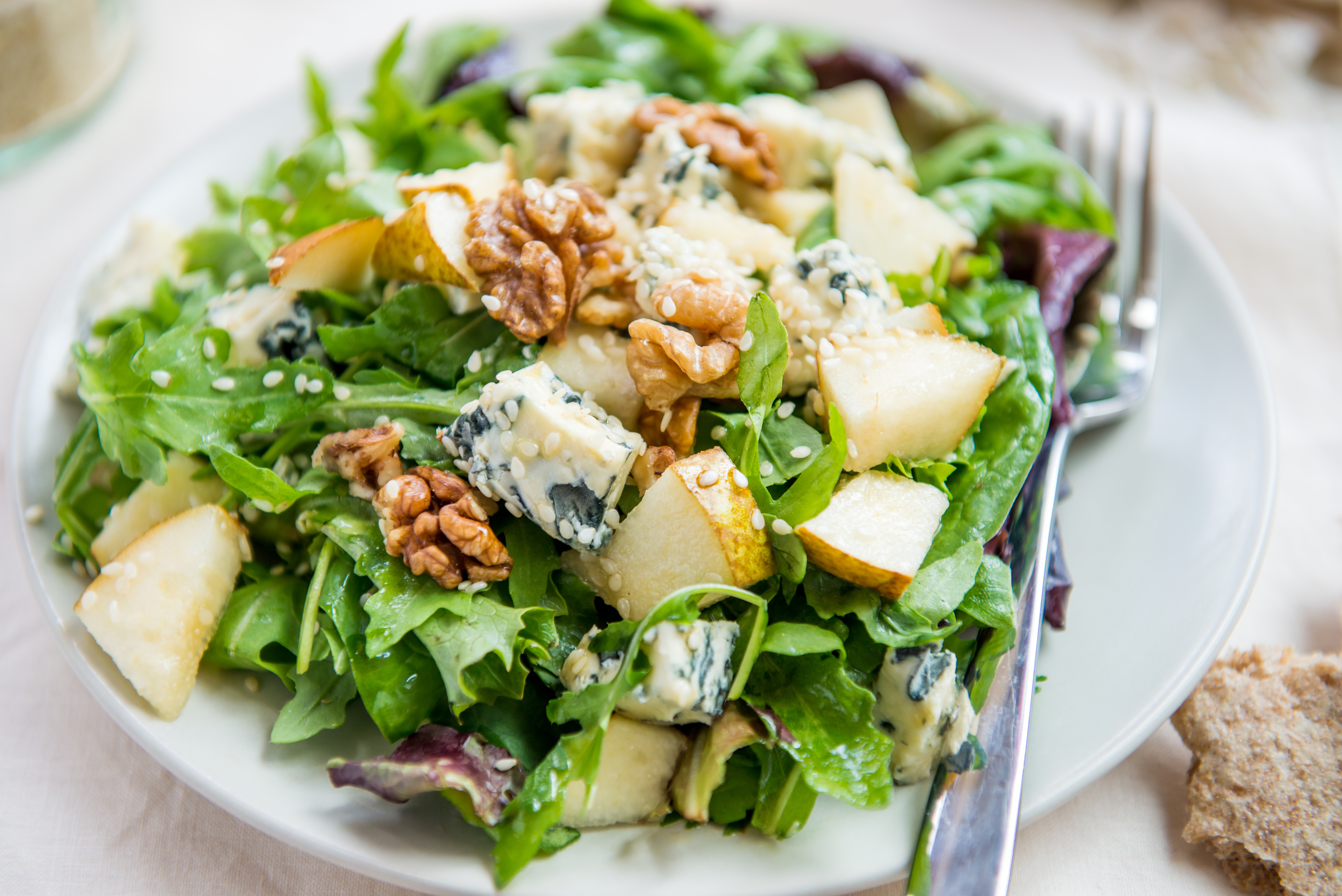
Make a show of blue cheeses at the counter, she advises. Add some simple pairing ideas like honey, pears or crusty bread. “And don’t forget the story. Consumers love to know who made their cheese nad why. That connection, combined with flavour and experience, is what brings them back for more.”
For those who are adamant blue cheese isn’t for them, Charlie advises sampling with one of his ‘big three’ - Gorgonzola Dolce, Montagnolo or Beauvale. “Gorgonzola, I’ve found, is a fantastic family cheese, in that it’s really popular throughout the family, and eventually the one person who doesn’t like blue cheese will try it, more than often like it, and that gets the ball rolling.”
Another cheese he suggests trying on newbies is Shropshire Blue, which customers have always told him tastes different to Stilton, despite there being little between the cheeses in the make. “I haven’t found a single customer who thinks they don’t taste the difference. And every person who doesn’t like Stilton has said they find it more amenable. They soften to it.”
Building trust with shoppers is critical when trying to encourage new blue cheese fans, says Stephen. “Encourage them to feel comfortable and adventurous.”
He thinks there’s a blue for everyone – they just might not have found their perfect match yet. “Sometimes they’ve tried something to start off with that’s a bit strong, and they’ll tie all blue cheeses with the same brush. You’ve got to make space for people, let them get stuck in, and steer them to cheeses that match their personal tastes.” This is the important role cheesemongers have to play. “When I see someone’s face light up because they realise they do like blue cheese – that’s gold for me!”
A wholesaler’s perspective
Tim Collings, national sales manager at Rowcliffe, agrees with our other experts that the modern palate is craving a creamier, milder blue, and the wholesaler has seen an increase in sales of this style in the last 12 months.
Three big hitters for the business, he says, are:
Isle of Wight Blue - Covered in blue, green, grey and white mould this soft blue cheese starts out with a relatively mild blue flavour which develops a spiky blue flavour profile as it matures. This colourful blue will stand out on any cheeseboard.
Grand Noir – A luscious and creamy premium blue cheese aged in black wax. Grand Noir has a punchy blue flavour with an incomparably smooth consistency and extraordinary mouthfeel. A truly versatile cheese that works just as well on a salad of Pears and walnuts.
Cashel Blue – They recently received their second 3 Star Great Taste Award. This Irish blue classic cheese is not to be missed. It’s creamy yet crumbly and so versatile it works well sprinkled over a salad or melted into soup.
Blue cheese is undoubtedly going through a revolution, as existing fans ask their cheesemongers, ‘what’s new?’, and younger and newer blue cheese consumers dip their toes into the category for the first time – many using it in cooking to soften its edges a little.
Across the UK, there’s a strong heritage of blue cheesemaking, and in turn that’s inspired today’s modern makers.
While Stilton is rightly heralded as one of Britain’s epicurean gems, did you know that our oldest blue cheese has a history stretching back around 300 years?
Dorset Blue Vinny was revived by Michael Davies 50 years ago. His daughter, Emily Davies, who runs the business today, says, “It was a cheese made in nearly every farmhouse in Dorset, and it was rumoured to be Thomas Hardy’s favourite. With the onset of the Milk Marketing Board, when farmers could make a better price for their milk, they didn’t leave any milk for their wives, who were the ones traditionally making cheese – consequently Dorset Blue Vinny died out.”
Later, as milk buying changed, Emily jokes that her dad was annoyed by getting up every day to milk his cows for products nobody wanted. “He had originally trained as a cheesemaker, and decided maybe he ought to think about making cheese. We are right on the cusp of big Cheddar making, so he knew he didn’t want to make Cheddar, so thought, ‘how about Dorset Blue Vinny’?”
Off he went to the Ministry of Agriculture, Fisheries and Food where the recipe was held. “He got his sticky mitts on it, bought a second-hand vat, and started making it in the garage at the end of the farmhouse.”
Emily’s mother, naturally, didn’t approve of her husband maturing the cheese in their home. “The walls were turning blue. My mum said, ‘Michael, this isn’t happening in my pantry, let’s be off with you!’. He got addicted and converted one of the old cow barns, where will still make it today.”
The team use milk from the farm’s own herd of 280 Holstein-Friesian cows to produce the cheese today – the liquid travelling only 80yds from the milking parlour to the cheesemaking vat. It’s matured for 15 to 20 weeks, with the PGI cheese being, “a brilliant introduction to blue”, says Emily. “It’s got such a delicate veining pattern and is lovely and creamy.”
A newer range of cheeses to come about from the milk price crash of the late 90s, is the variety from The Cornish Cheese Co, founded by Philip and Carol Stansfield.
Philip realised there wasn’t a blue cheese in Cornwall at the time, and wanted to steer away from Stilton styles, says his son Ben, today the business’s head of sales and marketing. After a two-day cheesemaking course in 2000, and a day with an instructor, Philip set out to create a smooth, creamy, European-style blue. A year later, Cornish Blue was born.
Crafted in open vats, and hand cut, moulded, salted, pierced and packed, the cheese is matured between 10 to 12 weeks and designed to be eaten young, so it isn’t dominated by a blue punch. I tell customers it’s a fantastic option for people that swear they don’t like blue cheese,” Ben says. “We really enjoy in-person tasting and being able to win people around. For them to admit they’ve been converted!”
As a modern dairy, The Cornish Cheese Co isn’t defined by many generations of heritage, which, says Ben, makes it more agile and adaptive to consumer demand. As a result, many of the maker’s cheeses, including its blue, have been designed with contemporary tastes in mind.
During lockdown, Ben says they became more conscious that consumers were being drawn to softer, creamy cheeses, but also towards locally-made versions of their Continental favourites. “We have seen a shift of customers wanting these types of cheeses made with local produce, supporting small businesses, and lowering their carbon footprint as a consumer, which is great news for British cheesemakers. Now more than ever, it’s important to protect our local economies, and if we can do more for the planet at the same time, that’s even better.”
One of Britain’s newest cheeses, Pevensey Blue, is fast becoming a cheesemonger favourite, raved about by the likes of award-winning affineur and head of cheese at Rennet & Rind, Perry Wakeman.
Pevensey Cheese was founded in 2020 by Martin and Hazel Tkalez, who wanted to get out of London to raise a family. Hazel comes from farming stock (in beef and lamb), and her parents just happened to live next to an organic dairy farm.
There was an opportunity, Martin says, to transform two bays of an old barn at Hazel’s parents’ farm, into cheesemaking facilities. And it wasn’t long before Martin and Hazel struck up a business plan with their neighbours, David and Marion.
The couple had the ideal background to get started – Hazel in food sales, and Martin having worked in retail at Neal’s Yard Dairy for 15 years. “We both love cheese,” he smiles.
They settled on blue cheese because, “we love Stilton, it’s our favourite thing to eat,” says Martin, “and other people told us it’s really hard ot make a soft blue cheese. As they say, fools rush in where angels dare to tread. Lots of people told us not to make a soft blue!”
Martin says they weren’t put off, trying to create, from the start, something with a buttery texture, that looks beautiful, and is complex.
After five years, they believe they’ve got the make right, crafting it daily in small batches using organic milk (delivered from only five minutes away) from British pedigree Friesians, with 4-5% added Ayrshire milk, which brings extra fat and creaminess to the make. Around 95% of the animals’ feed is from their farm, supplemented by organic rations. In warmer weather, the cows graze on the Pevensey Levels – something that’s encouraged by the Sussex Wildlife Trust, helping them to prevent the marshes becoming overgrown, and improving the habitat for migratory birds, spiders and other insects.
Crafting the cheese is a morning’s work (a process almost halved in time thanks to expert consultation), and the profile is perfectly suited, Martin says, to current tastes. “It’s soft, opened textured, buttery and spreadable at 11 to 12 weeks. And it should be quite sweet. Even though we pasteurise, a lot of flavour comes from the milk. I think it tastes a bit like having a Dairy Milk or Fruit & Nut chocolate – that’s the profile. That malty chocolate taste.”