Free digital copy
Get Speciality Food magazine delivered to your inbox FREE
Get your free copy

Britons have long looked to Europe for inspiration, not least when it comes to culinary culture, and an archetypal example of this is charcuterie: an artful combination of excellent produce, time-honoured skill and true craft. While Britain’s relatively fledgling charcuterie sector is gaining fans across the fine food sector and beyond, the Continent’s cured meat industry is as powerful as it has been for centuries; offering producers around the world invaluable inspiration, and food lovers a delicious way to relish some of the best produce on the market today.
“If you look at European charcuterie as a sort of extension of the traditional British meats UK consumers are familiar with, they offer much more flavour and excitement,” begins Gaynor Stokes, consultant to the EU’s More Than Only Food & Drink campaign. “British shoppers have been gaining familiarity with the likes of chorizo, salami and pepperoni for a while now, as they often come from the popular holiday destinations of Spain, France and Italy.”
While abroad, UK consumers were relishing the charcuterie that was easily accessible in these countries – piled high in retailers ranging from small, artisan food establishments to supermarkets – and developing an appetite for more of the same at home.
Their wishes began to be granted in the 1990s, says Gaynor, when buyers and dedicated businesses were bridging the gap between European charcuterie and the British shoppers who were more hungry for it than ever before. “It was far easier to bring European charcuterie into the UK within a business-to-business format rather than individuals on a case-by-case basis, which meant that both delis and supermarkets could much more easily get hold of it,” she continues.
While demand for these classic European charcuterie items gets ever-stronger, there is plenty more for foodies and the retailers who serve them to discover.
Independent retailers remain at the forefront of the charcuterie game, says Gaynor. “Buyers at delis and other smaller-scale fine food retailers have always taken a chance on emerging cuisines, and this plays a vital role in their recognition in the UK.” All are familiar with a number of charcuterie products from Italy, Spain and France, but not many have sat down to a hidegtál (cold plate) resplendent with traditional pick salami, paprika-rich dry sausage and smoked sausage Gyulai kolbasz PGI from Hungary.
“Consumers are travelling beyond the most popular countries these days, experiencing different types of charcuterie and wanting to enjoy them when they get back home,” she continues, and there are more avenues to explore than ever.
Regionality sells in 2026. “Shoppers are becoming more familiar with the regions their food hails from,” says Gaynor. For example, many fine food shoppers would recognise that nduja comes from Calabria, Italy, and appreciate the characteristics that its production in Parma, Italy gives Prosciutto di Parma PDO.
This is where protected food statuses, such as the EU’s PGI and PDO accreditations come into play. “British shoppers know that they can trust products that display these logos,” says Gaynor. “They give reassurance that all the necessary checks and balances are being taken care of every single batch of a product to make sure that it’s of the utmost quality and is going to deliver the taste, texture and safety that they would expect.”
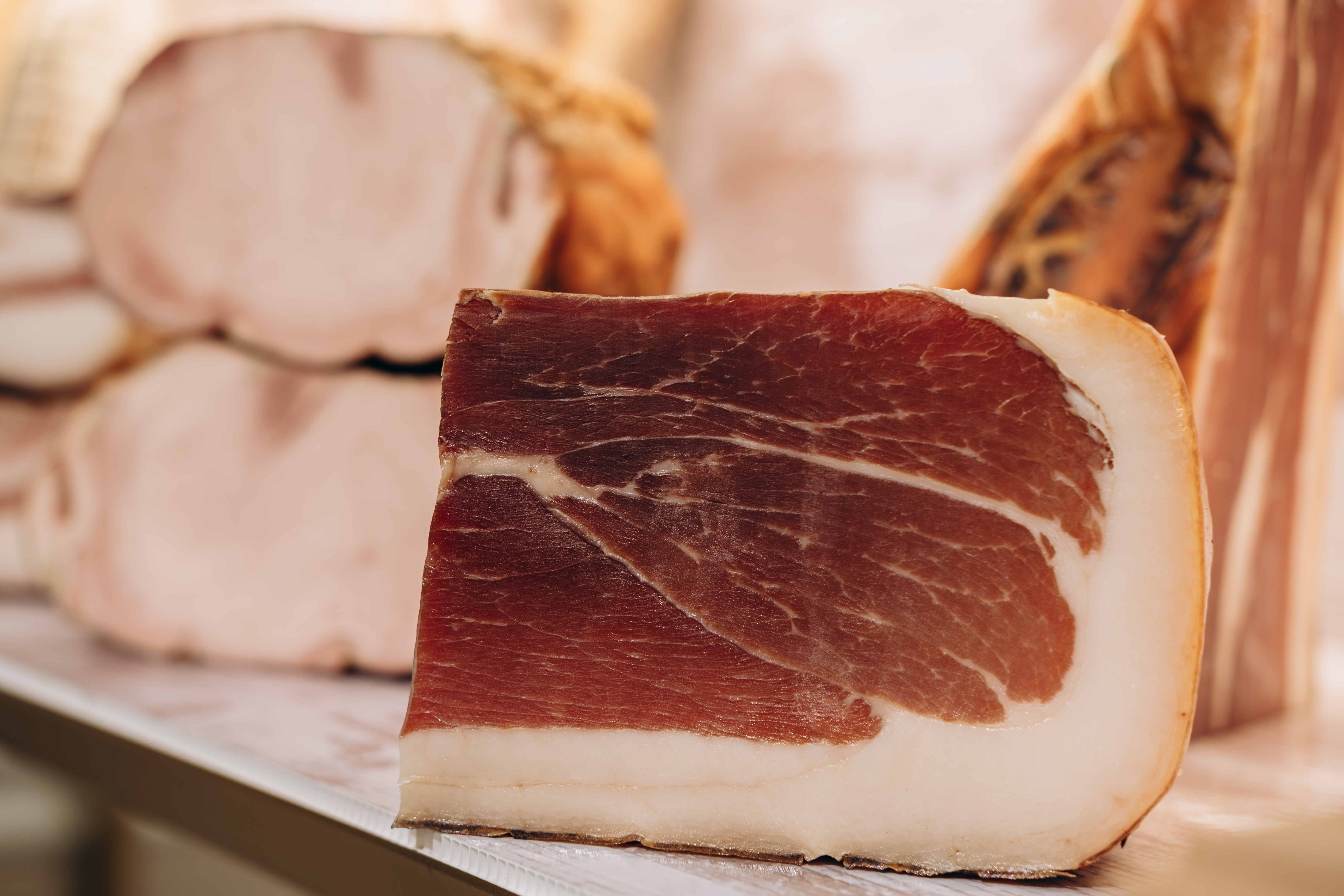
Independents are a natural home for charcuterie, she believes. “My professional background is at Waitrose, which I believe to be the last remaining multiple retailer to have a deli counter,” she says. The deli counter is an invaluable tool for retailers, allowing communication between staff and consumers; for knowledge and experience to be passed on. This is why independents have the advantage, says Gaynor, because they have experts on-hand and are able to source exciting products from speciality producers and wholesalers.
Shoppers who buy charcuterie tend to be “well versed in gourmet food and also well travelled,” says Drogo Montagu, founder of Fine Food Specialist. “They have most likely tasted the product abroad and searched for it on their return, or have it as a staple in their household.”
When it comes to sourcing great charcuterie, Drogo prioritises time-honoured expertise. “We look for a traditional and authentic recipe that has been passed down through generations then made with care, knowledge and experience,” he says. Truffle salami, guanciale and lomo are top sellers.
In order to provide a comprehensive view on charcuterie, we need to consider its place in the wider animal protein industry, says Dhruv Baker, consultant, chef and co-founder of Tempus Foods. “I find it extraordinary that the only predominantly unbranded section in a supermarket these days is meat,” he says. “There’ll be eight brands of bleach and flour, but no story told about this which was once a living thing and deserves some involvement – it should be so much more emotive than it is.”
Dhruv has recently left his hands-on role at Tempus Foods and Rare & Pasture, but remains passionate about the importance of promoting aspects of production like provenance, quality and animal husbandry in a brand. “We had a strong relationship with our suppliers, and when we merged with Rare & Pasture there was a huge emphasis on regenerative farming; our audience recognised that you can’t make good charcuterie with poor quality meat. Because there is nowhere to hide with charcuterie, the quality of the meat is of as paramount importance as the processes and seasonings used.”
Fine food retailers and consumers – the top 1-5% – speak this language, says Dhruv, but the further away you get into the mainstream market the more education is required. Price becomes more important in buying decisions than story and quality. It is a luxury to be able to buy only outdoor-reared (for example) charcuterie, therefore sharing information about the product – from its background to how it can be best enjoyed – is required in order to justify the premium price point, and is something increasing numbers of consumers are expecting from quality purveyors. In this way, perhaps charcuterie should be promoted in the same way as cheese; a language many fine food retailers are wholly familiar with.
“As well as provenance, look for a clean ingredients deck when seeking high quality charcuterie,” advises Dhruv. “A great charcuterie producer will be using far fewer ingredients than a more cheaply-made, mass-produced alternative so it’s always worth looking on the back of the pack – ideally all you’d see is meat, salt and seasonings on an ingredients list.”
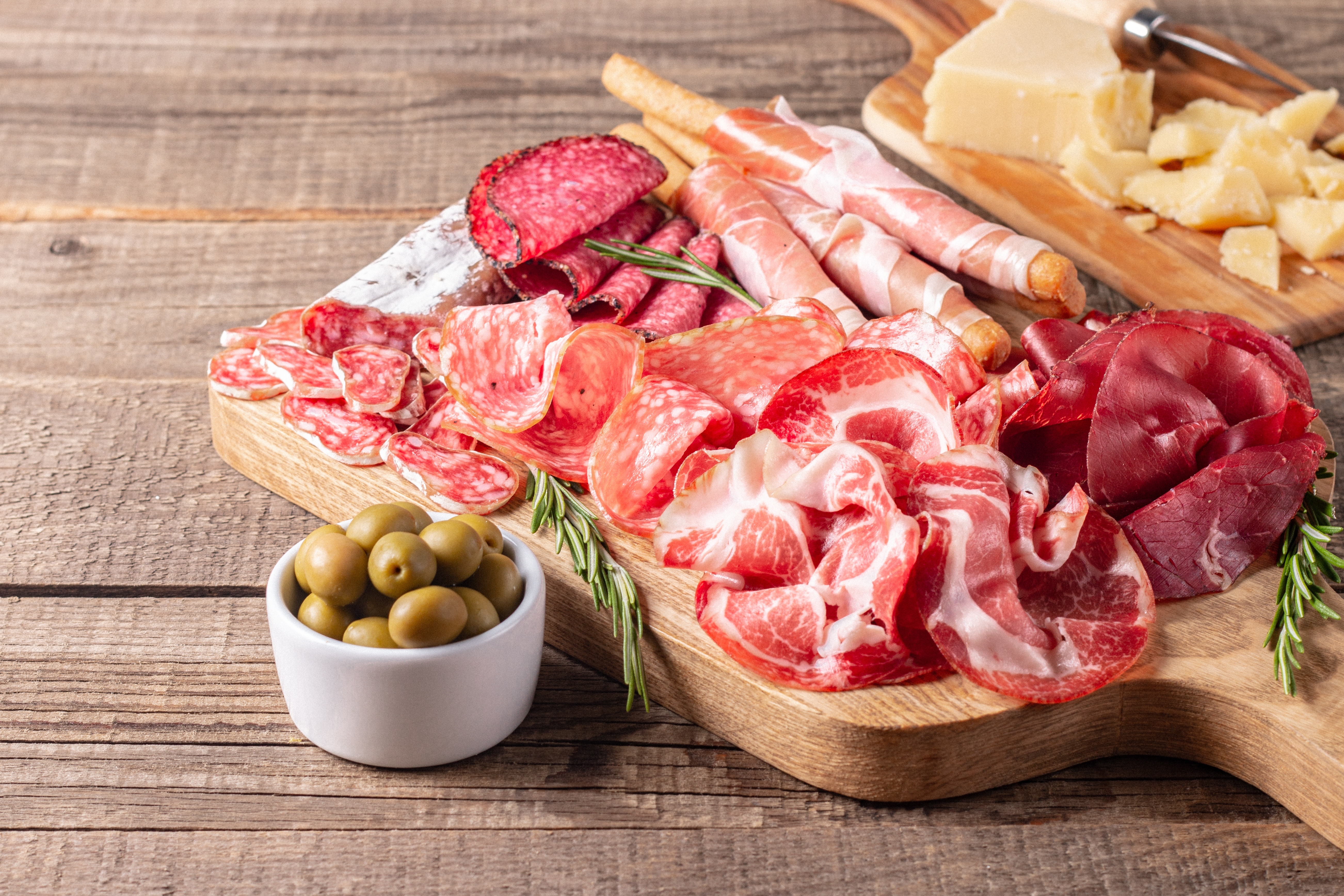
Aperitivo culture has gripped the nation, which offers fine food retailers an opportunity to create a ‘moment’ around their charcuterie offerings. Partnered with a well-chosen beverage, a salty-savoury snack and perhaps a pickled vegetable or chilli to balance the sweet richness of the meat, charcuterie is the ultimate special bite – bringing the key tenets of fine food: flavour, texture, story, provenance and craft to those who seek a refined indulgence.
For Chloe Colas of London’s L’Hexagone, a French deli, customers are often keen to celebrate the classic flavours of the country. “Some people are ready to try new flavours, but I must say that quite a lot of them stick to the plain ones which they enjoy with some wine,” she says. Popular charcuterie products at L’Hexagon include duck mousse, terrines, rilletes, pate and sliced rosette, and the shop boasts around 25 different saucissons to cater for every palate – from simple to cheesy, nutty, spiced and laced with truffle.
These are often best enjoyed with cheese, says Chloe, so the team keeps the counter well stocked with options to pair with a customer’s favourite saucisson.
Dhruv says that while careful curation of a few choice options is always a good move, it’s often a touch of experimentation sprinkled with a little subjectivity that works best. “I tend to put a load of options out for people to choose from, so they can create their own optimum pairing,” he says.
“You need to consider the intrinsic characteristics of the charcuterie in question,” he begins. “For example, salami tends to sit at around a 70:30 lean meat to fat ratio so is more fatty than a product like bresaola, so you’d want something quite acidic to cut through that like a fresh goats cheese. A tart preserve and acidic wine, kombucha or shrub would work too; you’re looking for contrasts of texture and flavour to complement and enhance the charcuterie. When you discover an excellent pairing, the result is often greater than the sum of its parts.”
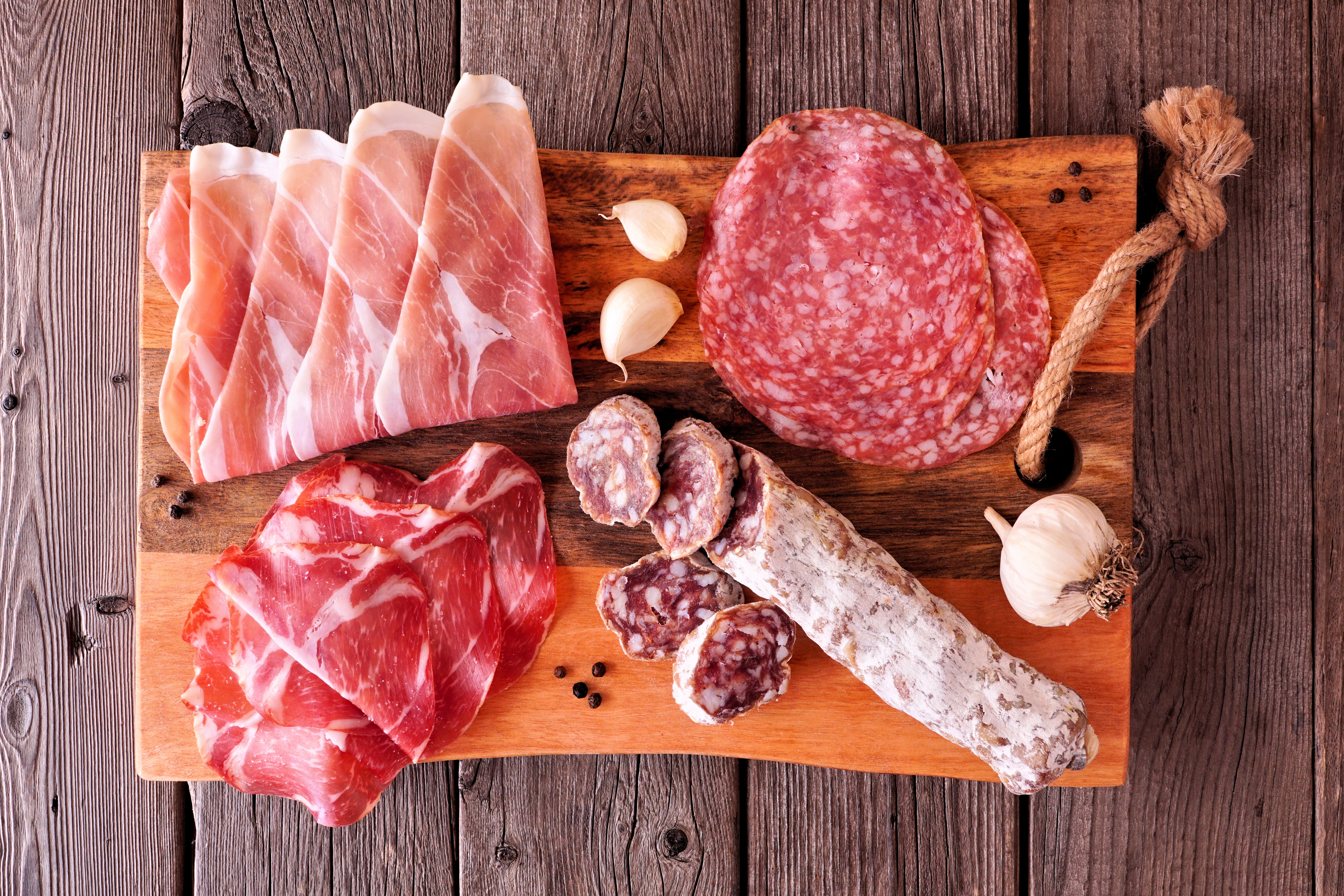
British charcuterie is much less established than its European counterparts, which can often lead to products that suggest the maker has put a lot of effort into standing out from the crowd, says Dhruv. “I’m seeing some incredibly complex recipes around, whereas my approach was always to get the fundamentals – ageing, drying, maturation – sound. As a nation we are excited about what’s new and innovative and seasonal, whereas Continental products are traditionally simple and perfect as they are.”
British charcuterie makers can learn a lot from European producers in terms of scaling while retaining high quality, Dhruv suggests. “Consistency - getting it right every single time - is hugely important, and restraint and patience, which Continental charcuterie makers excel at, are often missing in our makers while we try to learn and build and catch up.”
We are a melting pot of influences from around the world, so one of the most exciting things about British charcuterie is the essence of culinary cultures from elsewhere, including Europe, says Dhruv. “It’s not a competition. Let’s be inspired by other cultures’ charcuterie makers and celebrate them.”
By sourcing charcuterie carefully and considerately, with a focus on quality and story – and an appetite for delicious pairing options – Speciality Food readers can cater to the growing demand for charcuterie from Europe, the UK and beyond.
Click here