Free digital copy
Get Speciality Food magazine delivered to your inbox FREE
Get your free copy

Christmas remains one of the most important occasions for cheese, but for independent fine food retailers the opportunity extends well beyond simply stocking the traditional Stilton and hoping shoppers add a few crackers. From curated cheeseboards and limited-edition cheeses to grazing occasions, gifting and premium accompaniments, cheese can become a significant part of the festive shopping mission – and a way for independents to demonstrate exactly what makes speciality retail different.
For Jessica Summer, founder and owner of Mouse & Grape, the independent retailer’s greatest strength is the ability to turn what can be an intimidating category into a personal experience. “For independent retailers, our biggest advantage is the personal guidance we can offer,” she says. “A Christmas cheeseboard can feel quite daunting for customers when they are faced with lots of unfamiliar cheeses, so being able to ask how many people they are serving, when they plan to enjoy it and what flavours they like makes the experience feel much more approachable.”
That sense of guidance is particularly valuable at Christmas, when shoppers may be buying more cheese than usual, entertaining larger groups or looking for something special to take to family and friends. Rather than attempting to compete with supermarkets on sheer breadth, independents can use their expertise to curate a more considered range.
“A carefully curated range is more valuable than simply offering endless choice,” says Jessica. “I’d make sure there is a good mix of milks, textures and flavour profiles, with a balance of familiar favourites and a few more unusual cheeses that customers may not discover in a supermarket.”
For retailers, that means thinking carefully about the role each cheese plays. A board might include a soft cheese, a hard cheese and a blue as its foundation, with a goat’s cheese or washed-rind option providing something more unexpected. The aim is not to overwhelm shoppers but to make the selection feel varied, exciting and easy to understand.
The opportunity for independent retailers lies in making the cheeseboard feel like an occasion rather than a collection of products. “Tasting, sharing the stories behind the cheesemakers and giving confident pairing advice all help to make buying cheese feel like an experience in itself,” she continues.
For Amanda Burningham, cheese brand lead at Emmi UK, storytelling can be one of the category’s most effective tools. “I think storytelling is one of the most powerful tools the cheese category has because every cheese has a story – where it comes from, who makes it, how it is produced, how long it has been matured and what makes it taste the way it does.”
For the retailer, however, the message does not need to become overly technical. “The challenge is to make those stories accessible,” she explains. “You don’t need a paragraph of technical information; sometimes one compelling detail about the maker, origin or maturation process is enough to make a cheese feel much more interesting.”
A concise shelf card explaining where a cheese comes from, how it is matured or what makes its flavour distinctive can give customers a reason to trade up without requiring staff to deliver a lengthy explanation to every shopper.
The traditional three- or four-cheese board is also evolving. “I think the modern cheeseboard is becoming much less about a classic combination of cheeses and much more about how we want to eat and share food today,” says Amanda. “The traditional board of three or four cheeses is evolving into something more like a cheese grazing board – a collection of hot and cold cheeses, dips, breads and accompaniments that people can pick at, dip into and share.”
That has important implications for Christmas stocking. Cheese does not necessarily have to be positioned as the final course after the Christmas meal. It can be used as part of drinks occasions, informal gatherings, Boxing Day grazing, New Year’s Eve entertaining and relaxed evenings over the festive period.
“Ultimately, it’s about creating more variety and interaction around cheese, with different textures, flavours and formats giving everyone something to enjoy,” she continues. For retailers, this opens the door to selling cheese alongside a much wider range of products. Charcuterie, pickles, chutneys, crackers, breads, nuts, fruit, honey and wine can all become part of the same shopping mission.
Jessica recommends that retailers think about the cheeseboard in terms of generosity and balance rather than sheer size. “For me, an occasion-worthy cheeseboard is generous and beautifully considered, rather than simply enormous. Four or five excellent cheeses will usually give you plenty of variety without overwhelming people.”
Christmas cheese can also present a practical challenge: how much should customers buy to ensure that guests feel satisfied, but leftovers are minimal? Jessica suggests around 80–100g of cheese per person if it is being served as a course, with a little less required after a large Christmas meal.
Pre-ordering can also help both the customer and retailer. “Retailers could offer a small selection of ready-curated cheeseboards at different sizes or price points, alongside a more bespoke option,” she advises. “It makes life easier for the customer while allowing the retailer to plan stock and manage demand during the busiest part of the year.”
This could work particularly well as a Christmas pre-order campaign, with boards designed around different occasions or budgets. A family board, an indulgent board, a British artisan selection or a wine-and-cheese package could give shoppers a simple starting point while still allowing staff to personalise the final selection.
Dylan Fourie, deli manager at Macknade, highlights another way independents can make their Christmas range distinctive: limited availability. “The way we keep our range exciting is by including unique well curated cheeses that have ‘wow factors’ and are only limited to Christmas,” he says. “We source cheeses from our network of suppliers and producers alike so we can obtain exclusivity for our customers which is something that keeps our range exciting.”
For an independent retailer, exclusivity can be particularly powerful because it creates differentiation that cannot easily be replicated by a supermarket. A Christmas-only cheese, limited batch or special supplier collaboration can become a talking point and give customers a reason to visit the store specifically.
There is, however, a stock-planning challenge. “The biggest challenge for us is procurement,” says Dylan, explaining that some orders need to be placed as early as January because certain cheesemakers produce only limited quantities for the year. Traditional favourites cannot simply be assumed to perform in exactly the same way every year, he says, meaning buying teams need to be prepared to react to emerging demand while retaining core lines.
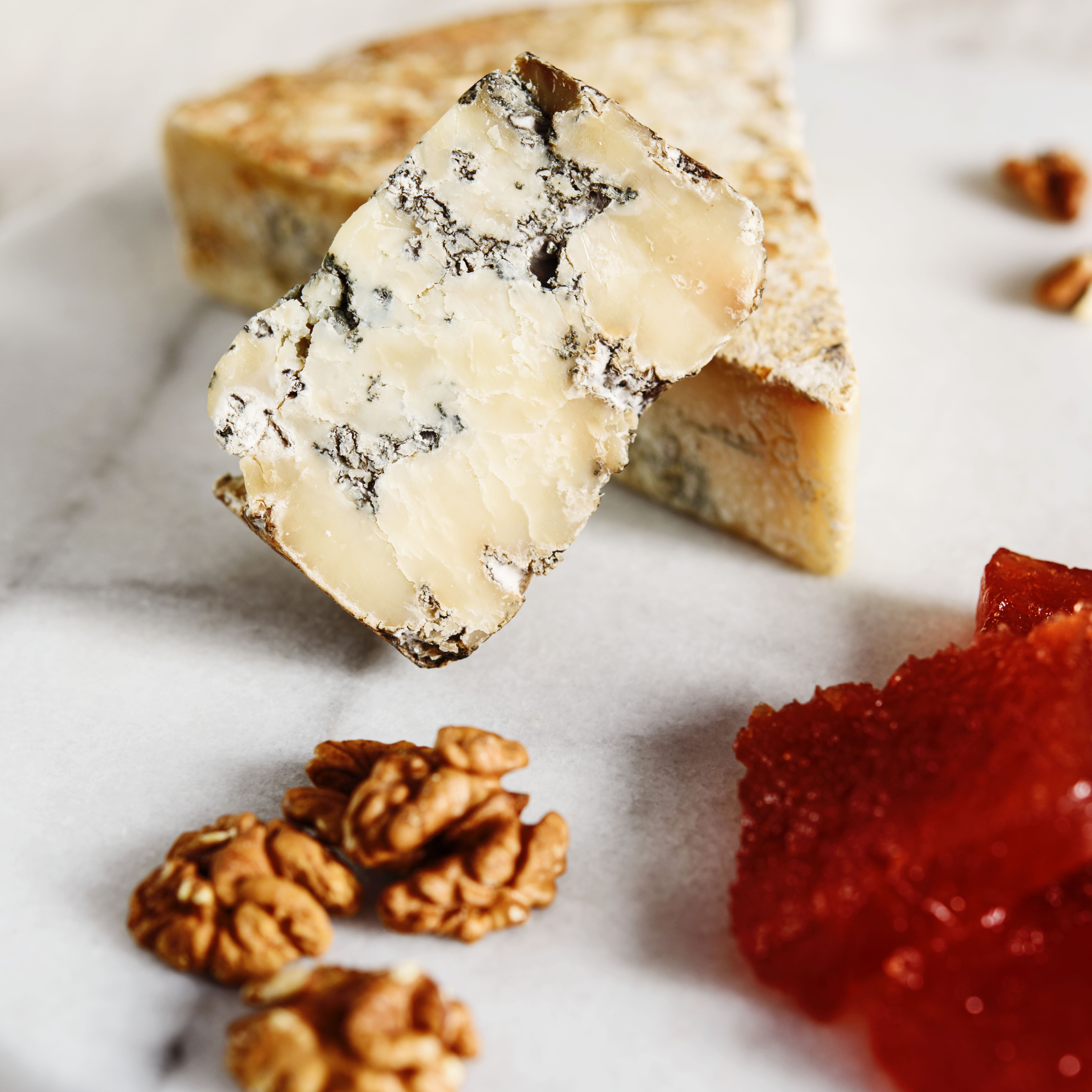
Cheese also has considerable potential as a Christmas gift, particularly when packaging, presentation and storytelling turn an individual product into something that feels special. Heather Lewis of Clawson Farms says Christmas shoppers are looking for products that create a sense of occasion. “At Christmas people are really looking for something a bit special,” she says. “They’re prepared, even in tough economic times, to push the boat out a little bit to create a moment of family and sharing. They want to give lovely gifts and enjoy all the sentiment and warmth that comes with that.”
Premium cheese is an appealing gifting proposition because it can combine food, presentation and discovery. Clawson’s truckles are designed to meet that need through unusual flavour combinations, distinctive characters and packaging, says Heather. “Every cheese in our range has been designed to use premium ingredients and create flavour combinations which are familiar, but a bit special.”
The idea of giving shoppers something familiar but elevated is particularly relevant at Christmas. Customers may know they want Cheddar, for example, but a more unusual flavour, format or presentation can make it feel like a gift rather than an everyday purchase.
Perhaps the biggest opportunity is to get creative around the uses of cheese at Christmas. “I think the biggest shift is that we should stop thinking about the cheeseboard and start thinking about the cheese occasion,” says Amanda. She cites NIQ data to 8th August 2026 showing the overall cheese category up 3.5%, with Snacking Cheese up 10.5%, Spreads & Dips up 10.4% and Speciality Cheese Ingredients up 6.3%.
“These trends point to the growing number of ways consumers are choosing to enjoy cheese, from grazing and ‘picky bits’ to cooking, snacking and entertaining,” she continues. Raclette, fondue and baked cheese can create interactive entertaining occasions, while goat’s cheese can move into canapés, salads, small plates and even dessert-style grazing.
“Cheese has an incredible ability to adapt to the way people want to eat and entertain today,” Amanda explains. “It can be premium and considered, relaxed and informal, indulgent and theatrical, or simply something delicious to share.”
“Our truckles provide the sense of occasion that fine food shoppers are looking for at Christmas. Yes, you can have them all-year-round, they’re designed for that too, but they are special – their flavours have been designed to be a little bit out of the ordinary. Take a classic Christmas flavour such as Wensleydale with Cranberry – we’ve added marmalade and elderflower to it to give it greater sense of specialness and occasion, which you really feel when you taste it. It’s an elevated experience in terms of the full experience, from presentation to taste.”
- Use presentation to increase value: Jessica recommends combining cheese with high-quality crackers or sourdough, then adding fruit, nuts, honey and a carefully chosen chutney or chilli jam. “At Christmas, dried figs, dates or a few chocolates can make the board feel particularly special,” she says, while cautioning against adding so many strongly flavoured accompaniments that they overpower the cheese.
- Cross-sell a solution: “The most effective upselling should feel like useful advice rather than a sales pitch,” says Jessica. “Once you understand the cheeses a customer has chosen, you can recommend one or two accompaniments that genuinely complement them, whether that’s a particular cracker, truffle honey, chutney or something sweet for a blue cheese.”
- Don’t forget drinks: The same approach can extend into drinks. “There isn’t one wine that will pair perfectly with every cheese, but sparkling wine is a brilliant all-rounder because its acidity and bubbles cut through richer flavours. Sherry is often overlooked, while Sauternes, Tokaji or a sweet Moscato can be wonderful with blue cheese.”