Free digital copy
Get Speciality Food magazine delivered to your inbox FREE
Get your free copy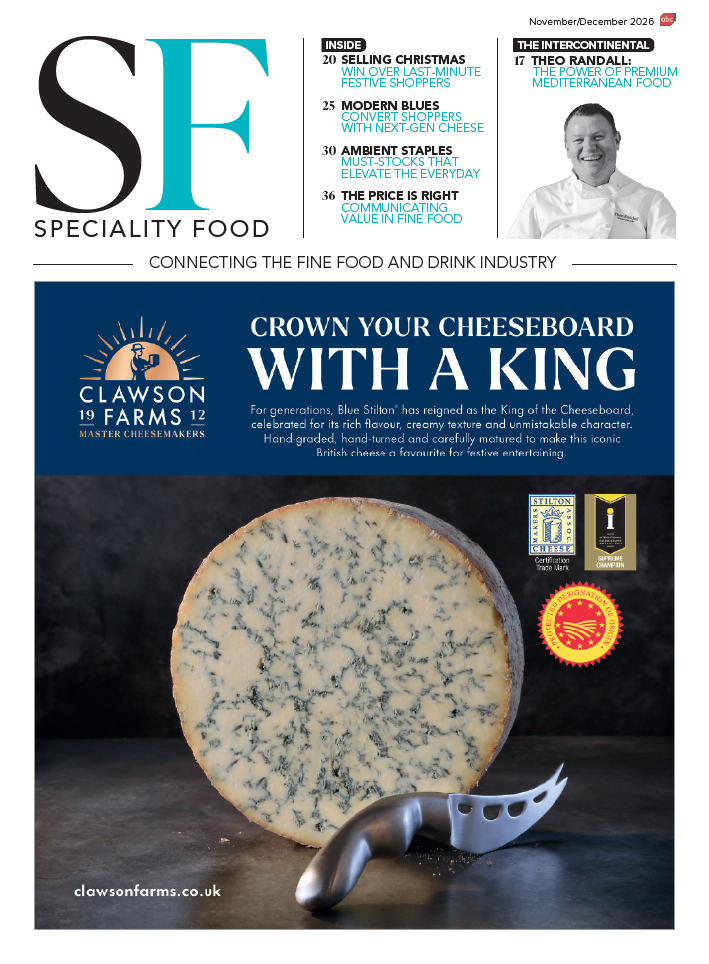

What draws me to Ragstone is its balance of freshness and depth. This British goats’ cheese has a delicate white rind and a bright lemony tang.
As it matures, the flavour develops and the paste beneath the rind softens. I like it with plain bread, to appreciate its subtleties. It is a lovely introduction to British goats’ cheese.
The pink foil catches the eye, but the real pleasure comes when Truffle La Bouse is unwrapped.
I love the gentle, creamy base through which the truffle aroma unfolds. A small piece deserves time to melt on the tongue. For customers looking for something special for an evening, I suggest this cheese with some plain crackers.
: The French cheese I choose for its generous creaminess.
Added cream gives it an delicate texture that melts in the mouth, while the white rind brings a subtle mushroom note. I enjoy serving it with a crisp baguette and a glass of Champagne. Together, they make a pleasure to savour at the day’s end.
I love Gubbeen for its assurance. This Irish farmhouse cheese has a washed rind, a supple, springy texture and pleasant nuttiness.
Earthy, mushroom flavours emerge as it matures. It expresses the patience we value in artisan cheesemaking. I recommend it to anyone keen to explore more aromatic cheeses without overwhelming their palate.
This cheese reminds me that blue cheese can be both expressive and approachable. I enjoy the balance of creamy texture, saltiness and piquant blue veins.
It is my choice for customers discovering this style. A slice of ripe pear brings a contrast. This is a cheese that can turn a cautious first taste into an eager second helping.
With Stärnächäs, I look forward to the lingering finish. Its firm texture and rich, nutty flavours reward small bites, each revealing another detail.
I keep it for the end of a tasting, when there is time to appreciate its depth. Those discoveries are why I love my work: a counter offers opportunities to share our favourites and hear a customer’s story.
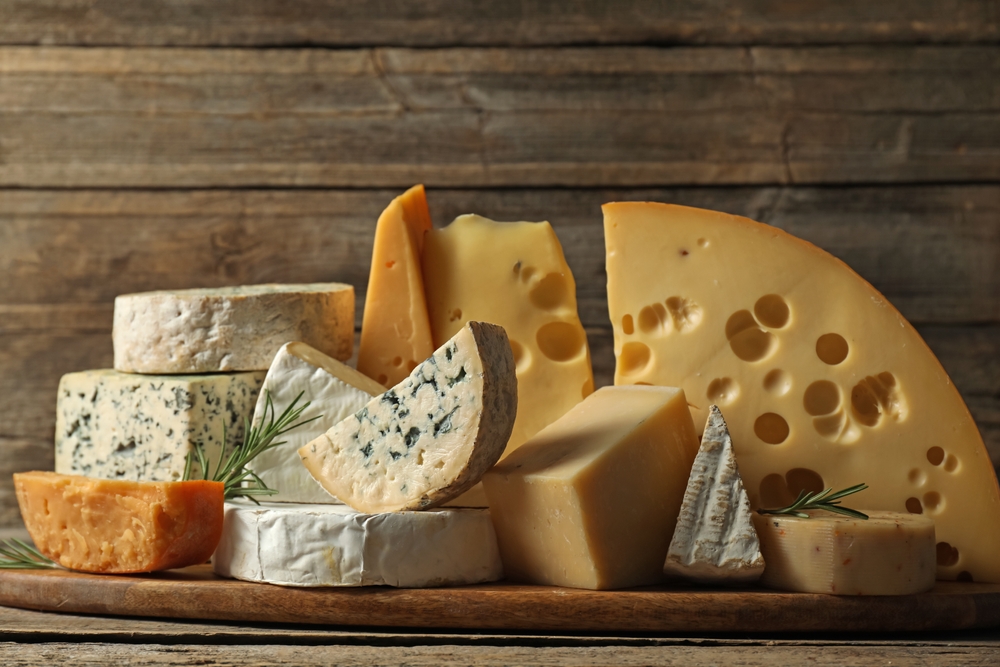
There are several ways in which you can (and should!) make your shop stand out, from good reputation and notoriety, to branding and signage, to custom fitting and merchandising. Evidently the range of cheeses and products stands front and centre, but how can we add a couple of cheeky extras to our ranges to really stand out from the rest?
In France and particularly in Paris, many cheese shops sell a range of whimsical “creations”, which are ways of putting cheese and accompaniments together by means of creating a cheese recipe of sorts. These creations are a way of adding value to cheeses, showing innovation and giving your shop some signature pieces that are only made by you.
In the UK, we frequently see truffled brie and other stuffed cheeses, but the French have taken this much further and there is a growing market for adding value and creating signature, showstopping pieces.
In cheese shops like Fromageries Laurent Dubois, you will find cheeses such as his original creation the Roquefort pate de Coing (Roquefort with quince paste), Tartuffe – a farmhouse sheep’s milk cheese with fine layers of truffle running through the centre and Chèvre Frais Yuzu Timut, a goat’s cheese with Yuzu and Timut Pepper atop.
Presented in his counter in small quantities like cakes in a Patisserie, these are a great way of creating products which respect both the cheese and the added ingredients. Other notable examples in Paris include the Charolais in Nikka Whisky at Fromagerie Quatrehomme and recently in Fromagerie Chataigner I discovered a Brillat du Jardin with coriander and pink peppercorns.
- Recipe test! Rome wasn’t built in a day, so take your time, find your ideas and test, test test!
- Is your cheese stable? As much as a gooey Brie could taste delicious stuffed with pickled girolle mushrooms, will it be presentable?
- Packaging is key! How you wrap and present will make a huge difference for the aesthetic, and we really do buy with our eyes.
- Watch out for allergens! Be very careful in the preparation of these styles of cheese and have a designated area, equipment and signage as soon as allergens become involved
- Be creative! Think outside the box. Think about local ingredients. But make sure that the flavours work well together or you are just creating inedible art.
Q Christmas is when we cut into the most cheese. How should we wrap and store what’s left so it stays at its best?
A I’ll be honest, most of the cheese that goes wrong over Christmas goes wrong after the first cut, especially the slow sellers.
So start by cutting less. If you’ve got 60 or 70 cheeses on the counter, that’s 60 or 70 cut faces to wrap and watch. Keep the knife for your core sellers. Pre-pack the slow ones in small, properly labelled pieces, and put the soft, pretty ones in formats people can carry and gift easily. They go straight into hampers and look far better on display.
For what you do cut, I know cling film is hard to give up. Just never wrap a whole cheese in it, or the rind sweats and soft cheeses start tasting of ammonia within days.
Cover only the cut face and let the rind breathe. It’s fiddly, but it works. Better still, use cheese paper, with fresh paper every time you cut, because old wrap hands the moisture and mould straight back.
Keep the counter at 4 to 8°C, and keep your blues well away from everything else. Their mould gets everywhere.
The bit most shops miss is the customer. Put a sheet of paper in their bag and spend thirty seconds telling them how to keep it. That’s the difference between a cheese they finish and one that’s binned on Boxing Day. And people who finish their cheese come back for more.
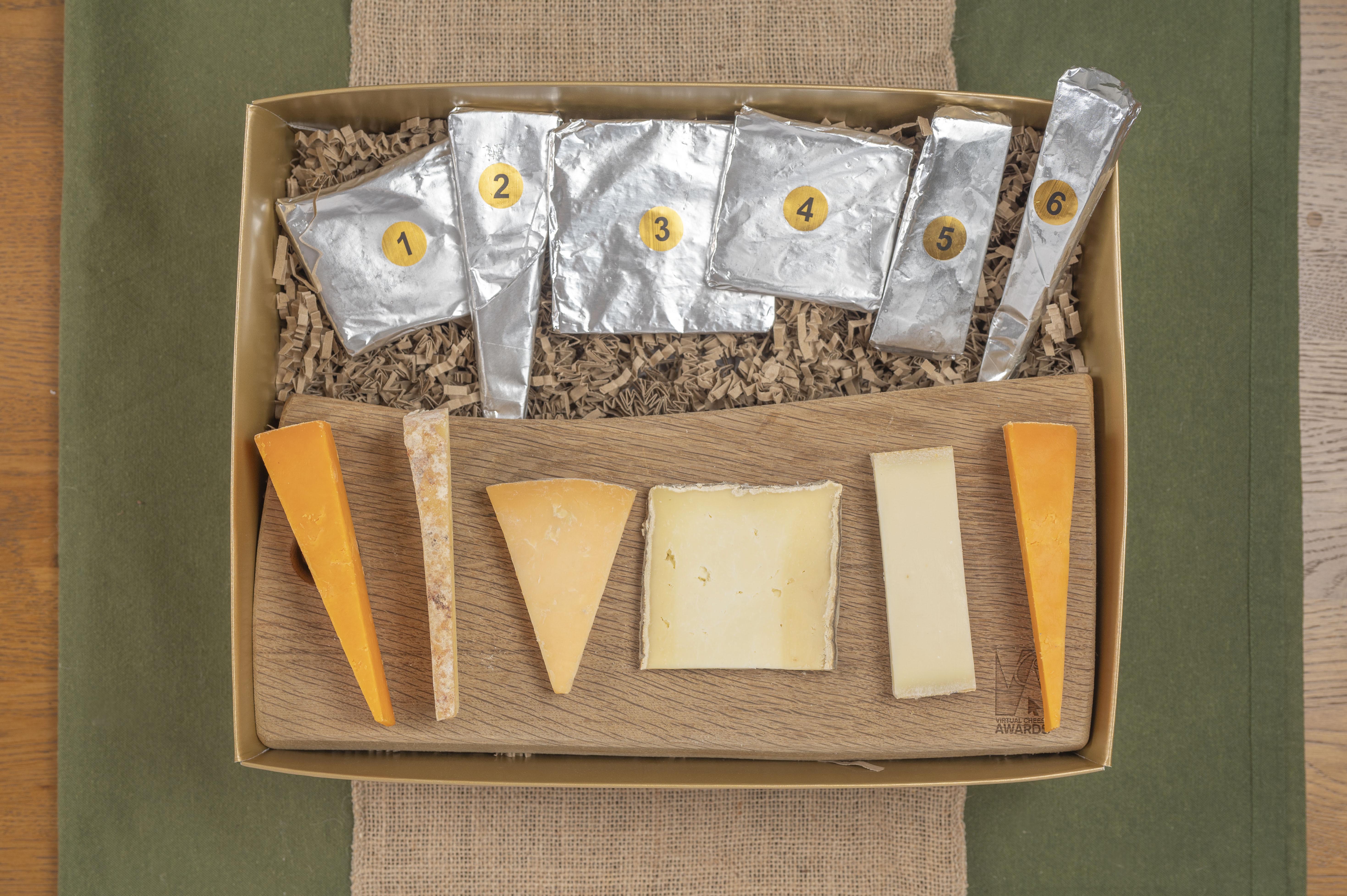
Advent calendars are a key part of the festive season, and with a vast array of edible options on the market, Speciality Food readers should consider it a valuable addition to their Christmas repertoire.
Stephen Fleming, founder of George & Joseph, has experience in selling his own. “I couldn’t think of a more perfect advent calendar than one dedicated to cheese – and thankfully there are lots of people who agree with me.”
“The first year we thought we might sell forty or so, but we sold considerably more. We’ve learned our lesson and are more prepared this year, although numbers are still limited so if you want one, you need to pre-order quickly!” he says.
“Imagine opening and discovering a different piece of cheese for 24 days in a row, and that’s the beauty of cheese: it lends itself brilliantly to an advent calendar because there’s so much variety. We can put together a range of completely different cheeses and take people on a real journey through soft and crumbly cheeses to blues, different milks and big, mature flavours.”
“I’ve no doubt people will enjoy finding their favourite cheeses, but there will also be plenty of cheeses that they haven’t tried before.”
“The tricky bit is that unlike chocolate, cheese is obviously a fresh product and we want every cheese to taste as good as it possibly can when people open it. That’s why we’ve split the calendar into two boxes of 12.”
“Logistically, it makes things more complicated for us because we’re effectively preparing and sending every calendar twice, but it means the cheese people open on Christmas Eve should be just as enjoyable as the cheese they open on 1 December.”
“There’s a huge amount of work involved behind the scenes. Every piece needs to be cut, wrapped and numbered by hand. But that’s also what makes it exciting for us. We’re passionate cheesemongers, so choosing great cheese and getting people to try something new is what we love doing.”
“The idea is that you’re not just getting a piece of cheese every day – you’re getting a little tasting experience, with notes explaining what you’re eating and the story behind it.”
“And we’re keeping the line-up secret. Half the fun of an advent calendar is not knowing what’s behind the door – or, in this case, what’s inside the wrapper.”
Highland Fine Cheeses has announced the launch of Ooh La La, a bright lactic cow’s milk cheese with a natural geotrichum rind and a texture described as being ’silkier than French knickers’.
Produced by second generation cheesemaker, Rory Stone, by in Tain, Ooh La La takes inspiration from the classic French Saint-Félicien style. Soft, supple and silky, this cheese has been in the making for over two years and is already award-winning, having been awarded Best Scottish Cheese and Best Soft White Rind Cheese at the British & Irish Cheese Awards 2026.
Ooh La La is now officially ready to be distributed across the UK in time for Christmas, following six months of further refinement.
The man behind Oxford Blue and Oxford Isis has returned to specialist cheese retailing with the opening of The Reluctant Cheesemonger, a new shop championing small-scale producers and more ethical approaches to dairy farming.
The new business opened on 15th October at Groves Yard in Milton-under-Wychwood, Oxfordshire, with a carefully selected range of British and Continental cheeses.
The shop marks a return to retailing for the creator of Oxford Blue, whose cheesemongering career began in 1983 when he opened a specialist cheese shop in Oxford’s Covered Market.
Having initially entered the trade with little knowledge of cheesemaking, he went on to develop Oxford Blue in the 1990s, working with a cheesemaker at a Stilton dairy in Hartington. He subsequently created Oxford Isis, which won the Cheese Lovers Trophy in 2008.
His latest venture has a different focus, with an emphasis on supporting smaller dairy farms that prioritise animal welfare, regenerative agriculture and traditional production methods.
The Reluctant Cheesemonger is particularly interested in producers adopting cow-calf contact systems, where calves remain with their mothers rather than being separated shortly after birth.
The initial range includes cheeses from Failand Hill Farm in North Somerset, Finlay Farm – home of The Ethical Dairy – in Scotland, Hancock’s Meadow Farm in Herefordshire and Holden Farm Dairy in Wales, producer of Hafod Cheddar.
Continental selections include Schlossberger, an unpasteurised Swiss hard cheese matured in caves beneath Schlossberg Castle.
The business acknowledges that its initial range will include some cheeses that do not fully meet its longer-term ambitions, with plans to expand its selection as more suitable producers are identified.
There are also plans to develop Oxford Blue and Oxford Isis using milk from a small herd practising cow-calf contact farming, although this transition will take time.
In another development, the business is creating a plant-based version of Oxford Blue, with the first samples expected to be available for tasting in November 2026.
The shop is managed by Lou Pouget and opens Thursday to Saturday, from 10am to 5pm. Customers can also enjoy cheese plates accompanied by wines from France’s Ardèche region.
For independent retailers, the opening highlights the growing opportunities for specialist cheesemongers to differentiate their offer through provenance, animal welfare and closer relationships with small-scale producers.
“Our recent Impact Report was a really exciting opportunity to pull together, especially in a year that’s been so tough for the dairy sector. While nobody wants the challenges we’re currently experiencing – droughts, high fuel prices, cost-of-living crisis, and so on – they push us to hold the mirror up to our expectations of the food we buy.
Farmers are in the middle of the scenario, wanting to create businesses that are fit for the future with minimal support apart from farming groups and organisations like First Milk, who are very keen to make a difference.
But, until the rest of the supply chain and majority of consumers start to unlock some of that passion, it’s going to be tricky to get there. That’s why Golden Hooves have spent the last few years distilling a core message for consumers, who predominantly care about price, quality and taste – and that is that we are regenerating. Not degenerating, not staying in the same place, but creating a healthy shared future for us all.”