Free digital copy
Get Speciality Food magazine delivered to your inbox FREE
Get your free copy

Italy is rightly proud of its cheesemaking heritage. From dainty, delicate little soft varieties made with fresh morning milk, to bold, expressive blues, rippled with veining, and brimming with spice – the spectrum of varieties is broad, each one unique to its terroir, and paying edible homage to the history that went before it.
Read on to learn more. How many of Italy’s best cheeses have you tried?
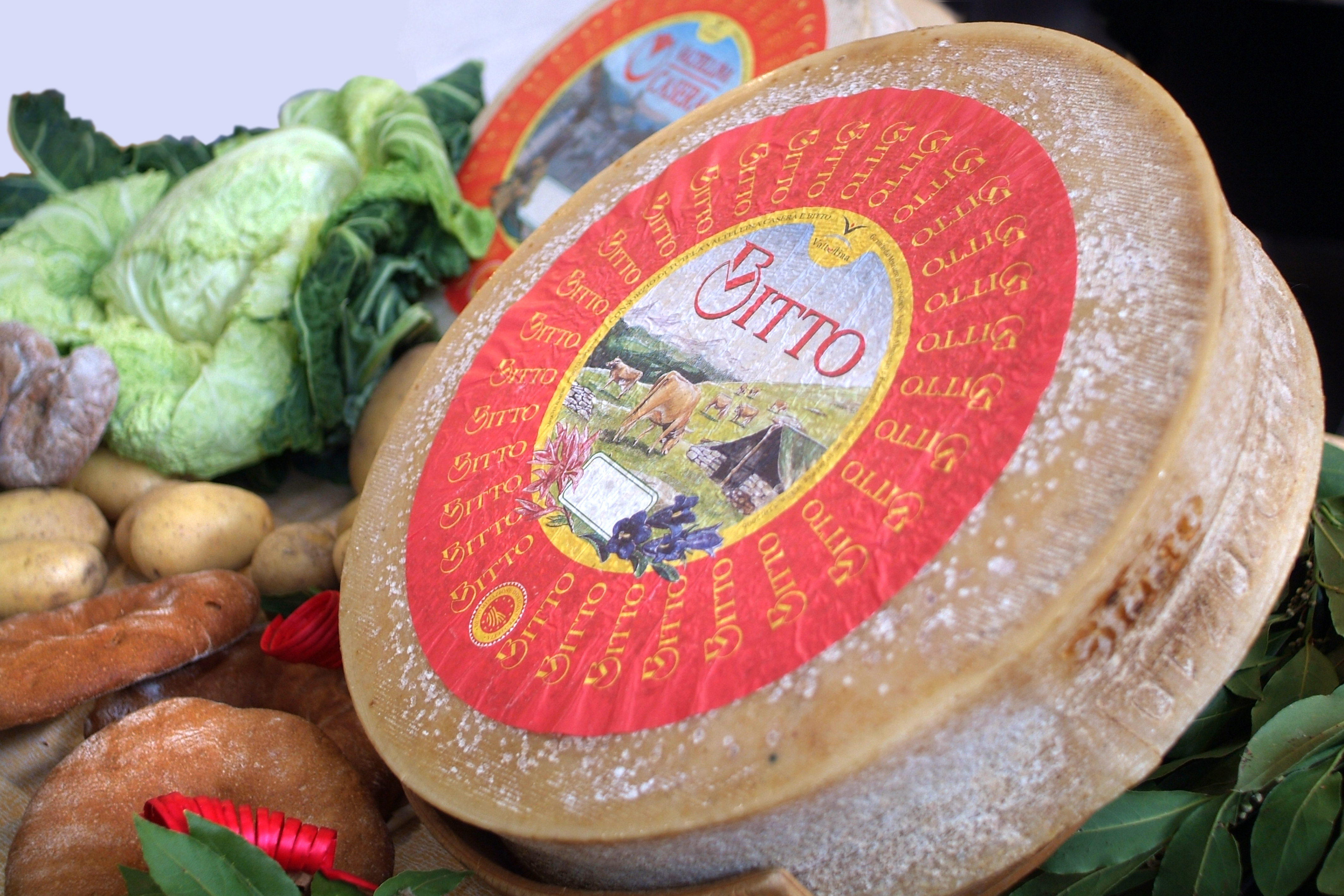
Milk type: Cow’s but can have added goats’ milk
Region: Lombardy
This history of this ancient cheese can be traced back to the Celts, who lived in the mountainous Alps region. Like many other cheeses of this style, the landscape has a part to play in Bitto’s unique flavour, as does transhumance (the grazing of animals across lush Alpine pastures during the summer months).
Known for its ageing qualities, this cheese can be eaten and sold anywhere from 70 days to around 12 months. It starts off buttery, sweet and milky with notes of hay, developing a spicy flavour and more brittle texture as it ages. It’s used to make many famous dishes along the Italian/Swiss border, including buckwheat pancakes or noodles tangled with cheese and ham.
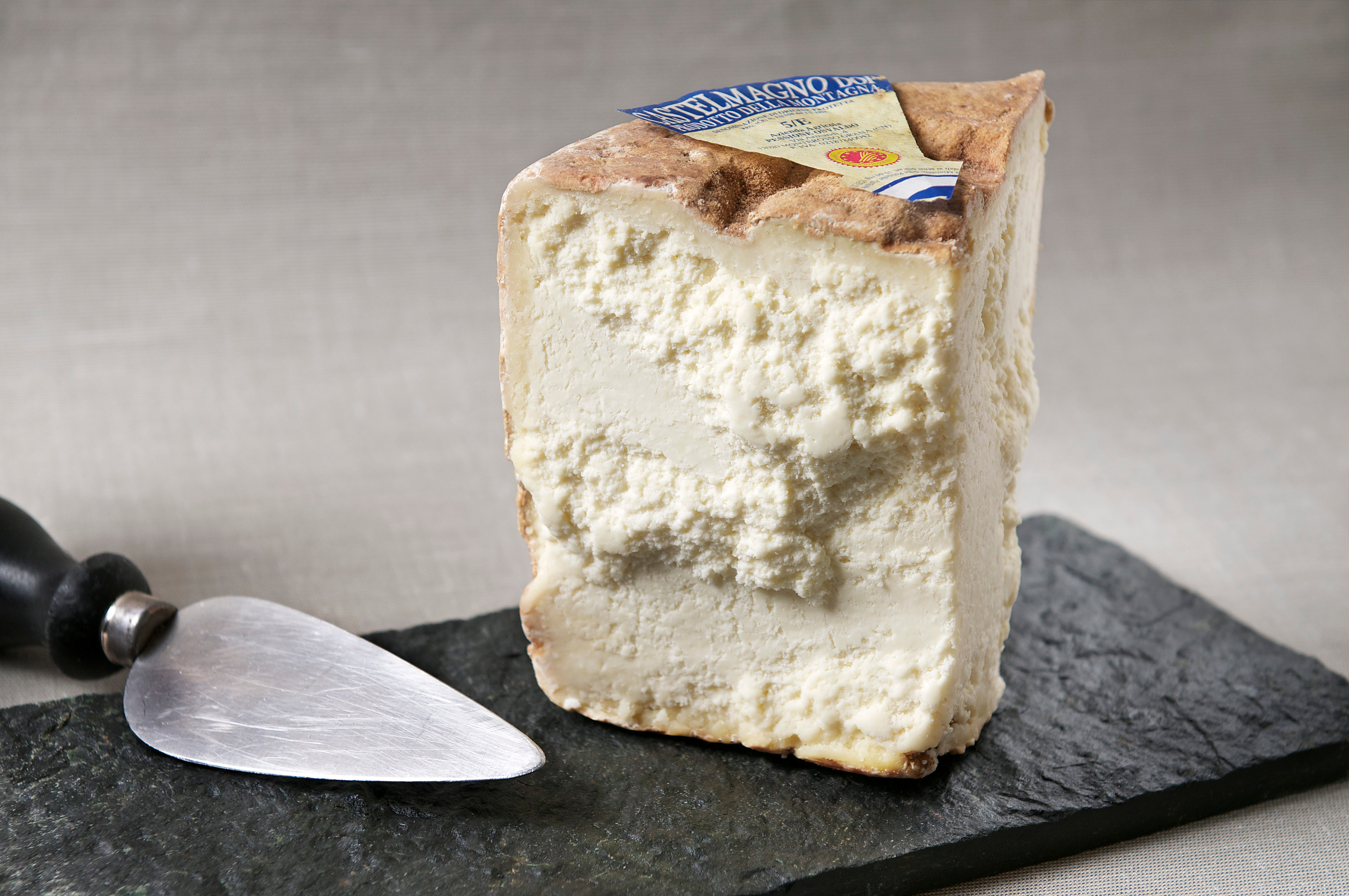
Milk type: Cow and goat
Region: Originates in Piedmont’s Grana Valley
The making of this PDO cheese is strictly regulated, with the raw milk used having to be traced to eight specific cow breeds and cross-breeds, including the Bruna, Montbelliard and Grigio Alpina. If the cows are grazed at between 650 and 1,000 miles above sea level, they can carry the label ‘Prodotto della Montagna’ alongside a PDO.
Semi-hard, with a rippling dark crust (indented by the patterns of a special mould) and granular, crumbly texture, the flavour of Castelmagno is informed by its ripening period of at least two months or more in cellars or natural caves. It’s strong, complex, and becomes increasingly intense, taking on hints of spice and fruit as it ages.
Milk: Cow
Region: Lombardy, close to Bergamo
This hard, semi-cooked cheese is made with whole, raw cow’s milk and formed into a cylindrical shape before being matured for a minimum of 45 days (sometimes years). Beneath the straw-coloured rind, the paste has a proliferation of tiny holes, and the flavour is delicate and gently aromatic.
Very strict production methods are followed to craft the cheese, with all stages of production (from growing feed to making) having to be carried out in one of the 21 municipalities of the upper Brembana Valley.

Milk: Cow
Region: Numerous provinces in Northern Italy
The recipe for Grana Padano dates back to at least the 12th Century, and it’s revered as one of the great Italian cheeses. Made with unpasteurised, fully traceable milk, Grana Padano is naturally free from lactose, and has a sweet, milky taste when young, ripening to become sharper, with rounded complexity – making it ideal for cooking and finishing off dishes.
To make the cheese, cows are milked twice a day, and the partially skimmed milk is prepared in bell-shaped copper cauldrons – each of which makes two wheels. The cheeses are wrapped in linen, placed in moulds, weighted and then inserted with engravings that signify their origin. Afterwards a casein plate with the cheese’s ID is placed on top. Grana Padano is brined for up to 25 days, dried, then aged for a minimum of nine months.
Milk: Cow
Region: Lombardy
This ancient-looking square shaped cheese appears as though it’s been stamped with hieroglyphics on its mottled beige/brown natural rind.
Sweet and tangy, with greater depth in mature varieties, it’s made in a very specific area between the Po Plain and valleys of Bergamo and Lecco – and has been since at least the 10th Century when it was largely eaten by peasants as a table cheese and made seasonally.
Today, Quartirolo Lombardo is made all-year-round, using early morning milk. Each cheese is turned several times, with their distinctive markings pressed in at the penultimate turn by the cheesemaker. After being dry salted or brined, the cheese is ripened for two to 30 days to be sold ‘fresh’ or sold ‘mature’ over 30 days.
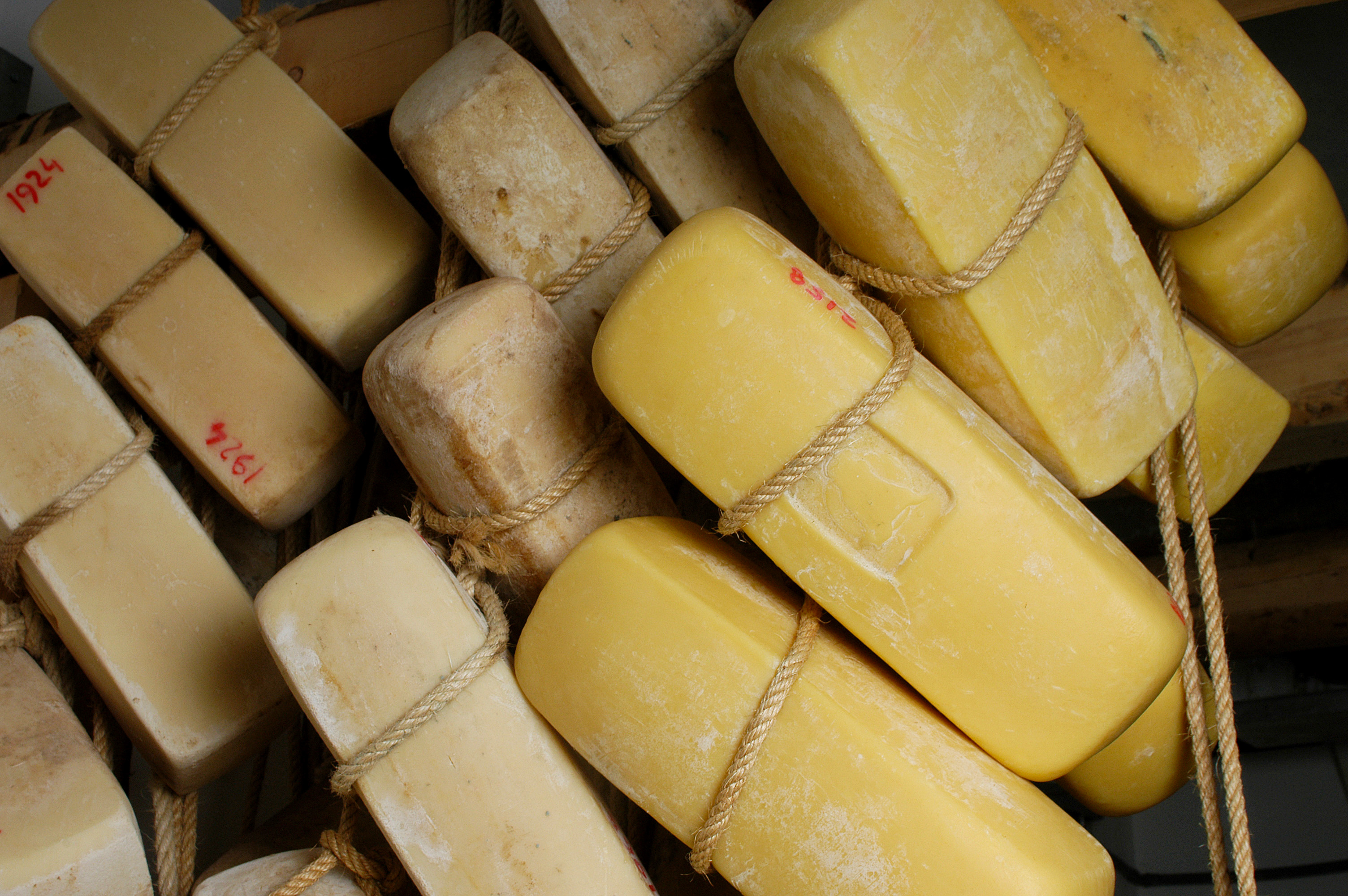
Milk: Cow
Region: SE Sicily
Made since around the 14th Century, Ragusano’s production is quite romantic – beginning with the grazing of Modicana cows in rugged Sicilian plateaus covered in spontaneous shrubbery, olive trees and herbs.
The stretched curd cheese is salted, formed and then suspended from beams in cool cellars by rope, where it matures for a minimum of three months (milky and mild with dairy notes) up to around a year, when it becomes firmer, more saline and filled with umami notes.
Milk: Cow
Region: Trentino-Alto Adige/Sudtirol
This raw milk cheese is one of the oldest of the Alpine varieties, dating back to the 13th Century, when it was produced, basically, as an afterthought. Seeking the best value for their milk, farmers laboured over producing luxurious, creamy butter to take to market. Any residual milk was processed and pressed (hence the name) into a rustic table cheese to nourish the family.
The recipe has been adapted since, with the cheese salted, pressed and matured for an average of three to six months. At three months it’s fruity and brothy, becoming significantly more intense, drier and more brittle as it ages.
Milk: Cow
Region: Trentino valleys
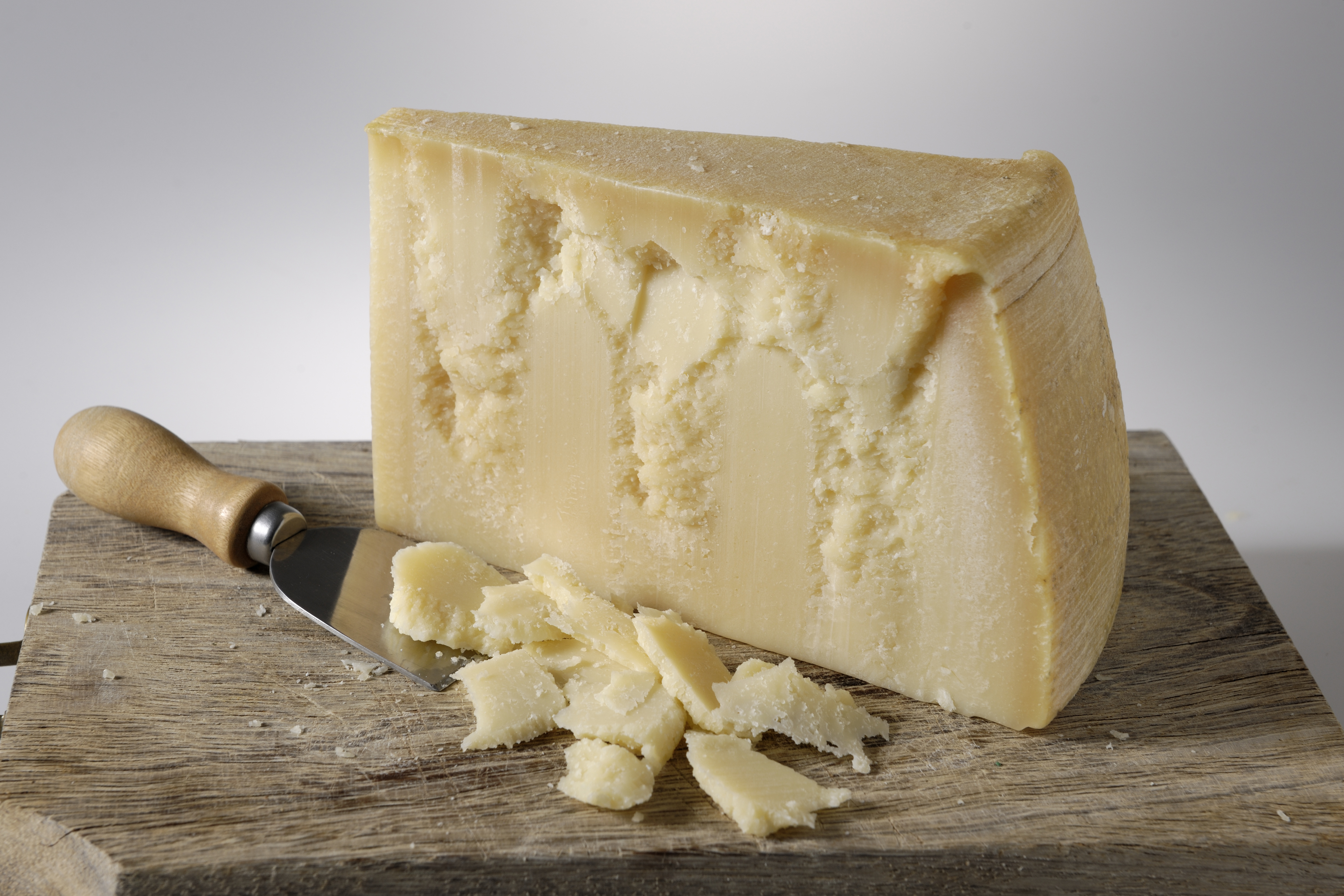
A fairly new cheese to Italy, Trentingrana can be traced to maker Michele Marchesi in the 1920s. Moving to Modena for marriage, he fell into making Parmigiana Reggiano, and on returning to the Trentino region, started to produce his own take on it.
To this day, the lactose-free cheese is produced only with raw milk from small farms in Trento, grazing their cattle on an entirely natural diet.
Pressed into cylinders it is a little flaky under its hard, smooth rind, with defined sweetness.
Some cheeses are selected to be matured to around 30 months, intensifying the herbal, floral notes of the cows’ diets, and becoming significantly more intense and punchy, with visible specks of tyrosine crystals. This variety is especially revered.

Milk: Cow
Region: Provinces of Parma, Reggio Emilia, Moderna, Bologna and Mantua
This is surely the most talked about, most recognised and best-loved cheese in the whole of Italy. We certainly can’t get enough of it in the UK, with around 6,000 tonnes of the cheese exported to us each year.
What makes Parmigiano Reggiano so spectacular? Aside from the taste – ranging from sweet and savoury to meaty with hints of tropical fruit – and the texture (irresistibly flaky and jagged), it has to be the unwavering commitment at every stage, ensuring each wheel is consistently excellent.
If you buy a Parmigiano Reggiano PDO – you are assured quality.
The cheese’s life begins with rich, premium milk from the strict production area, produced by cows fed a natural diet with no sileage, fermented or animal byproducts for absolute purity.
The morning and previous night’s milk is slowly, gently coagulated in copper boilers and cut into tiny pieces by master cheesemakers using a spino (almost like a giant whisk). Cooked to 55C, the cheese is separated from the whey, wrapped in linen and moulded into its final shape before being pressed with its own unique casein plate, denoting its origins, while a band engraving shows the month and year of production, and the serial number of the dairy.
Following a brine soak, Parmigiano Reggiano PDO is matured for a minimum of 12 months (the longest minimum ageing process of any Italian PDO cheese), taken on to 24, 36, 40 months – and sometimes longer.
At 12 months an expert from the consortium dedicated to Parmigiano Reggiano carries out an inspection, delivering their final verdict, and grading each wheel appropriately.
Those that ‘pass’ will comply with all PDO characteristics and are fire branded. ‘Mezzano’ cheeses have some minor defects and will carry the fire stamp alongside parallel grooves on their heel.
‘Blanched’ cheeses are those with major defects. These have their rind milled off, destroying the markings of origin, and cannot be defined as Parmesan.
Cheesemongers say it is an absolute ‘must’ in their counters. Rory Mellis, of IJ Mellis in Edinburgh, for example, says it’s essential to stock it because it’s so versatile. He favours a 30-month aged variety. “For me, it has the perfect balance,” he says.
“It’s something you can eat by itself because it’s still got enough moisture to be an eating cheese, but it’s also incredible on top of any dish.”
The Cheese Lady founder, Svetlana Kukharcuk agrees that 30-month aged Parmesan is ‘the one’.
“The flavour is a lot more interesting and developed, and the texture is a lot harder. For a connoisseur, somebody who likes to appreciate all the complexity and different flavours, I think that age is just spot on,” she explains.
If you want to take your offering to the next level, she says to look out for the ‘red cow’ or Vacche Rossa variety of Parmesan. “That is the creme de la creme, but it also adds to the price.” Choosing whether to stock it or not, “depends on whether your customers will appreciate that kind of quality”.

Milk: cow
Region: Puglia
This silky, seductive cheese has become a huge hit in Britain, with a number of home cooks seeking it out having been allured by its luxurious quality in restaurants. Creamy, oozing and melty, it brings something different to the grazing board, and makes a stunning lunch or dinner centrepiece with a dressing and salad.
Utterly luscious, burrata is made by filling the ‘skin’ of a mozzarella with sfilacciata (unpulled mozzarella curds) and fresh cream. When cut, the decadent filling spills out. It is unctuous and incomparable.
Milk: Cow
Region: Veneto
Although it is recorded as far back as the 17th Century, this former peasant’s cheese wasn’t recognised with a PDO until 2001.
For many centuries Casatella Trevigiana was produced simply as a way for families to use up excess milk – often turned around quickly by the women of the house.
It wasn’t uncommon for families (who would only have had a few cows) to band together into informal co-operatives to make it.
To gain PDO status, the milk must be sourced from, and processed in the designated area within 48 hours.
Rounded, with ridged edges, it has a pale, soft, melting paste without a perceptive rind, and crumbles beautifully, almost like a Feta. It’s a great one to add to your counter in summertime.
Milk: Cow
Region: Campania, Lazio, Puglia e Molise
This is the only type of mozzarella that carries a DOP status, ensuring short supply chains and the use of fresh, fatty, protein-rich whole milk from Mediterranean buffalos. Soon after collection the milk is pasteurised and taken for production where it is cut into strips and introduced into boiling water, being pulled and stretched continuously to form its characteristic texture. It’s usually moulded by hand, then rested in cold water, and salted water before packing in water, salted water or whey.
The result is a milky, almost buttery-tasti cheese with a delicate, thin shell and soft, pull-apart centre.
Milk: Sheep or sheep mixed with cow
Region: Piedmont province of Cuneo
One of the oldest cheeses in this part of Italy, this Robiola style has quite a breadth of profiles, being ready from 10 days to over 20 months.
As legend would have it, Murazzanno is so delicious even the devil tried to take it with him to hell, transforming himself into a crow to steal it – but being thwarted in his efforts by a young man who threw him into a well! Quite the recommendation.
Fresh and aromatic with a fine grain that gains complexity as it ages, to meet the PDO the cheese can only made in small quantities by artisans, using milk from the native Langhe sheep, grazed on grass and herbaceous plants, using a minimum of 60% sheep’s milk with 40% cow’s.
Milk: Cow, goat and sheep
Region: Piedmont
“This little Italian cheese is something special,” says Mouse & Grape founder Jessica Summer. “Made from cow, goat and sheep’s milk, it’s rich, creamy and melts in your mouth like ice cream. It’s also one of the most versatile cheeses for pairing. It works beautifully with sparkling wines like Prosecco, fruity reds like Beaujolais, or even dessert wines like Moscato.”
It’s clear La Tur is a cheesemonger’s favourite. Fluffy and mousse-like beneath its uneven, rippling rind, its texture comes from draining as opposed to pressing the curds, and ageing for only 10 to 15 days.
It’s buttery with notes of citrus and nut.
Milk: Cow, sometime’s with added goats’ milk
Region: The province of Cuneo
Taking its name from Alpe Raschera, this square or round cheese is typical of the Monregalee Alpine valleys.
Pale to ivory white within, it is made only from raw milk and is pressed to a semi-hard paste, filled with small, irregular eyes (holes). Served young, it is delicate and slightly sweet. When aged it takes on a firmer texture, becoming a little spicy and savoury.
.jpg)
Milk: Cow
Region: Veneto-Trentino
Eponymously named for the decoratively colourful village in Northern Italy, close to the foothills of the Alps, Asiago is produced to exactly standards, approved and presided over by the Veneto-Trentino Consortium for the Protection of Asiago Cheese.
Criteria dictates the cheese can only be made with milk from five varieties of cow, which graze the hilly Vicenza region, and that Asiago DOP must be produced within four provinces in North-Eastern Italy.
Additionally, any Asiago DOP produced and matured at dairies within these boundaries and more than 2,000ft above sea level, can carry the label ‘Product of the Mountains’.
What Italians adore about Asiago is how much variety it offers. The whole milk in a Pressato, for example, is heated twice, salted, wrapped, dried and cured in brine before maturing for 20 to 40 days.
Asiago D’Allevo, on the other hand, is produced with whole and skimmed milk, heated three times, with a longer salting, turning and brining process and maturation period of at least 60 days, usually ageing up to 15 months.
Eaten young, Asiago is light and citrussy, a 30-day ‘Product of the Mountain’ cheese will give over grassy, almost floral notes, and older cheeses become savoury with a touch of spice.
Milk: Cow, sometimes with added sheep or goat
Region: Piedmont
Creamy in colour, and marked with holes throughout, Bra is available both soft (tenero) and hard (duro).
Curdled twice, it’s set in moulds, salted twice and ripened for a minimum of 45 (soft) or 180 (hard) days. If the cheese is ripened in the mountainous Province of Cuneo, it can carry the tag ‘d’Alpeggio’ on the label.
There’s a lot to appreciate about a Bra cheese. Young, it’s supple and elastic with a nutty, sweet, buttery flavour, becoming harder, more golden and savoury as it ages.
Milk: Cow
Region: Southern Italy’s Sila mountain area
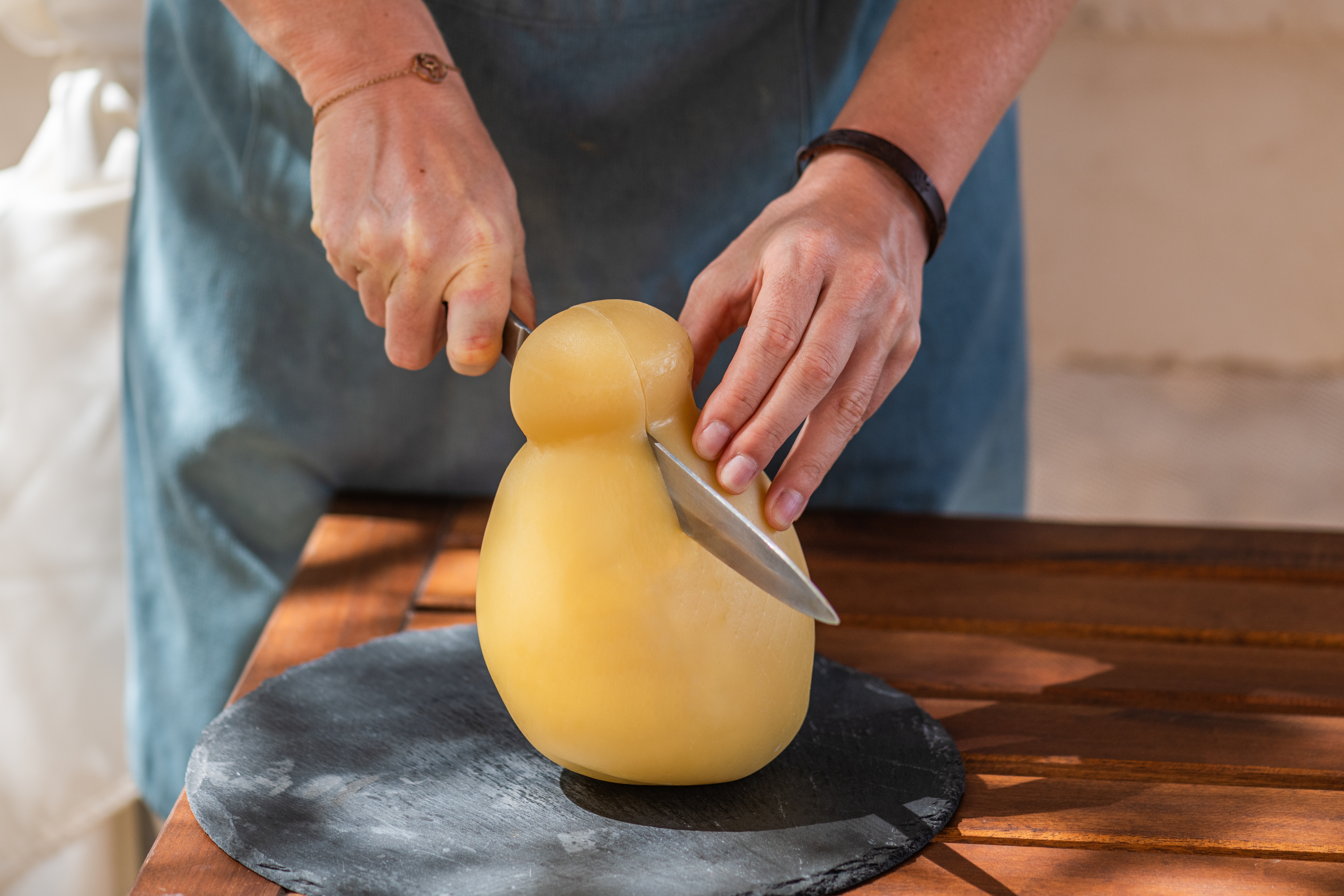
Processed to controlled and traditional methods, this semi-hard, oval cheese (often marked with its origins) is golden yellow, with a creamy paste revealing small holes, giving flavours ranging from sweet to piquant.
It’s distinguished by its unusual presentation, tied with string at the top, creating a ‘head’.
Milk: Cow
Region: Aosta Valley
Fontina is split into three types – PDO, PDO Alpeggio, and PDO Long Seasoning – each with their own identity.
The cheeses are all revered for their melting quality, and nutty, sweetly lactic flavour, enhanced by the cows’ (which each have their own name, horns and bells) diet, roaming over open pasture.
Light brown at the rind, with a pale, straw-coloured paste, it changes depending on the make. Alpeggio varieties require the cows to have grazed at around 2,700m above sea level in summer, munching on indigenous flowers, grasses and herbs, imparting a beautiful sweetness to each bite. While long seasoning Tallegio (black label) is aged in caves for at least 180 days, deepening the dark yellow hue of the paste, and imparting more aromatics and vegetal notes.
Milk: Cow or Sheep
Region: Emilia-Romagna
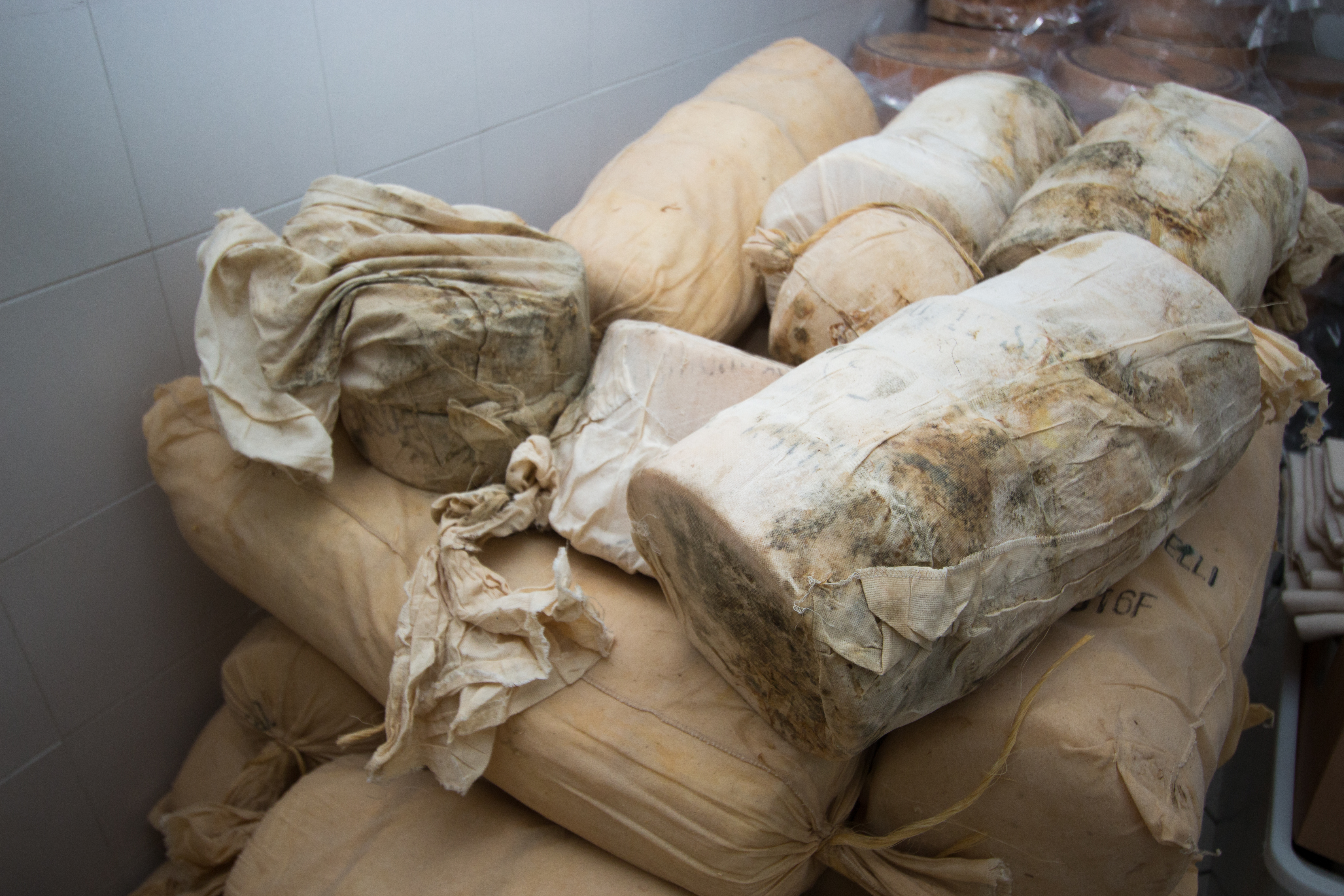
This rustic, almost freeform-looking cheese has quite an interesting past. Historically it was aged in ancient pits, dug into the sandstone rock – likely to prevent it being stolen, but also as a means of preservation during summertime, laying down cheese for autumn and winter.
Today the curd is pressed and salted, and ripened for between 60 and 240 days, being kept in pits that have often been cleaned with fire and smoke, and layered with hay. This cheese is moist, crumbly and bosky, with woody, spicy, truffly notes.
Milk: Cow
Region: Eastern Veneto
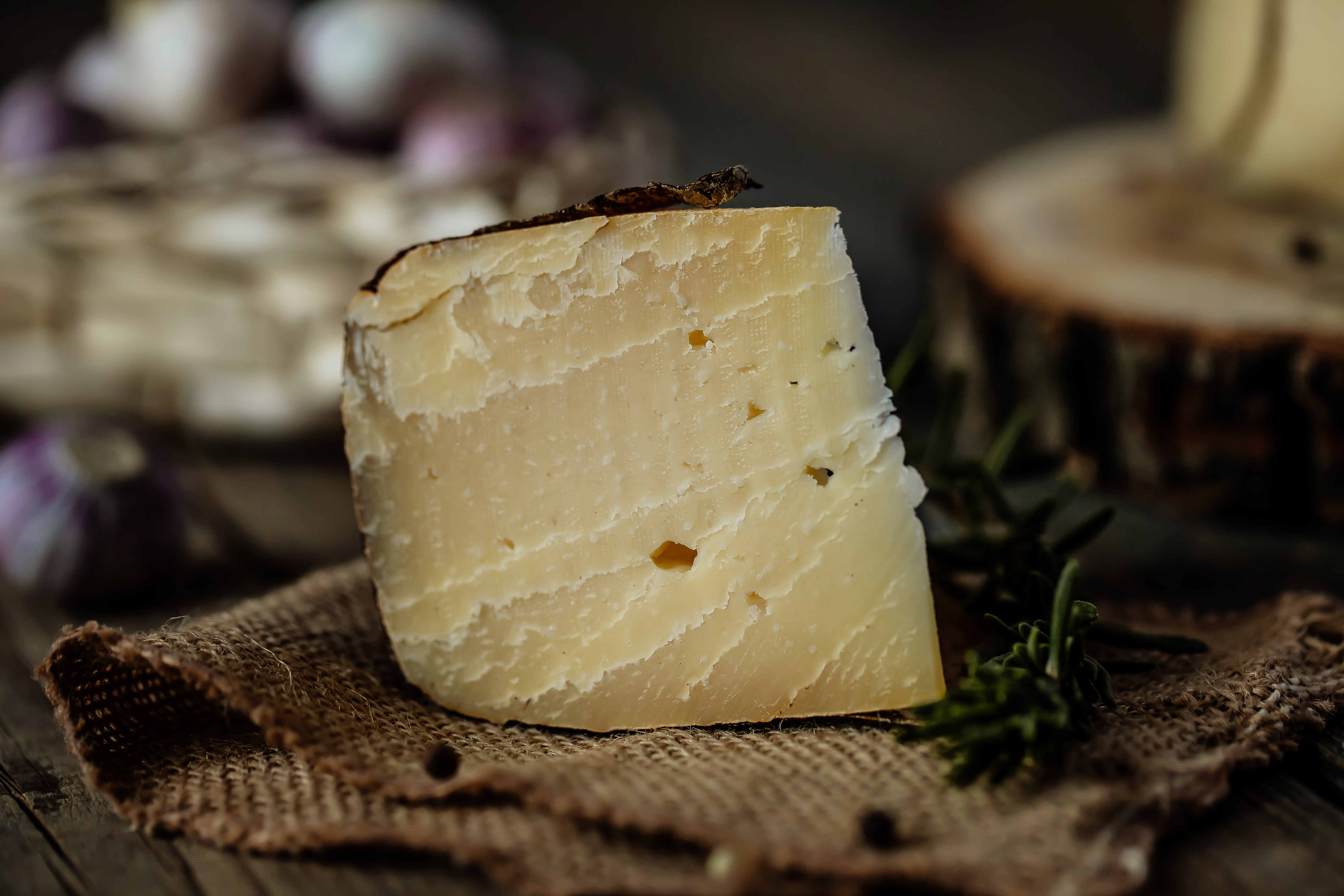
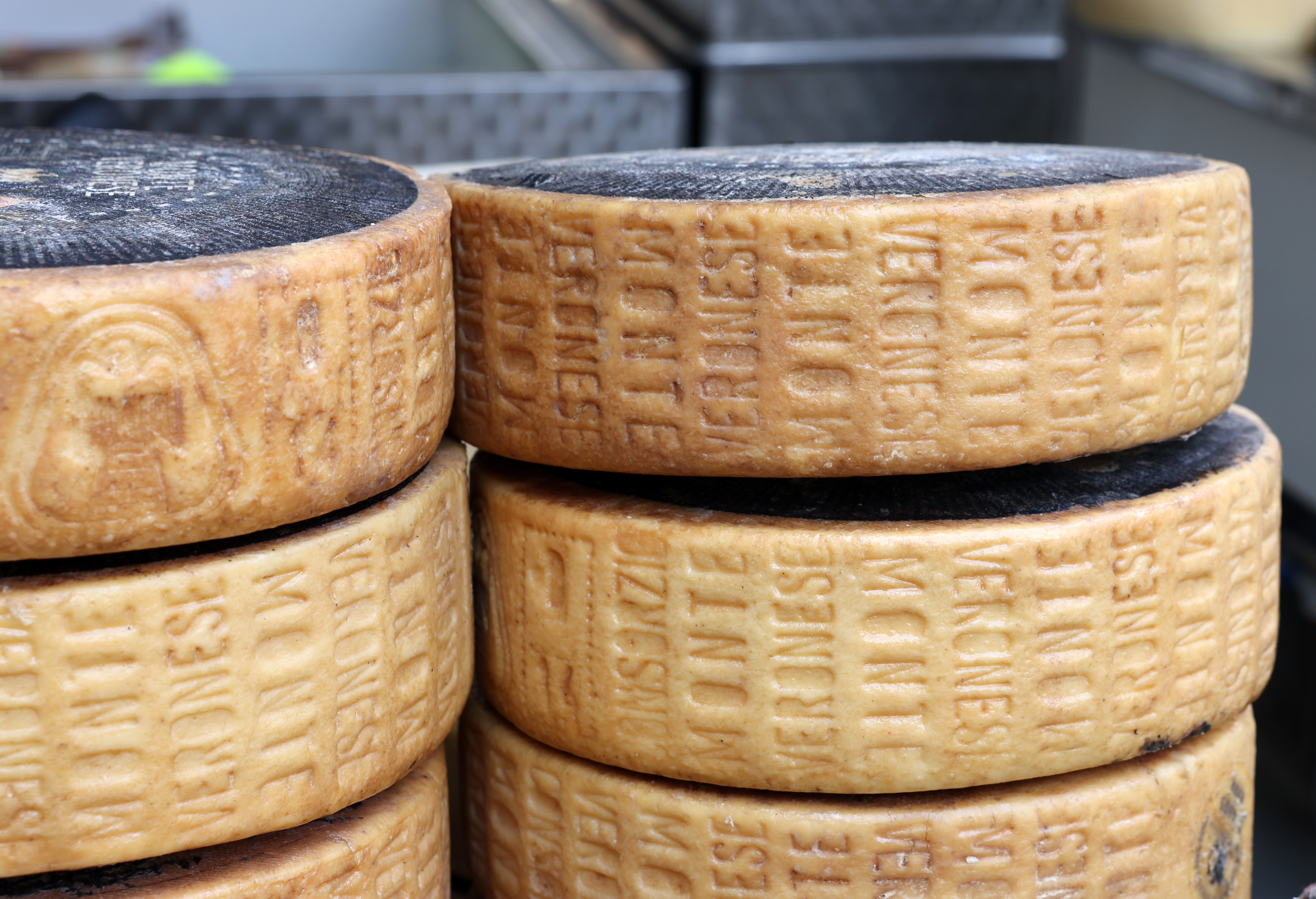
Montasio was first documented more than 250 years ago and has many variations within its PDO. With a thin golden rind and pale paste, sold young (60 to 120 days) it’s smooth and elastic, with lactic notes of yoghurt and cream. At 100 days the cheese is assessed and selected for PDO by the cheese’s dedicated consortium.
Those cheeses aged to five to 10 months (Mezzano) are more full-bodied, with hints of hay and butter. And cheeses taken above 10 months tend to express bold fruit and even a hint of meatiness.
Organic versions are also available, and when the entire process (from feed, to milking, processing and maturing) takes place in mountainous territory, it can be labelled as ‘Mountain Produce’.
Milk: Cow
Region: Veneto
There are two varieties of this cheese - both conjured from the milk of cows which graze along the craggy hillsides of the Dolomites.
The young (matured up to 60 days) version uses whole milk only, giving over a fresh, sweet, delicate taste.
And the Mezzano variety (made with skimmed milk and aged to around six months or more) packs a punch of intensity and sharpness.
Milk: Cow
Region: Veneto
Piave can only be made in a selection of dairies within Veneto’s Belluno province. Tracing its history back to the late 19th Century, many flavour profiles can be eked out from beneath the straw-coloured rind, with five varieties to sample.
These range from fresh (fresco), which delivers dairy notes of yoghurt and butter with a touch of floral, all the way up to the Riserva. Aged to 18 months, Riserva is hard and crumbly, bringing toasty dried fruit and complex spice flavours to the table.
Milk: Cow
Region: Northern Italy
There are several different types of this cheese to enjoy – each with their own PDO status.
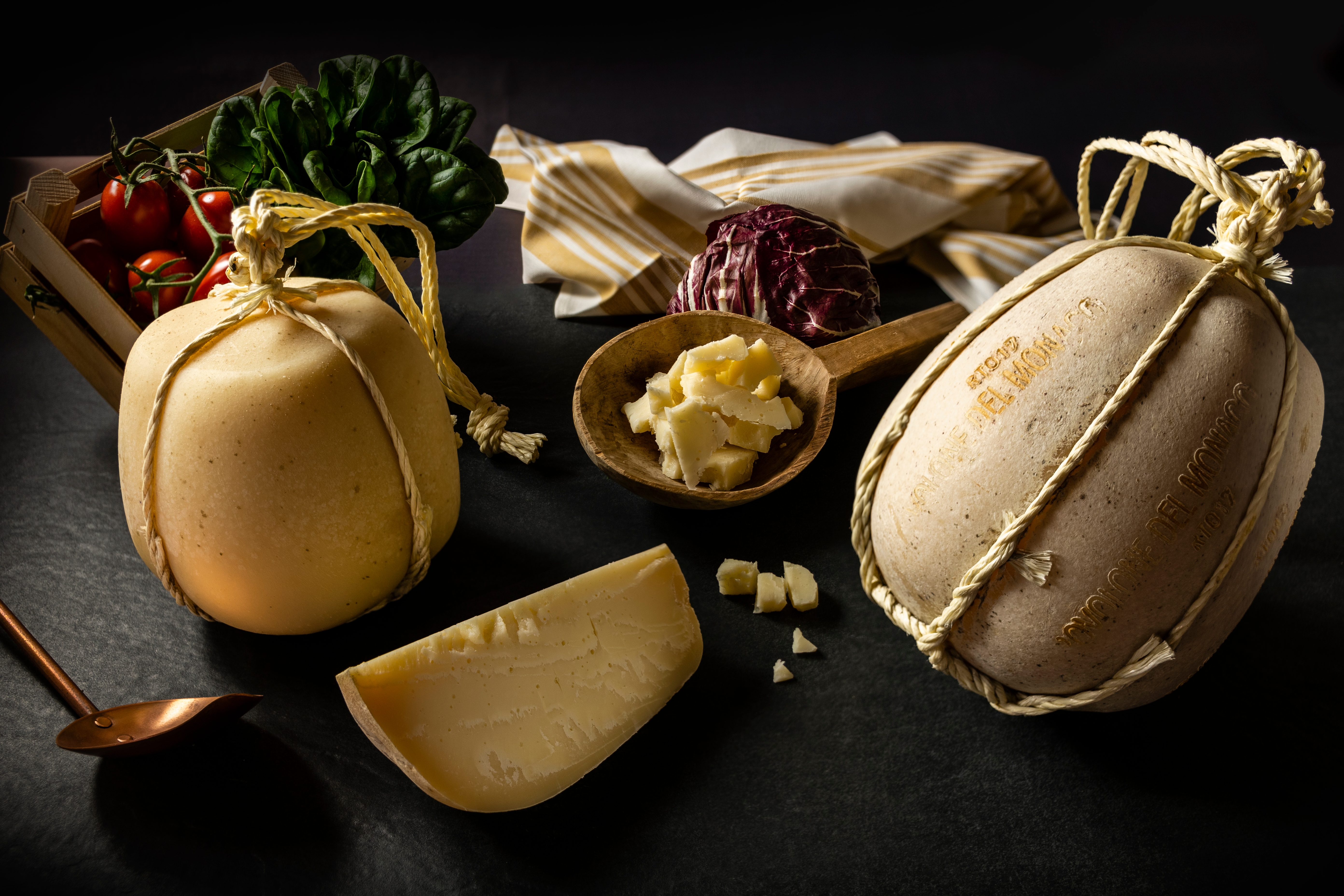
Provolone Valpadana is a spun paste variety, with origins dating back to the Middle Ages. During the spinning process, the ‘ribbon’ of cheese bundles in on itself, and is fashioned into a shape formed without any ‘eyes’. Typical shapes include an elongated salami, melon, cone or flask. And this cheese is available in mild and strong – the stronger cheese matured from three months to a year, accented with flavours from goat or lamb rennet. Smoked and Aged Strong types can also be found.
Then there’s Provolone del Monaco PDO from the Sorrento peninsula, crafted exclusively with raw milk from cows which graze freely in the Lattari mountains. Shaped into long ‘melons’ these range in weight from 2/5kg to 8kg and are matured for at least six months for a sweet, buttery flavour. Beyond this, the cheese darkens and becomes firmer, taking on a nuttiness and touch of spice.
Milk: Cow
Region: Northern Italy
Nothing else looks like a Salva Cremasco. The exterior appears like a weathered, ancient, leathery book – thanks to regular turning and sponging with a saline solution.
Inside, though, the paste often looks akin to a French Tomme, with some breaking down under the thin rind, and a crumbly, fresh, milky heart.
Served as a table cheese, it’s matured for a minimum of 75 days, taking on an aromatic, buttery taste.

Milk: Cow
Region: Lombardy
Being matured in cave-like conditions with 80% humidity, and washed with a salt and water brine encourages the bacteria desired to give this wonderful cheese its very specific aroma and pinky-orange colour.
It can be made with either raw or pasteurised milk, and is aged and turned for at least 35 days, with the paste taking on a sweet, truffly, distinctive flavour.
It’s often used for cooking, but is also lovely drizzled with honey or served alongside fruit as a dessert or cheese plate.
Milk: Cow
Region: Piedmont
Weighing it at between 2kg and 8kg, Toma Piamontese is matured for 15 to around 60 days in dark cellars at 85% humidity, being turned and washed in a salt brine solution regularly to nurture the natural rind.
It can be made with either whole or semi-skimmed milk – the whole version containing more holes and being more pliable than its counterpart, which is darker and more intense.
The usual profile of this cheese is salty, sweet and slightly acidic.
Milk: Sheep
Region: Puglia area
Made in the provinces of Foggia, parts of the province of Bari and Barletta-Andria-Trani, this historic-looking hard cheese takes its rippled, ridged edges from its unique mould.
Flaky, coarse and crumbly under a hard rind. In the make the curd is cut with a specific knife (petto di piccione – translating to ‘pigeon chest’) and preserved in cloth.
It has a salty, spicy, intense flavour that pairs beautifully with the region’s bold red wines.
Milk: Sheep, with 20-30% cow
Region: Emilia-Romagna
Apparently Michaelangelo had a penchant for this small, shallow, round table cheese, which has been made in the region since before the 15th Century.
It has a largely delicately sweet taste and, being semi-cooked, has a crumbly pale paste. It becomes stronger and more interesting as it ages. A great table cheese with a chunk of crusty bread.
Milk: Sheep
Region: Various
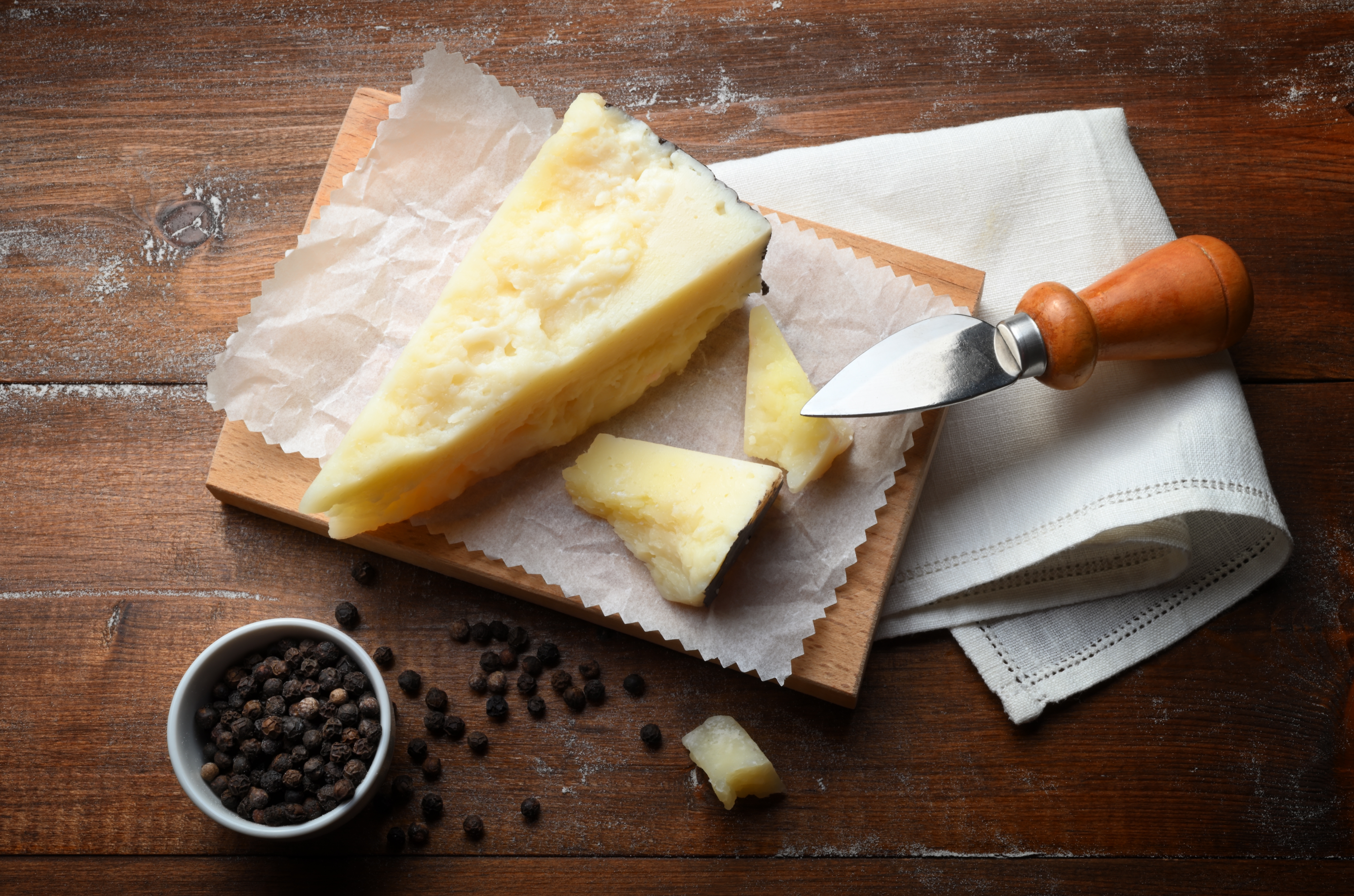
“There are actually so many different varieties of Pecorino,” says Svetlana. “Sometimes people forget, it’s a type of cheese, rather than one specific cheese. There are many hundreds of them in Italy. We stock Pecorino Sardo PDO because it’s very complex and can be used in cooking, or for general enjoyment with a glass of wine.”
This type of Pecorino is made only in Sardinia, using whole milk from local sheep, and is one of the oldest cheeses on the island – its taste enhanced by the wild, natural diet of the flocks. There are two different types – mild and mature.
Mild is sold with a green label and has a thin, smooth rind and pale sweet paste.
The mature (blue label) is lactose free, a straw-like colour, and has occasional small holes. Its taste is strong and tangy and wonderful with a cheeseboard, or to season many dishes.
Pecorino Romano PDO has been made using the milk of sheep grazing the hillsides of Lazio for thousands of years and was included in Roman military rations alongside bread and soup.
The use of lamb rennet gives it a powerful, spicy, deeply savoury taste, revered in many Roman dishes today.
Made across the whole of Tuscany, Pecorino Toscano PDO is available fresh or aged. Fresh, it’s matured for a minimum period of 20 days, and has a light paste with some irregular holes. The flavour and scent is delicate, buttery, clean and sweet with notes of hay.
The aged version is semi-hard, maturing for a minimum of 120 days, during which time it develops well-distributed holes and notes of hay and fruit.
Milk: Sheep
Region: Sicily
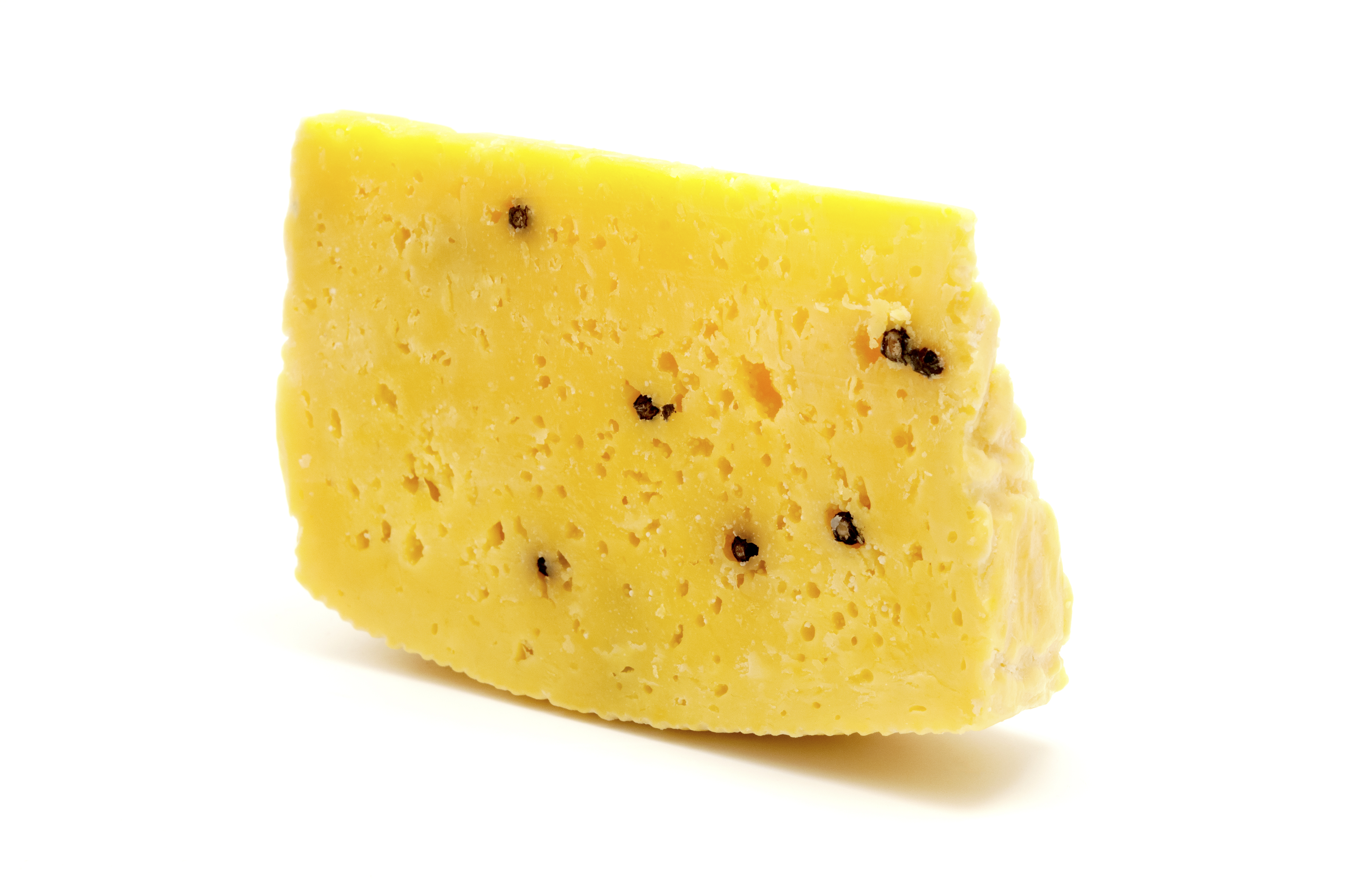
A seriously unique cheese, this is produced only in the landlocked province of Enna, made with whole milk from autumn through to spring. Its golden appearance is achieved by infusing local saffron to the curd once it’s been chopped, with black peppercorns also added to the mix. The cheese is shaped in baskets, and salted twice over 10 days, before maturing for at least 60 days.
Hard, with a grooved rind, Piacentinu Ennese has a sweet, savoury warmth and is a real delicacy.
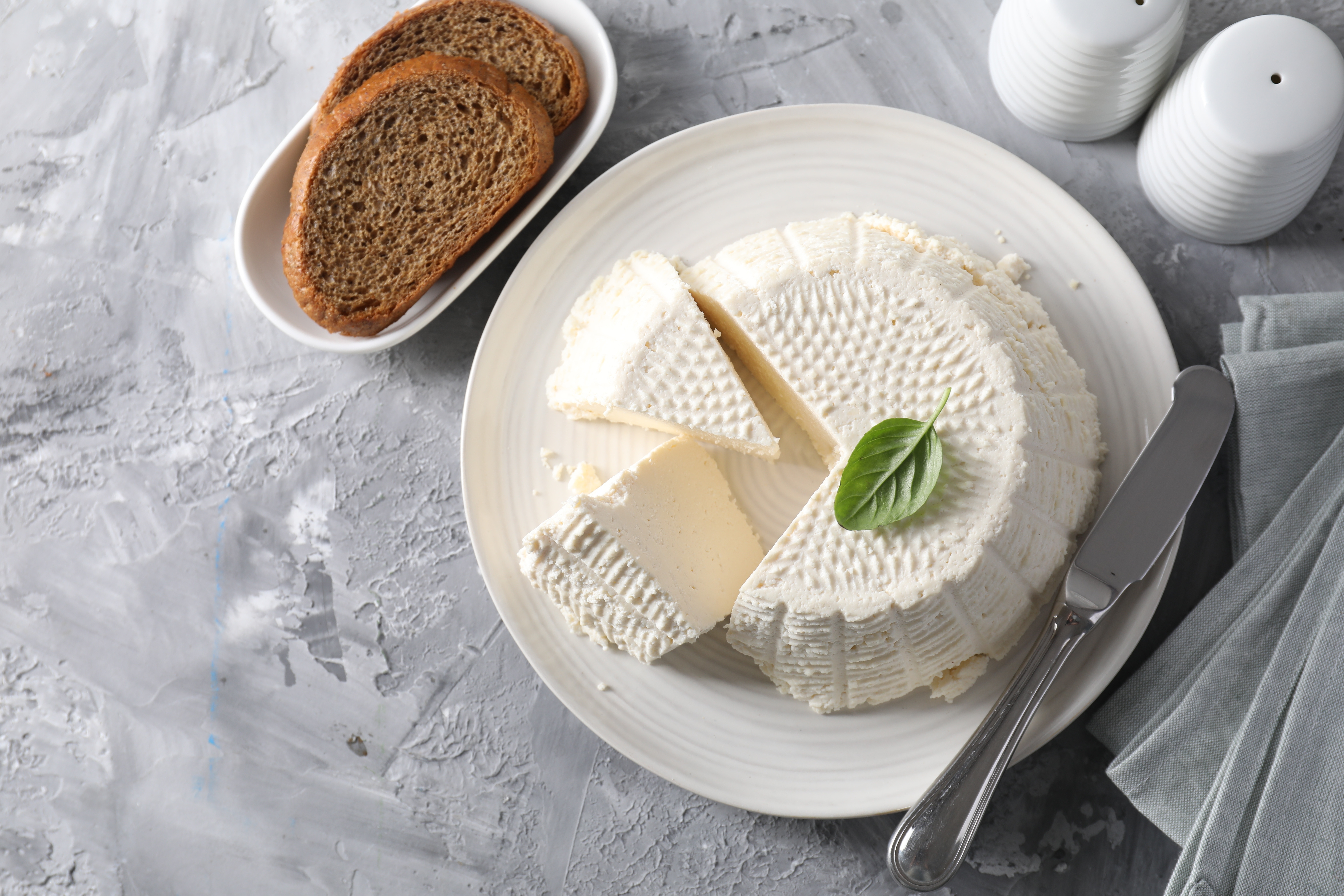
Milk: Sheep
Region: Lazio
Used in both sweet and savoury cooking, ricotta has become a mainstay in kitchens not only in Italy, but across Europe. Pristine, crisp white, with a rippled basket pattern, it’s produced with milk only from sheep farmed in the Lazio region, whose diet consists of whatever they can snuffle and forage in the pastures and meadows. Importantly, the milk must be processed at the dairy within 24 hours, and no chemicals may be added to the cheese.
The result is milky, mild and incredibly versatile.
Milk: Goat
Region: Lombardy
Made exclusively using whole raw milk from specific goat breeds in the Alps, this cheese is produced by around 20 makers due to the painstaking process and demands of the PDO. Aged for a minimum of 20 days, it has a natural rind, sweet flavour, and elastic, moist paste that intensifies as it ages.
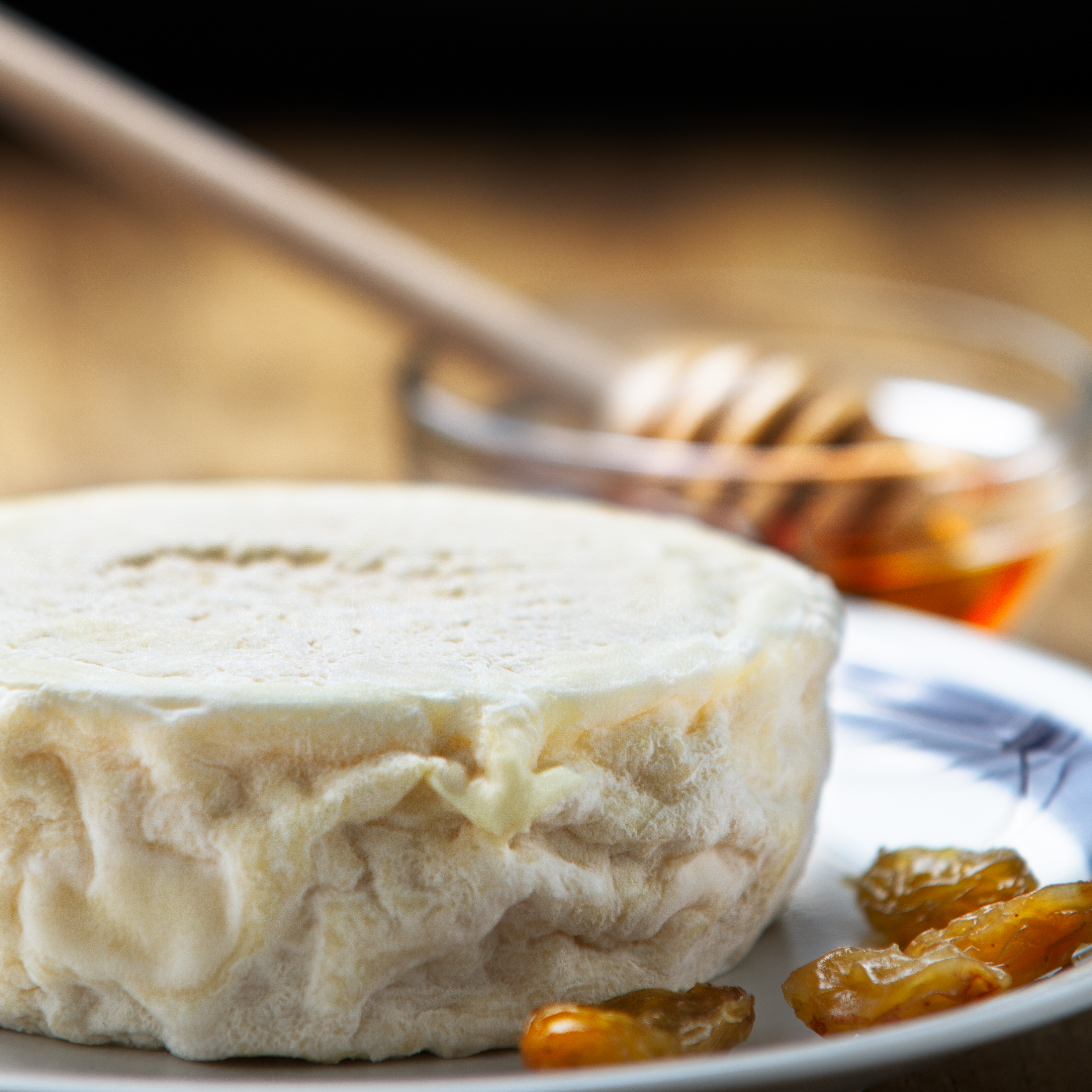
Milk: Goat, sometimes mixed with sheep or cow
Region: Piedmont
Cheese expert and author Ned Palmer has a deep love for Robiola di Roccaverano. Here, he explains why it deserves a place in cheese counters across Britain.
“In the misty hills and valleys of Piedmont, a region in northern Italy bordering the Alps, you will find Robiola di Roccaverano PDO, Italy’s only PDO goat’s milk cheese. Actually, reflecting its origin among a frugal peasantry (who made cheese with whatever milk was to hand) Robiola di Roccaverano PDO can be all goat, mixed with sheep or cow’s milk, or a heady melange of all three. Sheep’s milk adds creaminess and spice, cow’s milk mellows the flavour - a boon to the goat-shy.
“This soft cheese comes in small rounds a little broader than a Camembert, and in a number of variations. Eaten fresh, at under 10 days, it is called fresco, appears pure white and rindless, and has the most delicate flavour, with refreshing acidity, notes of green grass, almonds and the merest suggestion of goatiness. Over time the cheese, now known as affinato, or ‘ripened’, develops a white mould rind, with a red blush, hence its name which comes from the Latin rubeole or ‘ruddy’.
“Age gives a fuller flavour, with white mushroom from the rind, toasted hazelnut, and a more spicy goaty tang in the finish. Beautiful in its unclothed form, Robiola di Roccaverano PDO also comes dressed in a variety of leaves from local trees. Chestnut enhancing the hazelnut note, cherry adding to that red shade, fig leaves - a green so deep as to be almost black - add a little vanilla to the flavour. Loosely wrapped to allow the mould to develop and tied off with a length of raffia, this little cheese presents a beautiful and enticing package.
“Fittingly for a PDO cheese (the letters stand for ‘Protected Denomination of Origin’) Robiola di Roccaverano PDO truly expresses the terroir, or natural environment, of its home. Local flora including sage, thyme and wild rose certainly lend their aromatic characters to the final flavour, but there is more - while industrial producers use freeze-dried powdered starter cultures, artisan makers ferment the milk naturally using whey from the previous day’s cheesemaking - a traditional method.
“The result is the fullest possible expression of terroir, where the unique microbial population of the region and of each individual farm contribute to the delicious, complex character of the cheese. It’s also an ancient way of ensuring food safety, as the richly diverse population of beneficial bacteria habitually outcompete any problematic microbes.
“You don’t have to go far to find something to pair with Robiola di Roccaverano PDO, as Piedmont has an exciting selection of PDO wines, or DOC in the Italian. The mighty Barolo PDO would be a bit hefty, but its lighter sibling Barbaresco PDO with soft tannin, red fruits and notes of rose petals is a friend to the affinato style. Roccaverano is a commune in the province of Asti, which may sound familiar.
“The lesser known Moscato di Asti is a premium version of the well-known sweet sparkling wine whose name means ‘musty’, a note that perfectly complements the mushroom character of an older cheese, while the bubbles combine with the cream to create a lovely mousse in the mouth. For something drier, try a Gavi PDO, whose crisp acidity is perfect with a young Robiola di Roccaverano PDO, adding white peach, almonds and wisteria to its clean fresh flavour.”
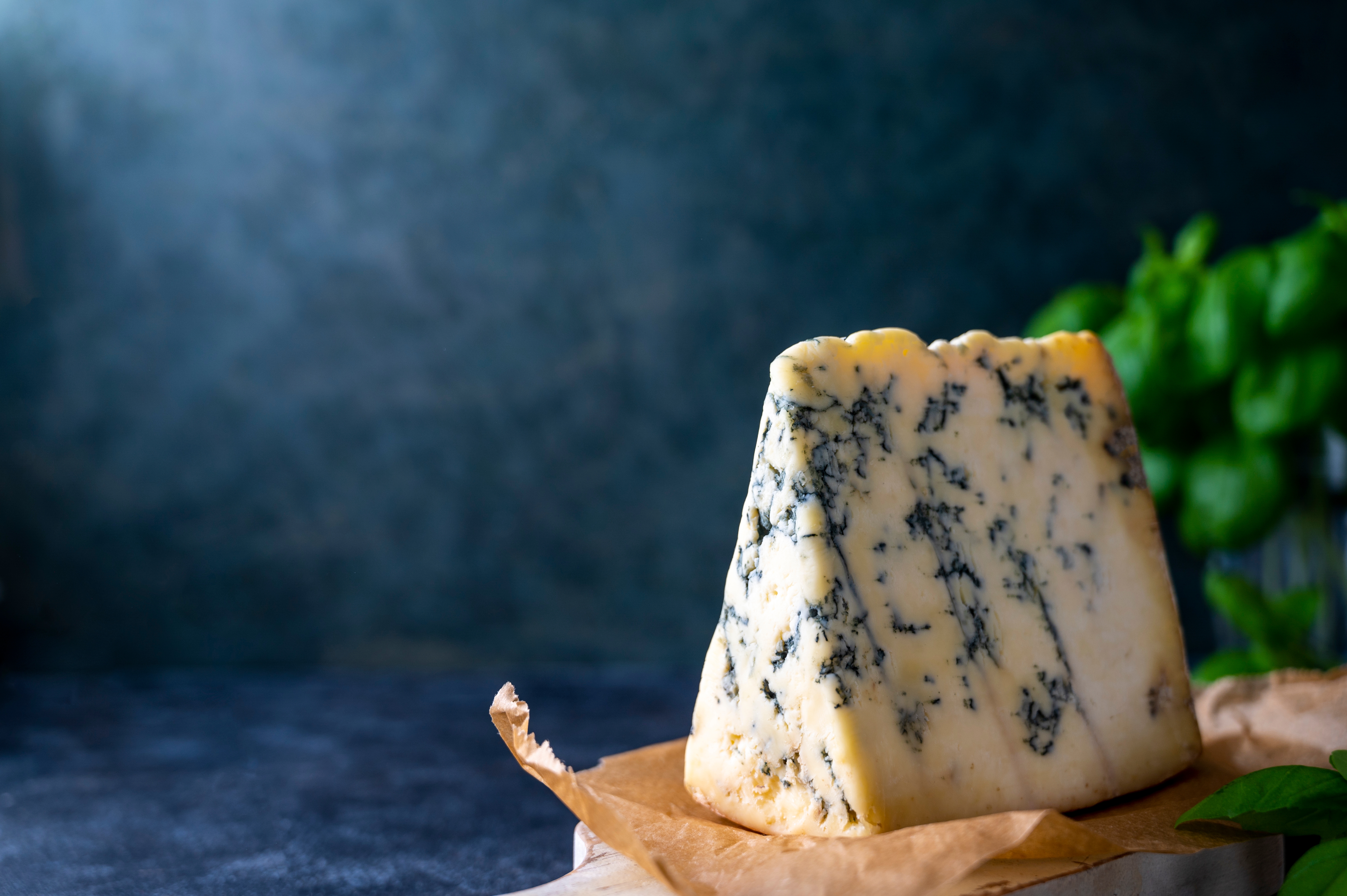
Milk: Cow
Region: Piedmont and Lombardy
Considered the best blue cheese in all of Italy, and loved by cheesemongers and cheese fans in equal measure, you just cannot beat a slice of Gorgonzola.
Both Dolce (sweet) and Piccante (spicier) varieties are made – the former having become a staple in modern delis, where a sense of theatre is created, scooping the melty, gooey cheese into tubs in front of customers.
Apparently the origins of Gorgonzola go back to a mistake in a different cheese make, when curds were left in a damp cellar and added to the next day’s batch. A blue veining developed, and it was so good, it took on a life of its own, initially being called Stracchino di Gorgonzola.
Today, it’s made to strict rules under the PDO, using pasteurised milk, and matured for 50 to 150 days (Dolce) and 80 to 270 (Piccante).
Against the stark, white paste, the uneven, rippling blue veining is a striking green/grey/blue, being sweet, meltingly creamy and herbaceous in Gorgonzola Dolce, and sharp and piquant with minerality in Piccante varieties.
To ensure you have the real deal, look out for the Consortium’s logo ‘CG’ on the foil wrap.
Milk: Cow
Region: Around Bergamo
This blue, with its crusted, wrinkled rind, and marbled creamy blue marbled paste, looks almost like a British territorial, and has a strong lactic, herbaceous scent.
Produced with raw milk, its make involves combining the ‘cold’ evening curd from the previous day, which has been left to drain in clothes for at least half a day, with the ‘hot curd’ from the morning. It’s matured for at least 75 days, and spiked during the maturation process to let the natural blue moulds do their thing.
A really interesting cheese, almost comparable to a young Stilton.
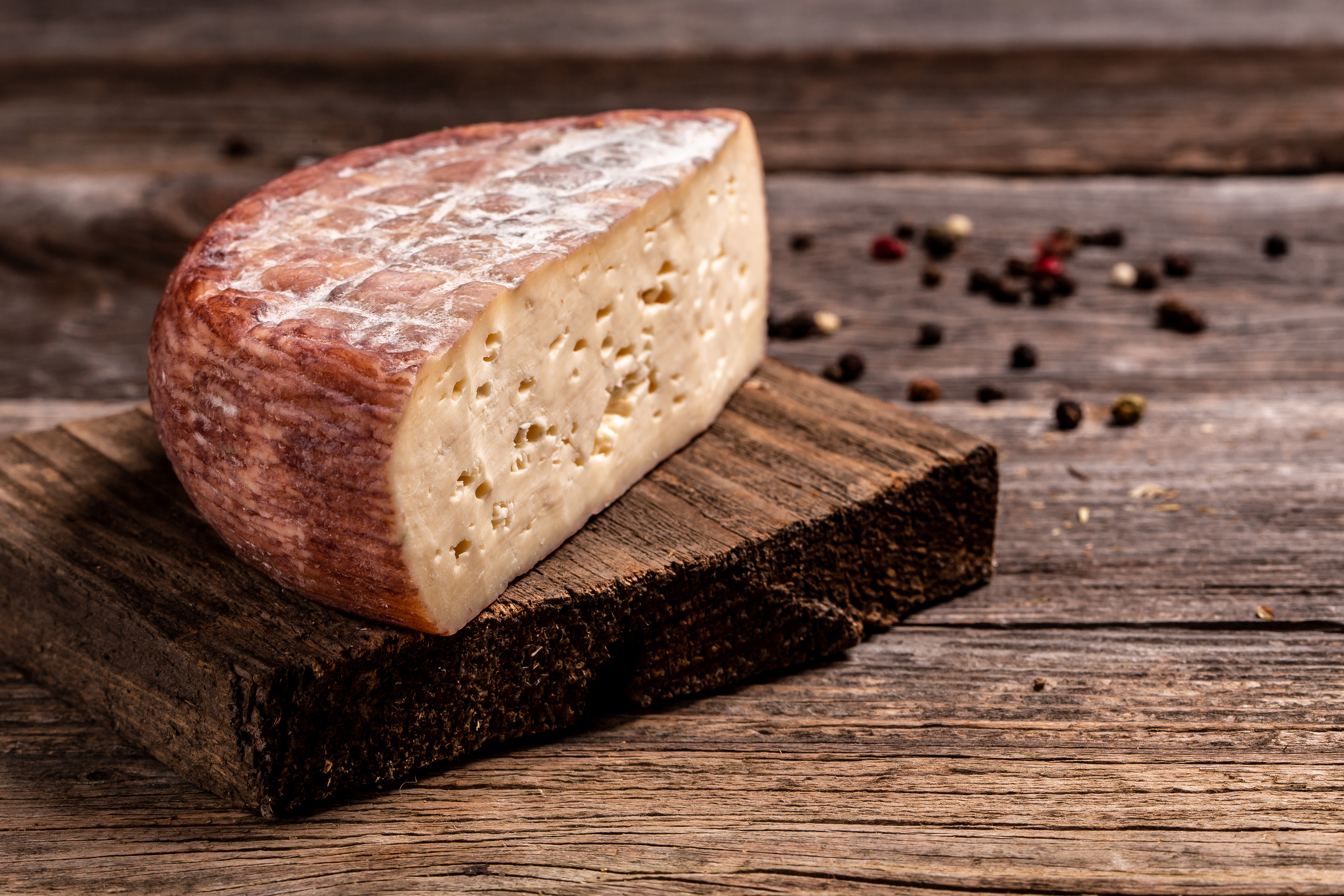
Milk: Any
Region: Veneto
This type of cheese is almost in a category of its own. Hailing from the Veneto region, the process involves soaking a traditional cheese (be it a blue, Parmesan or semi-soft) in a wine or spirit – the cheese taking on the aromas and perfume, utterly changing its profile. Some are then topped with dried fruit or herbs.
Popular varieties are soaked in beer, Prosecco or sweet red wine, and they’re incredibly popular at cheese counters at the UK, especially during the Christmas period.
Svetlana’s favourite is Basajo. “Think of a nice strong blue sheep’s milk, and imagine it bathed in sweet white wine from Sicily. You have the saltiness from the cheese, and the sweetness from the wine. It’s hideously expensive, but worth it,” she says.