Free digital copy
Get Speciality Food magazine delivered to your inbox FREE
Get your free copy
Strict regional ageing standards, cow health and pasture quality can affect cheese quality, taste and texture. Due to these various factors, the cheese category is particularly vulnerable to the effects of climate change—and therefore so too are the cheesemongers who serve it and the farm shops, delis and food halls that stock it.
Independent retailers need to protect their stock, maintain quality, manage energy costs—and keep cheese on display. And this is alongside the challenge of navigating increasingly volatile climate events. According to the UK’s meteorological service, the Met Office, the UK has experienced a record number of heatwaves in 2026.
Furthermore, 2026 is on track to hold the provisional record for the hottest summer in history, with a mean temperature of 16.5°C.
With the summer season’s mean temperature made approximately 130 times more likely by human-induced climate change, the frequency of heatwaves raises several questions: How can independent cheese retailers adapt to these temperature changes? And what are the potential knock-on effects on food availability and quality?
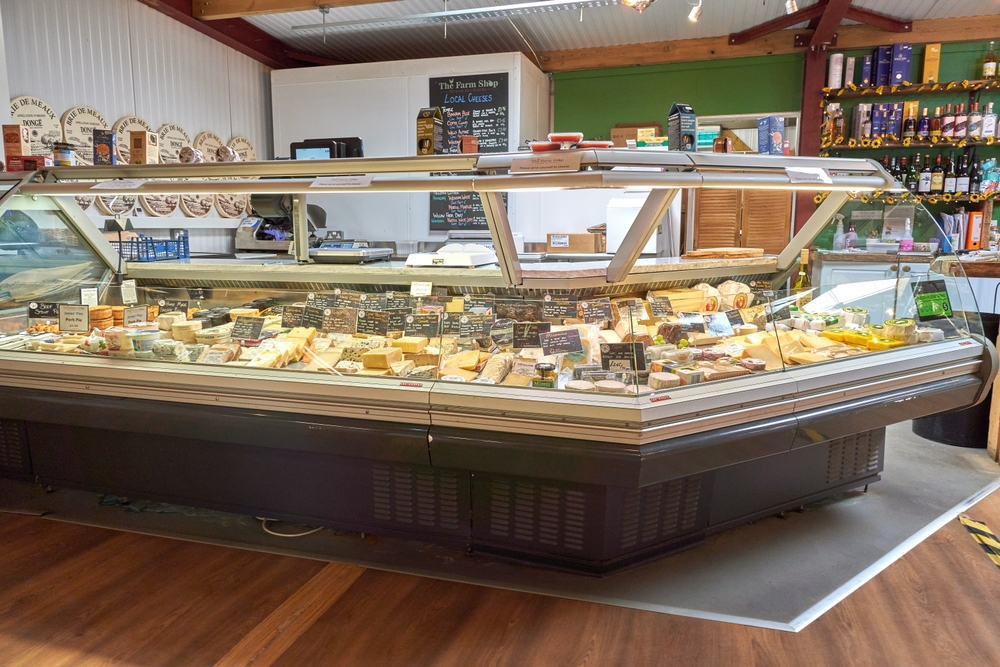
As hot weather sets in, maintaining cheese quality becomes a growing concern. Ensuring cheese displays are aesthetically appealing while controlling temperature and humidity are vital to satisfy functional requirements and consumer demands.
Cheese retailers need to therefore consider what happens when climate-controlled rooms have to contend with an increasingly hostile climate outside.
“Parmigiano Reggiano and other mature hard cheeses are relatively resilient in warmer conditions due to their lower moisture content, particularly compared with softer cheeses,” Mia Cowie, head cheesemonger at The Big Cheese Company, told Speciality Food. “However, prolonged heat and high humidity can still affect their texture, condition and overall quality.”
The Big Cheese Company’s display concept, for instance, was designed with climate change and rising temperatures in mind. Its cheeses are housed in the brand’s cheese gallery behind glass, allowing the company to control its surrounding environment rather than refrigerating the entire store. “It helps us look after the cheese responsibly while still allowing our customers to see, appreciate and celebrate it,” Mia said.
During its open hours, the company’s hard cheeses will sit out on its cheese board. Then, when the store reaches 25°C, particularly in high humidity, all hard cheeses are returned to its cheese gallery as a matter of store policy. The team will also move them back at any time if they feel the conditions or the cheese require it.
Independent cheesemongers and retailers can monitor the climate-related risks in a similar way to preserve the quality and organoleptic properties of their cheese selections, shielding them from intensifying heat when necessary.
Every climate-controlled room is designed around the external conditions it expects to face. Much of a cheese’s ability to withstand climate conditions and maintain quality depends on its environment. “The room itself does much of the work,” Stacy Horseman, head of marketing at Stancold, told Speciality Food.
When those conditions shift beyond the original design assumptions, the system has to work harder and for longer to hold the same conditions inside. “That means higher running costs and more wear on the equipment,” Stacy said.
Insulation and careful detailing separate the internal environment from what is happening outside, so the system isn’t fighting the building and the external conditions. “Where that detailing is weak, you get cold spots, condensation and an internal environment that drifts off target,” Stacy added.
Strengthening the internal environment’s ability to withstand external climate conditions is a priority to ensure it remains resilient and operational regardless of heat intensity.
However, this comes with added practical considerations. Monitoring both temperature and humidity, understanding the requirements of different cheese styles and identifying hotspots around display areas can help cheese retailers respond to changing climate conditions.
“The bigger question is how cheesemongers respond to increasingly frequent periods of extreme heat in a sustainable way,” Mia said.

Ahead of future summers, how can independent retailers protect their cheese collections against rising temperatures and multiple heatwaves while managing the escalating costs of doing so?
Energy bills, equipment performance, the ability to protect stock and the cost of upgrading existing premises could hit retail budgets hard. But for independent cheesemongers, improving temperature does not necessarily require investing in purpose-built, climate-controlled rooms.
As first steps, retailers can check door seals, improve insulation and introduce temperature and humidity monitoring. “We believe the future is in smarter temperature and humidity monitoring, and creating controlled environments around the cheese, rather than using more energy to refrigerate entire retail spaces,” Mia relayed.
Assessing existing heat loss and weak points—and closing these gaps in existing storage areas—could help retailers’ refrigeration systems achieve and maintain more stable conditions while using fewer resources.
During stretches of prolonged or extreme heat, retailers may need to adjust their display quantities, return vulnerable cheese to suitable storage conditions and review the efficiency of their refrigerators to balance cheese quality with energy costs.
Establishing clear procedures for checking conditions and rotating stock can also help reduce waste while ensuring cheese varieties are stored appropriately.
When combined with regular equipment maintenance and adaptable display practices during heatwaves, these measures can help retailers protect cheese quality and manage their energy costs.
Extreme heat can have a significant and disruptive effect on cheese, yes. But it’s not only at the point of entering the retail environment that heat proves problematic for cheese.
“The impact actually starts long before the cheese itself is made,” Vhari Russell, founder of Food Marketing Experts, told Speciality Food. Throughout the wider cheese supply chain, players can also implement smart storage solutions and consider the impact of extreme weather on dairy herds to adapt to climate change.
“Extreme heat stresses dairy cows, and once temperatures top around 40°C, cows eat less and lie down more,” Vhari said. A 2025 study found that extreme heat can cut milk yields by up to 10%, with effects lasting for more than 10 days.
Concerns over reduced yields, supply and quality spur new technologies and applications to manage the on-farm impact of climate change. “I’d expect to see continued investment in farm cooling technology and smarter environmental monitoring,” Vhari shared. “Plus growing interest in more energy-efficient cold storage solutions for maturation warehouses, given how directly rising energy costs are now hitting producers’ margins.”
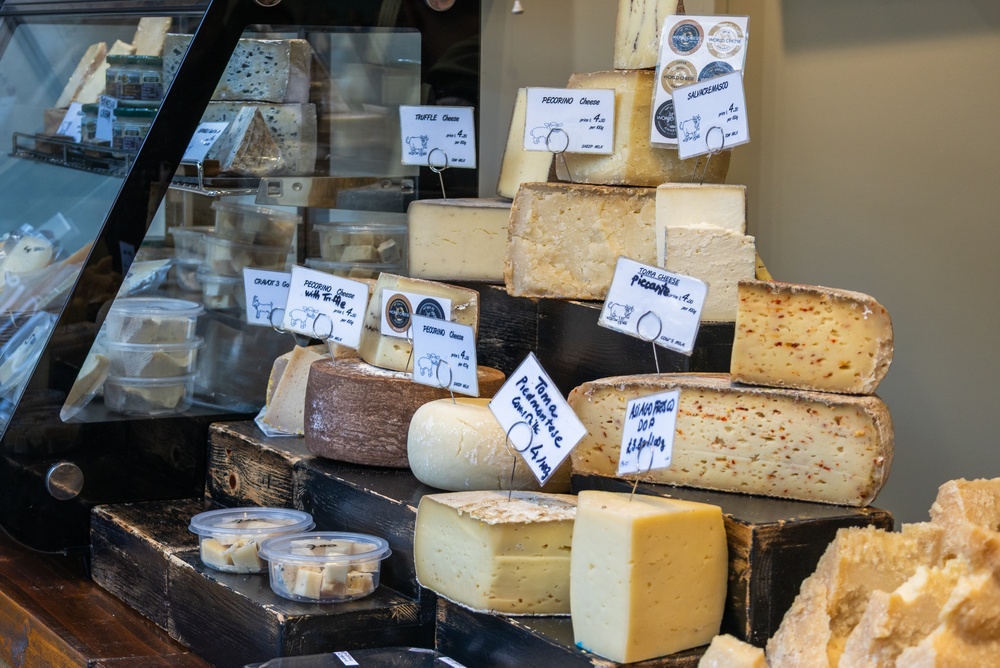
The ultimate challenge is how specialist cheesemongers and independent retailers can retain the quality and character that shoppers expect while managing the operational costs and environmental considerations associated with production. “It’s about protecting the quality of the cheese while being responsible about the energy required to do so,” Mia shared.
As temperatures rise and heatwaves become more frequent, retailers may need to rethink how they store, display and manage their cheese ranges. However, adapting to a warmer climate does not have to involve investing in costly new infrastructure.
Identifying fluctuations using temperature and humidity monitoring is key. Reviewing insulation, refrigeration performance and equipment maintenance can also help create stable conditions without unnecessary energy use.
Increasingly, display decisions will be a key part of a successful storage strategy. Keeping smaller quantities of cheese on display during particularly hot weather, replenishing stock more frequently and returning products to suitable storage when conditions require could also help protect quality and reduce waste. Adaptability is crucial too, as individual storage needs vary by cheese type.
Building and keeping strong relationships with suppliers can also help retailers anticipate potential challenges across the supply chain. As heat stress in dairy herds and rising production costs may affect the availability and prices of some cheeses, regular communication with producers and wholesalers can reduce unknowns.