Free digital copy
Get Speciality Food magazine delivered to your inbox FREE
Get your free copy

Europe is rightly revered and applauded for its exquisite, varied, devoted cheesemaking heritage.
The creamy, unctuous, yielding Bries of France; Italy’s melting Gorgonzola, mottled with a palette of cobalt and cerulean blues; Spain’s moreishly snackable Manchego.
This trio, along with a breadth of others (Parmigiano-Reggiano, Gruyere, Emmentaler, for example) may well form a significant slice of your Continental offering – but look a little closer, and you’ll see the cheese landscape of the EU has so much more to deliver for you and your customers.
Over 300 (Protected Geographical Indication) and PDO (Protected Designation of Origin) varieties, crafted on pillars of tradition, quality, authenticity and expertise. And exciting new cheeses, taking their cue from the masters, bringing freshness and a modern touch to an industry that’s been emboldened by growing consumer interest in ‘real’ food, the best ingredients, sustainability and traceability.
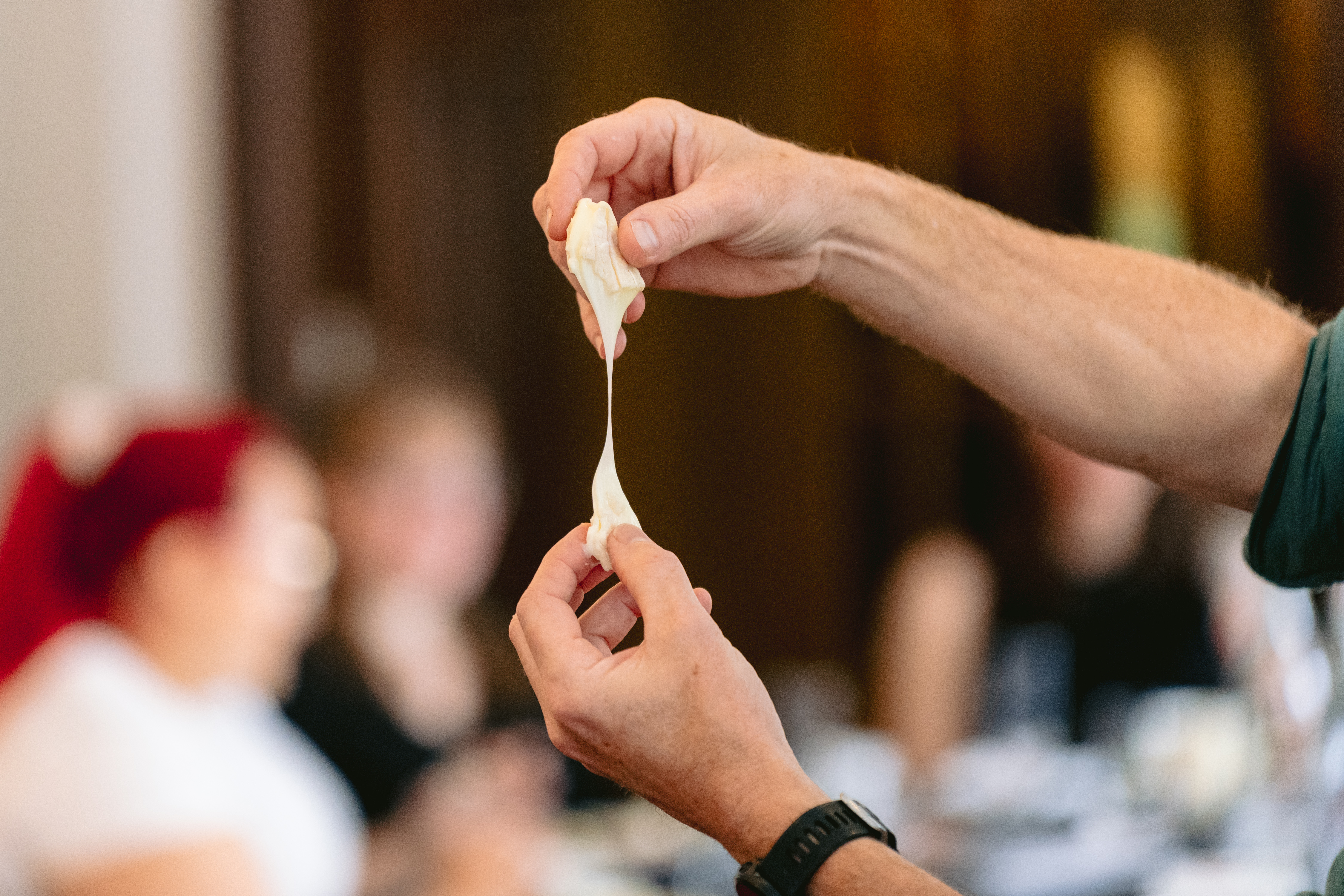
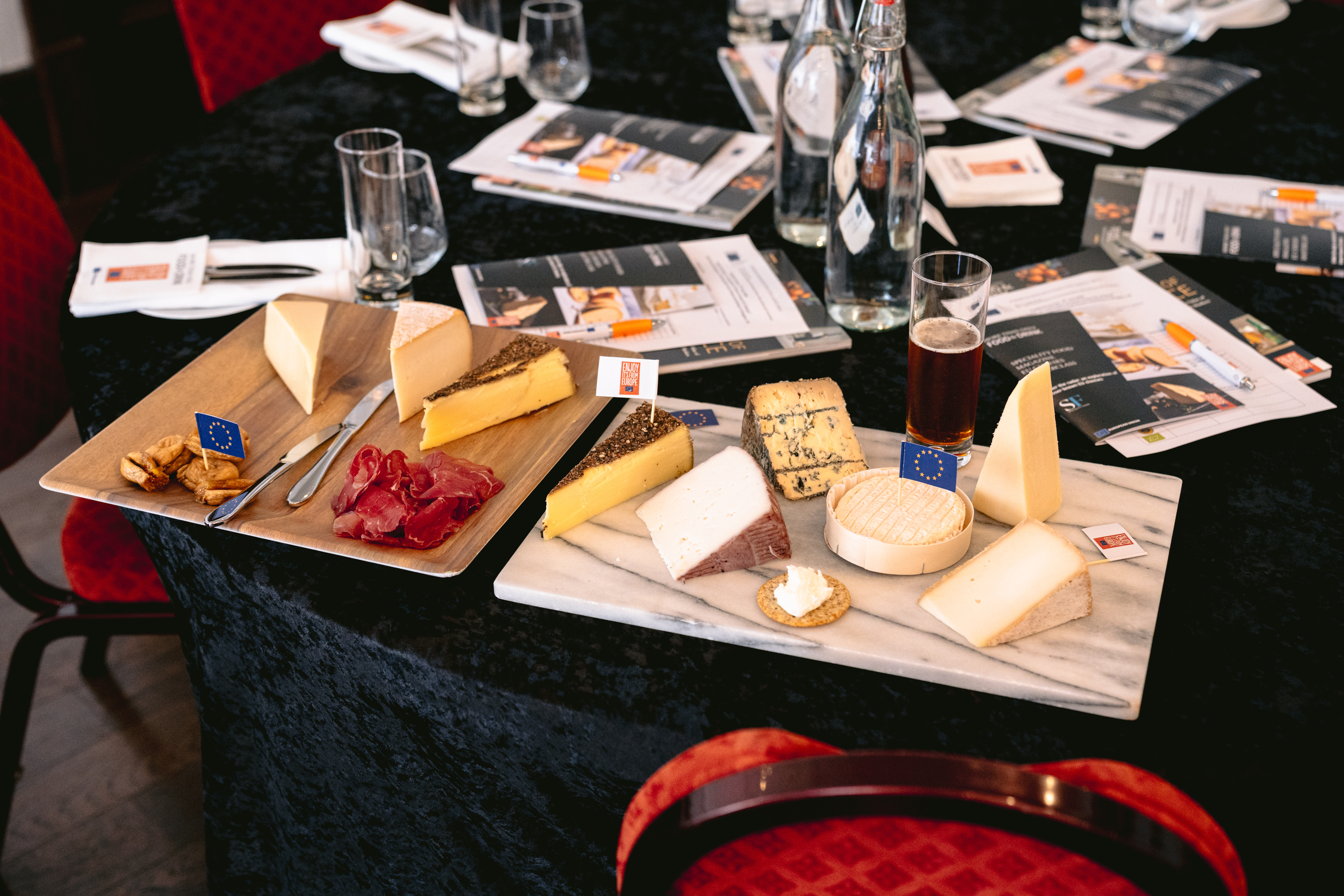
Speciality Food, in collaboration with the EU’s More Than Only Food & Drink campaign, recently held a masterclass in some of Europe’s lesser-known cheese varieties.
Led by cheese writer and expert, Patrick McGuigan, it gave retailers and hospitality operators a glimpse into the window of what’s available to breathe new life and excitement into their business.
Attendees said they found it a fascinating voyage of discovery – Patrick leading them in a tutored tasting spanning eight countries, demonstrating why the EU is an “absolute powerhouse” for cheese production.
Retailers and consumers can put their trust in EU cheeses thanks to stringent measures across the dairy industry designed to safeguard the environment, animal welfare, authenticity, and quality.
Safety: All EU farms must be registered, giving full traceability along the supply chain. There are strict controls around all practises, particularly the health of animals. Every product carries an ID mark, tracing milk back to its farm of origin.
Trust & Quality: Centuries of expertise and traditional methods are used to preserve local flavours and characteristics, while reducing the need for artificial ingredients and preservatives, which are very strictly regulated. Labels must have clear details of product origins and the producer.
Sustainability: The EU sustainability strategy has been designed to protect the environment while supporting farmers and their livelihoods.
Key factors are conserving biodiversity, protecting local animal breeds, and lowering chemical use, with an aim for 25% of EU agricultural land to be farmed organically by 2030. Many dairies have adopted circular solutions to improve soil, recycling nitrogen, and optimising animal feed to reduce methane emissions.
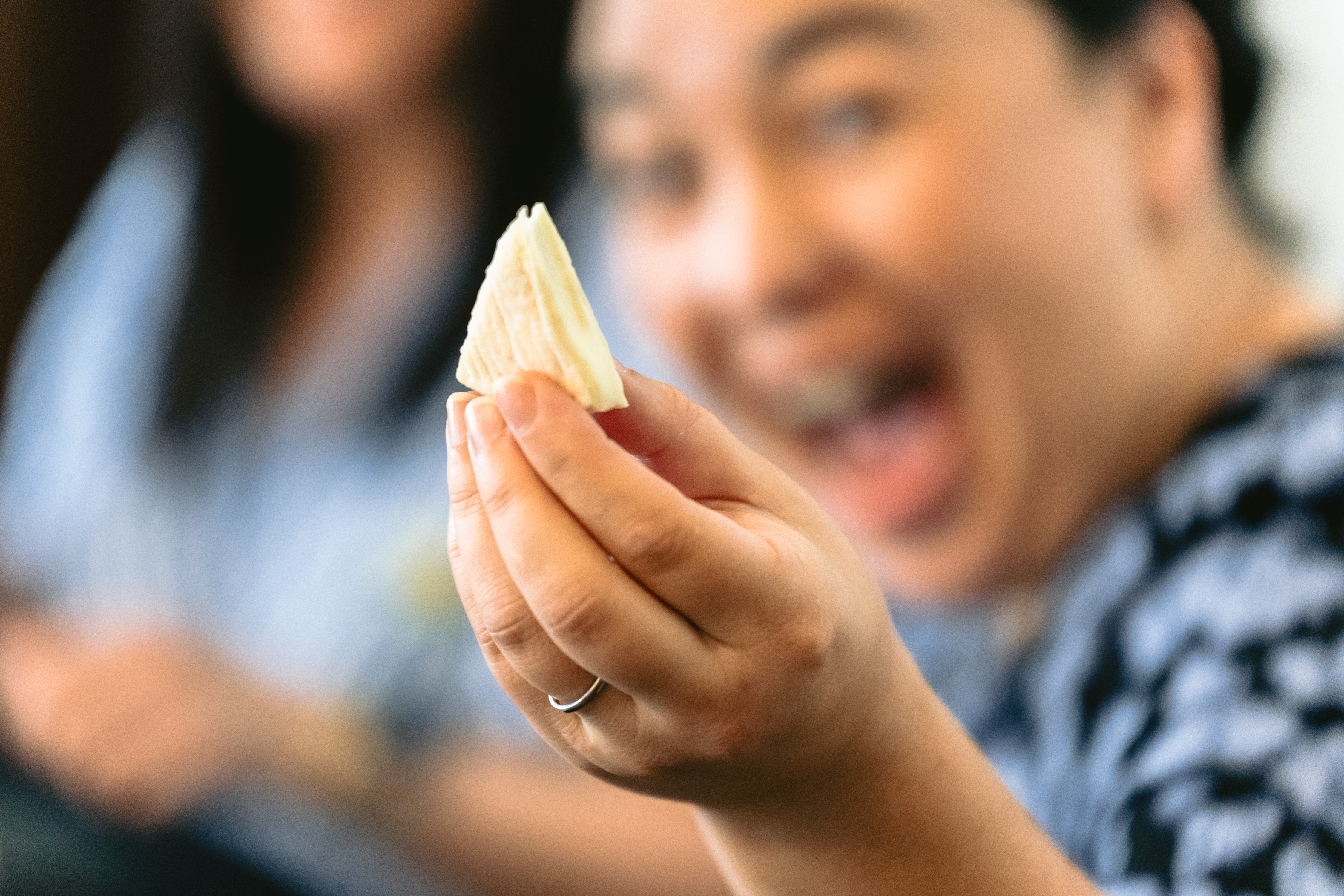
Stay ahead of the curve with these upward trends suggested by Patrick…
Girolles, which slice semi-hard to hard cheeses into lightly furled ‘flowers’, are all the rage. Not only do these speciality devices cut melt-in-the-mouth thin pieces of cheese, but the results are stunning, helping customers to create real ‘wow’ centrepieces. Hiring out or selling these, alongside suitable smaller, hard cheeses, is a modern must – if you have space.
Pairings are going bigger, bolder and more unusual. Don’t be afraid to offer something you might consider ‘challenging’ at the counter or on your menu alongside cheese. Modern cheese lovers are all for exploration. Think fudge with blue cheese, or shiitake mushroom salad with a washed-rind cheese.
Cheese layering is happening right now. Customers are, for example, buying a large Brie for a party, slicing out the centre, and popping a ripe Époisses PDO in the centre for dipping.
Cheese plates are having their moment. Served as small plates, appetisers or standalone desserts, offering a single cheese with something delicious prepared specially to go alongside it, is hot right now. That might be a strong, hard cheese with a slice of homemade malt loaf or an Eccles cake, blue cheese brûléed alongside caramelised white chocolate shards, or a washed-rind paired with a homemade digestive biscuit, drizzled in local honey.
Picky bits and snacking plates are chiming with consumers. Think of ways to inspire them at the counter. You might want to put aperitifs and Vermouths front and centre of a nearby display, with pots of salted almonds, fancy crisps, and the best quality dried fruits. Demonstrate how they can put together quick picky teas using European cheeses and prime ready-to-eat ingredients.
Whipped feta is everywhere. All the premium and mid-range supermarkets now have a version of it in their chiller aisles, and there’s nothing stopping you from making your own, prioritising and demonstrating that you’re using the best Feta PDO. Again, this can be sold alongside sweet and savoury accompaniments, from crackers and grilled artichokes, to fruits, honey and nuts.
Cheese gougères (loved at dinners parties in the 70s and 80s) have made a comeback, big time, in hospitality. Customers love the theatre of these puffy cheese bombs (made usually with Gruyère PGI or Comté PDO) landing on the table, and waiting staff theatrically grating even more cheese over the top. It’s Instagrammable, and delicious.
This raw, lactic set cheese from Aveyron in the Midi-Pyrenees is a by-product of Roquefort production, made using leftover milk from the Lacaune sheep breed, who graze across the wild pastures of the Grands Causses. “The terrain in this part of France is so unique,” Patrick explained. “There are plants there that just won’t grow in the UK.”
This diet contributes to the overall impression of the cheese, with its delicate, bloomy rind, velvety texture and buttery, earthy notes of wood, sweet hay, and roast lamb.
“It’s got a lot of richness and fattiness,” Patrick said. “It’s quite musky and savoury but subtle and it keeps going, opening up the more you chew it.”
Often spread on bread, this is a versatile cheese that taps into increasing UK demand for soft sheep and goats’ milk varieties.
This cheese is traditionally made in the harbour town of Sitia in Eastern Crete, with raw goats’ milk, sheep’s milk, or a blend of both. Recognised with PDO status in 2011, its name comes from the Greek oxygala, roughly translating to acid-milk. It’s a simple, sharp, very soft spreadable cheese, made purely with milk, a little added salt, and sometimes a small amount of rennet. Cretans enjoy it year-round as a spread or dip, also incorporating it into salads and cooking.
“I like that it’s a bit yoghurty,” Patrick revealed. “What they do is take the milk and let it acidify for a long time. You’re literally leaving your milk for up to 10 days until it eventually splits and sets into this really delicate curd.”
This process is one of time and tradition, he explained. “The landscape is dry in Crete – around 40C in summer. It’s not suitable for cows, but the special breeds of goat and sheep that live there are very tough. This is what we mean when we talk about a sense of place and terroir.
“The reason the milk is left for a long time, is that you don’t get a lot from a sheep, so you continuously add the next day’s milk. It’s a way to make use of what you’ve got.” Patrick found the cheese “fluffy, fresh and zingy” and said he felt it would work best with herbs, honey, crisp bread, watermelon and fresh tomatoes.
Stock this, and your customers will immediately ask, ‘what’s that?’. Queso de Murcia al Vino PDO’s unique, showstopping magenta colour is conjured from the cheese being soaked in Monastrell wine sourced from Jumilla, Yecla and Bullas – combining two of the region’s biggest agriproducts.
This is a brilliant demonstration of the partnerships fostered between producers within the EU – one traditional maker working alongside another to create something striking representing the place they are proud of.
Pasteurised goats’ milk is used in the make, from the very hardy Murciano-Granadina breed – a hardy, sturdy animal that’s adapted to the hot climate.
“Goats are better suited to the landscape here,” said Patrick. “It’s sparse and mountainous. A lot of work has gone on in this part of Spain to encourage shepherds to use this breed, and this cheese is really helping because you have to use their milk to make it.”
Aged for a minimum of 30 to 45 days, but often longer, the cheese can be soft (lightly pressed) or cured, resulting in a crisp white paste, in contrast to the pinky-red exterior. It’s perfectly suited to today’s lover of ‘picky teas’.
Artisan cheesemaking is on the rise in Sweden, and this striking organic blue (inspired by France’s Bleu D’Auvergne) showcases some of the best of what the country has to offer. “Sweden is a very interesting place for cheese,” explained Patrick. “There’s a real revolution of cheesemaking there. A lot of it became industrial in the 60s and 70s, and small farms went out of business. But there’s been a rise in smaller makers. Only a few producers exist, but there’s some really nice cheeses coming out of there.”
More and more consumers in both retail and restaurants, are reaching for something ‘new’ or ‘unusual’, searching for niche varieties like this, is “an easy way to add a point of difference to your menu and get real conversations started”.
Sörmlands Ädel PGI is made with low-pasteurised organic whole cow’s milk, and aged from five to 12 months, coming in a small, 3kg, format. Made to a traditional process, it has a warm yellow surface, mottled walnut brown and dark grey, with even blueing in the paste, which bursts with complexity: umami and caramel notes, the aroma of sour cream, butter, woodlands and truffle, and tastes of toasted almond, digestive biscuits and white chocolate. A treat with honey, figs, or sweet biscuits.
Lithuania isn’t somewhere that might immediately spring to mind when you think of cheese, but the country is justly proud of its Džiugas PGI – a pasteurised cow’s milk variety named for the legendary giant and warrior. Tales speak of Džiugas being a fearless, humungous knight, who built Telšiai, dug out the city’s lake, and fashioned the nearby landscape.
There are four maturations of this cheese, from 12 to 48 months – with some very rare versions going slightly over this ageing. Produced using summer milk from cows grazed on pasture, its profile switches between sweet and smooth, to savoury, spicy, hard and crystalline. It’s one of Lithuania’s most important dairy exports.
“It’s very smooth on the outside,” Patrick explained. “That’s because they stagger the ageing, putting the cheeses on their sides on rollers, and turning them every few days. So it doesn’t really have a rind.” Džiugas works as a cheeseboard feature, or across cooking.
Alp Blossom – rolled in colourful Alpine flowers – has become a modern classic in British cheese counters. Retailers have long told us it’s one of their bestsellers. This popularity has paved the way for the success of Shadow Blossom, created by the same producer, Albert Krauss of Hofkäserei Kraus in Germany’s Allgäu region.
The recipe was developed with Michelin starred restaurant, Schattbuch, coating the smooth, rich Alpine-style cheese (created with thermised milk from two local farms and aged to three months), with wild Madagascar, long, tailed and kampot peppercorns, crushed pink peppercorns, and cardamom. This number packs a real punch, being sweet and melting in the mouth, with a lingering warmth from the rind. We’re starting to see its star rise in the UK already.
This organic, raw goats’ milk cheese from Belgium’s East Flanders region is made in the traditional abbey style, with a washed rind giving it an approachable character.
Semi-soft, it was developed by one of the country’s early artisan organic cheese producers and pioneers, part of a co-operative of three friends rebelling against factory-made, mass-produced cheese.
Underneath the orange-brown, subtle rind, Cabriolait is milder than you might expect of this variety. There are sweet, milky notes, hints of brioche and toasted nut, underpinned by a tang of acidity. The ‘funkiness’ is understated, making this a fantastic discovery cheese for customers unsure about dipping their toes in the washed rind world.