Free digital copy
Get Speciality Food magazine delivered to your inbox FREE
Get your free copy

So you’re stocking incredible produce. Your staff are seriously on point, know their stuff, and deliver unwaveringly good service. And your curated merchandising displays knock the socks off the local multiples.
What next?
Today’s customers are increasingly demanding more from speciality retailers, considering their visits to these businesses an experience – something to put in the diary and look forward to. From farm trails and vineyard tasting rooms, to drive-thrus and food lockers – here are ideas to consider if you’re thinking about adding value to your site.
Fen Farm Dairy famously innovated with its milk vending machines more than a decade ago – paving the way for others to follow in its footsteps. Another unique mechanism to get products to customers is via food lockers.
The family behind Upper Dysart Larder in Scotland were so blown away by the advances in food locker tech, they designed an entire farm shop around it.
Jessica Squires says it’s one of the best decisions they’ve ever made, with the offering having expanded significantly to include everything from their own premium mashed potato products, to cheeseboards – each item individually housed and accessed from its own glass-fronted box.
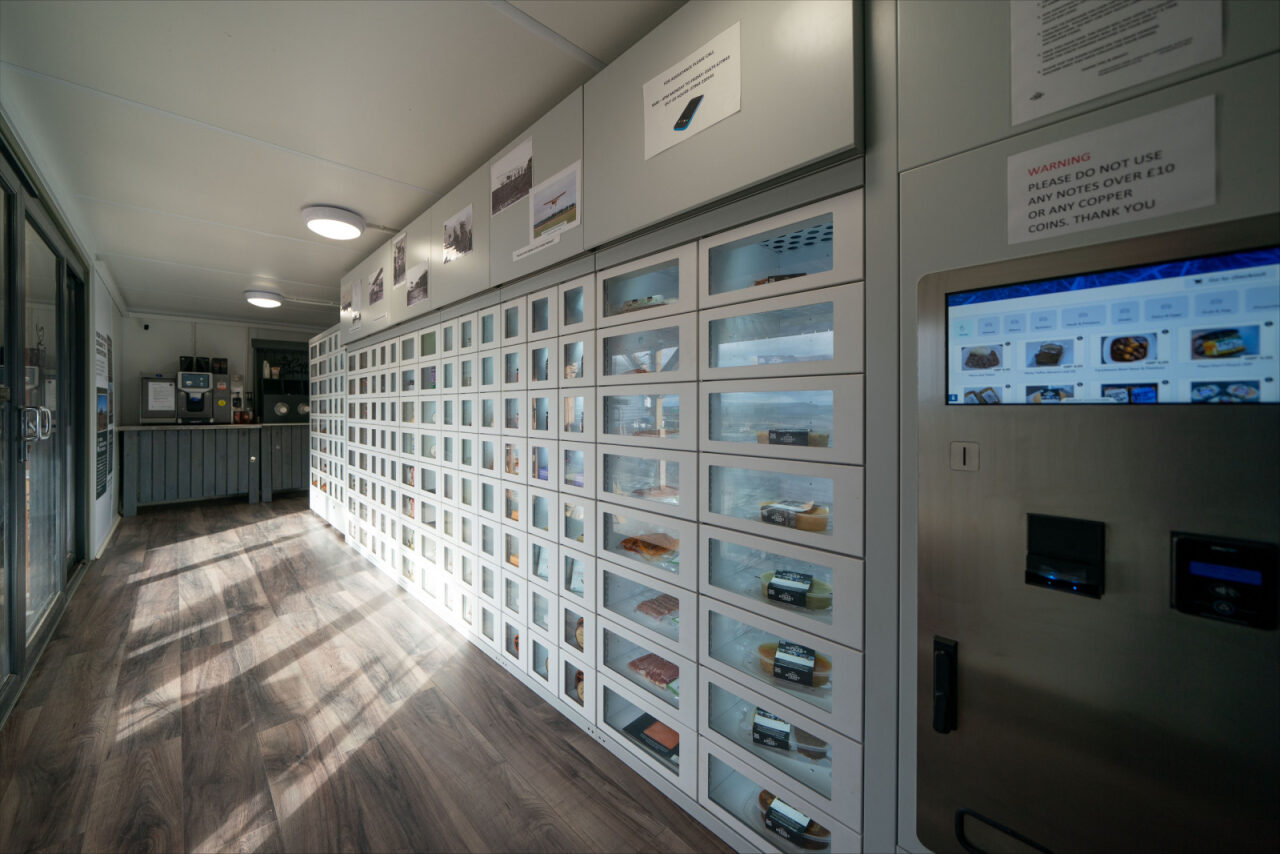
“It’s like an iPad on a screen,” Jessica explains. “Customers look around in the lockers, go through the categories on the screen, can flick through all the products and find out more, including allergy information and the price, pick what they want. Then they can pay by cash or card. A new update is that all the lockers go dark after that, and the lockers you’ve picked light up. You go around, pick up the bits you’ve bought and away you go. It’s so easy to use.”
If you’re based near a busy through route (like an A road or motorway), maybe it’s time to think about offering something a little outside the box to make daytrippers’ and holidaymakers’ journeys smoother (and more delicious)?
The Rhug Estate’s own solution to capturing this market was opening the UK’s first drive-thru (something Friday Street Farm Shop in Suffolk has recently replicated) at its location in Corwen, North Wales.
It gives those passing by (plus locals) a quick and healthy option compared to what’s available at typical motorway services, and has been warmly received since opening in 2018, especially as there are also multiple EV charging points in the car park.
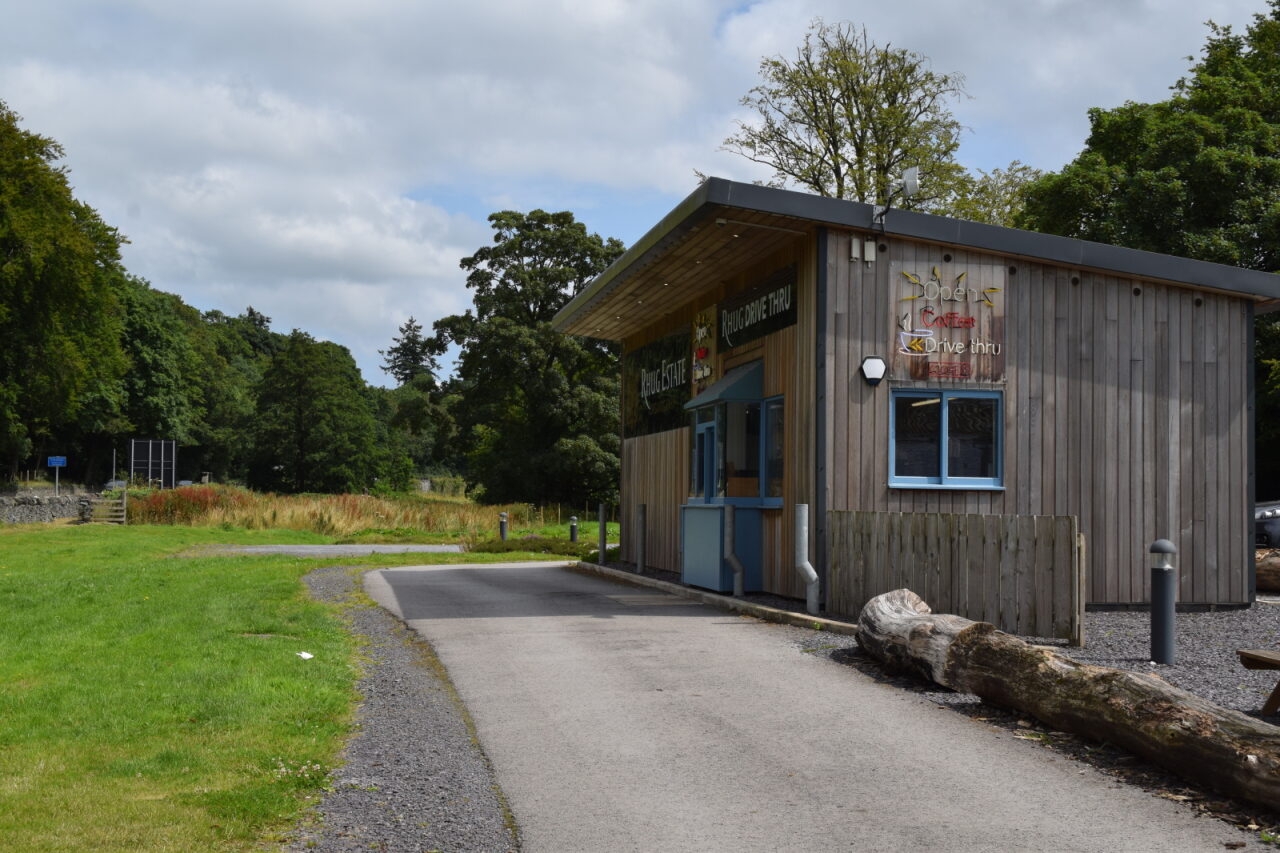
“We are off the A5, linking to all sorts of destinations, and people often don’t have time to go out looking for somewhere to eat and drink,” says managing director, Amy Coleman. “We’ve become a part of their journey, selling light bites (from organic bacon rolls to toasties), teas, coffees and soft drinks. The charging points help too. They are 24 hours, and there’s not many of them around here. We’ve definitely seen an increase in visitors thanks to those.”
The demand for premium baked goods continues to grow in the UK. Not only are consumers on the hunt for UPF-free alternatives to supermarket ‘plastic’ bread, but they’re going out of their way to discover bakeries for their ‘affordable treat’ moments.
Having an on-site bakery (with flour ground in its own mill) has proved imperative to the success of Otterton Mill in Devon – the 18th oldest business in the world.
The farm shop, cafe, and bakery space attracts visitors from far and wide says owner Chris Wright, adding that shoppers and diners can’t get enough of the skilful bakery’s breads, including traditional loaves, Spanish varieties infused with olive oil, and even touches of the unusual, like crab buns fashioned into crab shapes.
Hundreds of scones leave the ovens each day, lined up alongside brownies, Devon cider apple cake, and Coast Path cake, infused with the site’s own beer.
Marrying the bakery with the cafe has proved very beneficial to the farm shop. Customers, Chris adds, will often eat a sandwich in the cafe, then head to the farm shop to buy all the ingredients they need to recreate it at home – from the bread and butter, to chutneys and fillings.
Agrotourism is on the rise in the UK. There’s something charming about spending a weekend in a bucolic countryside setting, while learning more about artisanal foods and traditional production methods.
Somewhere seeing fantastic success in this regard is Teesdale Cheesemakers in County Durham, where visitors can join cheesemaking courses, eat in the (largely cheese-based) cafe, buy cheese, and stay for a while on the 20-acre glampsite.
Co-owner Allison Raper says they could very easily expand, but have no plans to. Part of the appeal of this place is the sheer peace and quiet. It attracts a wide demographic, she adds. “We thought it would be middle-aged, affluent people, because we make artisan cheese, by hand, in small batches – it’s not cheap. But we’re actually seeing quite a lot of young people, and that’s interesting. Part of that might be because we’re adult-only. We’re a quiet idyll over the hill where people can unplug and recharge with cheese during the day, and a wood-fired hot tub in the evening.”
The kind of customers that stay with them, Allison continues, are craving authenticity. “We source our milk from the family farm, our cheese is made and matured here, they can get a real taste of the local area. People want something they can touch, feel and smell – ingredients with provenance and connection.
“Everyone who comes here enjoys it, and we get them coming back again and again.”
Southern Britain and Wales’ largely mild climates have seen a surge of investment in vineyards in the last 20 years. Today, more than 1,000 have been planted here, with Champagne houses from France even putting roots in the UK.
Several farm shops have invested in winemaking to diversify, and are seeing the fruits of their labour as customers seek them out for tours and tasting days – an added bonus after picking up their groceries.
Tillingham Farm Shop says it is seeing more and more younger visitors as a result of its trifactor of shop, vineyard and Michelin Green Star restaurant. Accommodation is also available.
Head of wine, Tierney Beames, says Covid and Brexit created the ‘perfect storm’ for people seeking out food and drink experiences, with a noticeable spike seen in English wine tourism particularly. Something that hasn’t waned in the years since.
With proper planning, understanding the risks and pitfalls, and going all-in, Tierney says producing wine could prove lucrative for other farm shops in the future.
“You’ve got to think about what the climate is going to be like in 20 years,” he advises. “Plan for that rather than the now. That’s something people are realising and being caught out by at the moment. The climate is changing more rapidly than anyone ever expected.”
What started as a small wooden cart selling a few eggs and potatoes by the side of the road, has become a little empire for the Bendall family, owners of Hollow Trees Farm in Suffolk.
Today, the site encompasses a large farm shop and cafe, plant centre with homegrown plants, homegrown Christmas tree business and very very popular farm trail.
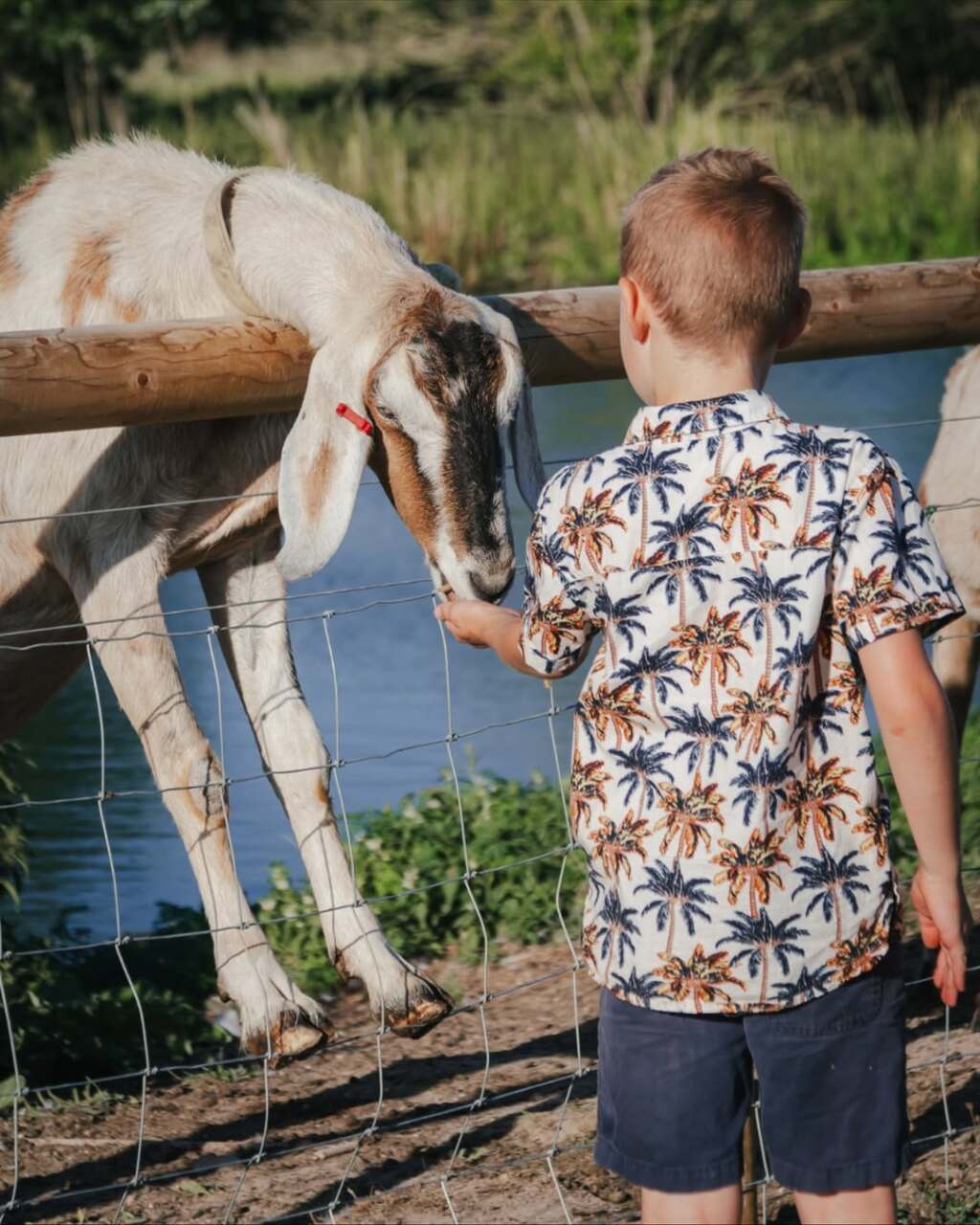
Much of the success of the site can be attributed to the trail. Sally and Robert Bendall, in their ethos of ‘agriculture for all’, were pioneers of farm experiences when they allowed visitors to meet their animals and see ‘behind the scenes’ in 1990. The experience remained free until 2010, when the Bendalls scaled up the offering to meet huge demand – using income to fund maintenance, feed costs, animal care, and later the manning of a kiosk and seasonal activities such as October half term’s Holloween.
“We aren’t a petting zoo or a farm park or a nature trail,” says Sally Bendall. “We are a farm trail with animals to feed, activities to keep little ones entertained, and plenty of space to really enjoy the beautiful Suffolk countryside.”
Education points can be found around the trail, such as a bug hotel and wild bird walk, and additions include Woodland Wizard climbing frames, a hill fort, livestock barns, and a permanent marquee with sheltered soft play and the Semer Beach sand bit.
Giving customers the chance to get outside and interact with animals, and having a family-friendly offering, is crucial to success, says Aimee Edwards of Cholderton Rare Breeds Farm in Salisbury, which operates a cafe, farm shop, vineyard, accommodation and play area, as well as a farm with 40 breeds of animal.
With no pub gardens with play equipment in the area, the trampolines, soft play barn and woodland adventure playground really do draw a crowd. And guests adore walking around the farm. “There are activities scheduled in every day,” Aimee says. “Duck feeding is especially popular. Our ducks are super friendly and will come and eat out of your hand!” Families adore cuddling bunnies, walking alpacas, and even guinea pig fishing – dangling carrots into the pens for the cuddly creatures to nab. “It’s lovely.”
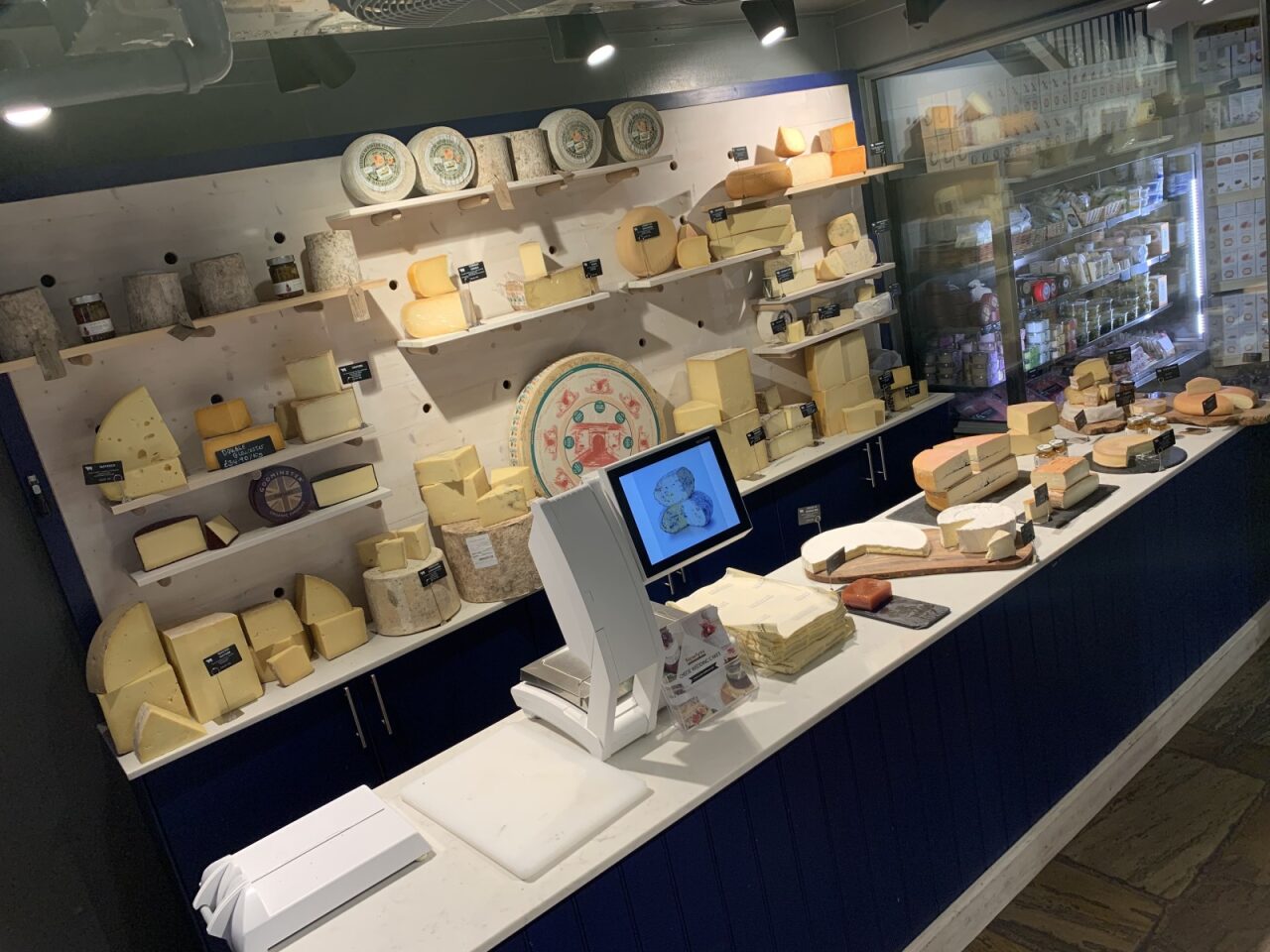
From Jarrolds Food Hall in Norwich, to Daylesford Organic’s store in London’s Kensington, cheese rooms are becoming a popular, if still niche, way to display and inspire awe of dairy products.
The humidity and temperature-controlled spaces really do have the ‘wow’ factor, and allow cheesemongers to showcase their range more innovatively and creatively – often in whole rounds and blocks (rather than smaller cuts), so customers can see the patina of the rinds up close and personal.
The additional of a cheese room at Newlyn’s Farm Shop in Hampshire has certainly made a difference, says owner Emma Higgens.
“We had a cheese counter before, and did sell from the multideck, but now we have this space, with a ripening room, we’ve been able to focus on selling cheese at the optimal taste. Jo, who runs it, is phenomenal. She loves her cheese!”
Customers are forever taking pictures of the room, Emma says. It’s a major talking point for the business. “They love that they can go in there and sample cheese, and they love talking about it, finding out how to eat it and the crackers, chutneys and fruits they could put with it. That has a massive impact here, especially at Christmas. Customers queue out the door!”
When done right, seasonal events and themed weeks can bring in a huge amount of business – during the period in question and beyond. From limited-time activities tied to holidays to mini-festivals celebrating a particular crop, they attract new customers and get people talking.
For Secretts of Milford, that event is Pumpkin Week, held each year in the run up to Halloween. “What began as a modest idea has grown into one of Surrey’s key Halloween attractions and an important source of diversified income for the farm,” says manager Mel Wythe, adding that the popular experience started “entirely by accident”.
When a wholesale order was cancelled at the last minute, it left the farm – owned by Charles and Nicola Secrett and their son, Greg – with fields scattered with gourds. Rather than waste them, Greg organised tractor rides out from the farm shop so people could pick their own pumpkins.
After 17 successful years of the event, it now brings in more than 20,000 visitors across nine days (it’s outgrown its original week). “Events at Secretts are far more than fun days out,” says Mel. “They play a vital role in sustaining the farm and strengthening our community. By creating an additional revenue stream, they help support the long‑term future of the business and provide valuable work for our team and seasonal staff.
“Perhaps most importantly, our events give people the chance to connect directly with the land, the seasons, and the process of growing food.”