Free digital copy
Get Speciality Food magazine delivered to your inbox FREE
Get your free copy

All eyes have been on Chancellor Rachel Reeves over the last few months, as speculation grows around this Wednesday’s Budget statement.
From wealth taxes, to NI and Income Tax arrangements, property taxes, and pensions – no stone has been left unturned by reporters, forecasters and economic experts as they make predictions about what will be unveiled at Westminster.
A topic of hot debate in the food and drink sector has been the question of what will happen to the nation’s farmers.
Is there any chance Reeves will backtrack on her amendments to their IHT liabilities, which sparked shockwaves and protests up and down the country in the autumn of 2024?
Those farmers qualifying for 100% APR (agricultural property relief) and (or) BPR (business property relief) now face what they say are detrimental decisions about the futures of their farms (many of which have been in families for multiple generations).
Due to come into force in April 2026, the new regulations see 100% relief restricted to the first £1 million of combined APR/BPR assets for each individual.
A further 50% relief is available for qualifying assets beyond this figure.
Farming charities and bodies have been very vocal in the last year about their feelings around the planned changes for 2026. But, they add, there is still time for the government to rethink its agenda.
“With confidence among farmers at an all-time low, the upcoming Budget presents a chance to restore stability and confidence through incentivising investment,” NFU president Tom Bradshaw told Speciality Food.
“We are calling on the government to mitigate the devastating impacts of the family farm tax on working farm businesses, and reform the capital tax allowance system to create an environment where investment and growth can flourish.”
Food security, Tom added, is “absolutely vital” to the success of Britain, saying “it’s our farmers who put the ‘great’ in Great British food”.
He continued, “We want the government to remember the people behind British food, whether it’s the 70-year-old farmer who’s worked tirelessly to build up the family farm, or the eager-eyed youngster bursting with new ideas on how to further grow the business. The Chancellor has the opportunity to back these family businesses in her Budget, and enable them to continue to do what they do best – produce the fantastic British food we all know and love.”
The government needs to abandon short-term thinking, begins Martin Lines, CEO of the Nature Friendly Farming Network (NFFN). “For farmers to deliver for food, nature and the climate, they need multi-year budgets so they can make long-term plans for their land.
“At the same time, cashflow is tight on many farms, with delays in England’s agri-environment schemes, and rising costs. The Treasury must look at getting money into farmers’ hands faster.”
Martin said ministers need to also ensure tax changes do not inadvertently push working families off the land, damaging successful farms – especially as many in Britain are tirelessly changing their processes to grow healthier food in a way that’s better for the environment.
“The transition to nature-friendly farming means good quality, nutritious food, and the soil which is essential to producing it is treated as national infrastructure, just like transport, health or education. Improving the nation’s diet could save the NHS billions, and the government should invest in public procurement so those on lower incomes can benefit alongside the better off.”
Above all though, Martin said, government needs to, “stop chopping and changing direction every few months, and focus on delivering clarity and fairness. Farmers are ready to deliver for food, nature and climate, but the Treasury needs to treat them not as costs to be cut, but investments in resilience for the future.”
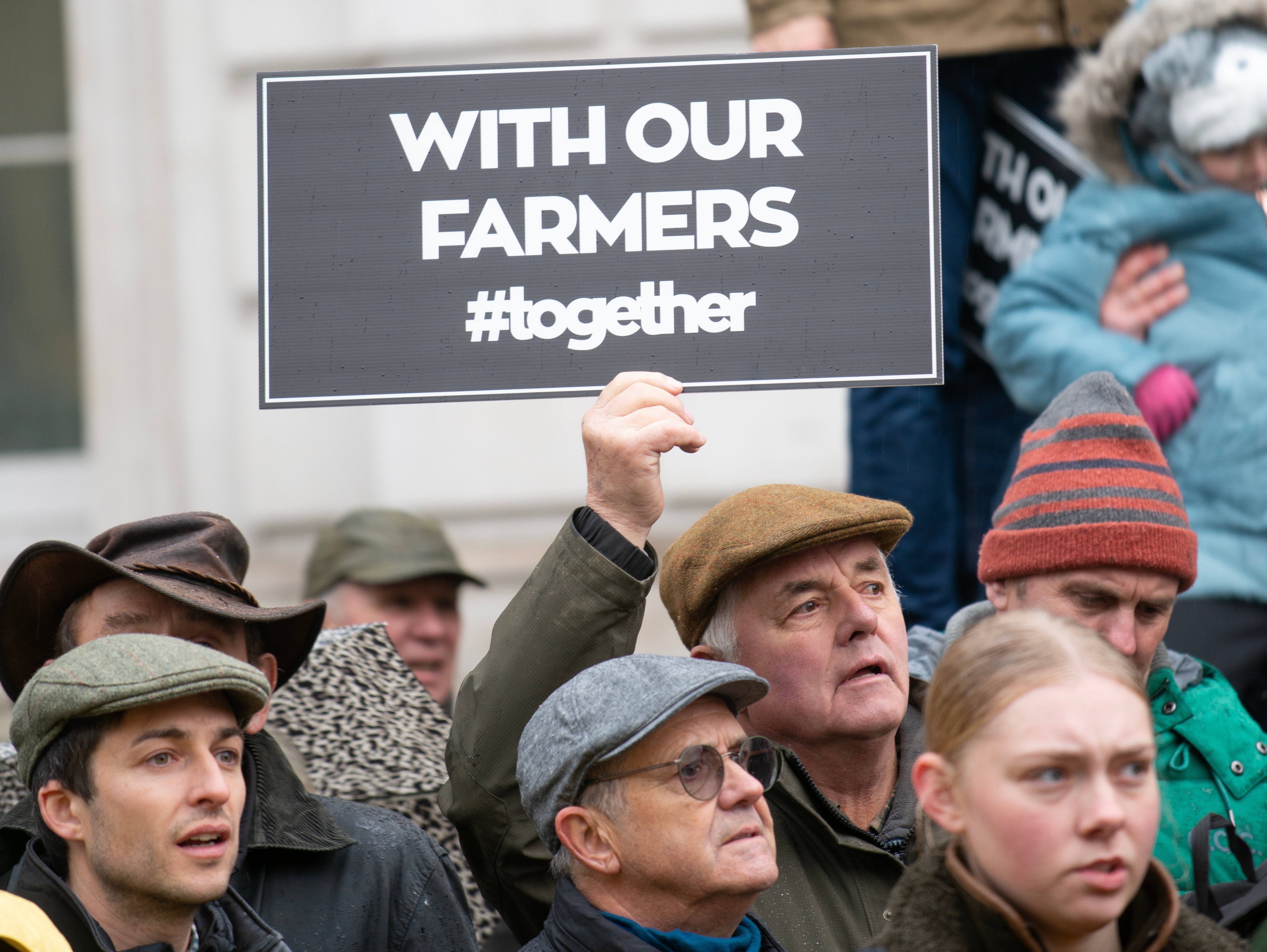
For the farmers Speciality Food has spoken to over the last 12 months, the idea of not being able to pass down their legacy, or generations of tradition, is one of their greatest fears.
Many of them say they are disappointed the government doesn’t take into account the fact they may be asset (land, machinery, outbuildings) rich, but cash poor, making it nigh-on impossible for their children in a lot of cases, to come up with the sums demanded of them in future in order to meet IHT bills, even if that amount is divided into payments across a decade.
George Holdstock, who farms outside of Canterbury in Kent, on mixed land producing wheat, oilseed rape, field beans, potatoes, pumpkins, apples and pears, alongside rearing cattle and sheep, is a former government economist, and is acutely aware of the problems farmers are currently facing, and could face in the future.
When he returned to the fourth-generation family farm a decade ago, the government was subsidising agriculture based on land holdings, paying up to £240 per hectare a year, equating to 1% - valuable cashflow in a volatile market, he said.
“That’s gradually been withdrawn and is almost all gone now. We’re facing very tight margins. Going from the situation 10 years ago, we now have this family farm tax, reducing IHT from 100% to 50%, which still equates to 20% per generation.
“If you say a generation is 30 years, that’s 0.67% tax on land ownership. So, we’ve gone from being in a position where there was a subsidy of 1%, and now we’ll get taxed by 0.67%. It doesn’t sound like a massive amount, but the average return most farms would be happy with is 1%. If you’re already paying income tax of, say, 20-40%, that takes 1% down to 0.8% or 0.7%. And if you’ve got to put 0.67% aside to pay for future IHT liabilities, there’s not much left to plan for the future, think about Net Zero initiatives, or the other things the government want us to do.”
On top of concerns around IHT and future planning, fluctuations in markets are impacting family farms too. A short-term rally in commodities such as wheat and oil seeds at the height of the Russia-Ukraine war, saw prices for British farmers skyrocket, with wheat being sold at an average of £300 per tonne.
Now we’re largely returning to business as usual in the UK, that’s drifted back down to approximately £150 per tonne, all while budgets on farms become tighter and tighter due to factors such as higher labour and energy costs, putting the brakes on investment and innovation.
The impact is being felt beyond the farm, George added. “We’ve had two agricultural machinery dealerships that serve us in East Kent announce they’re closing and consolidating to central Kent in the last month. And the main grain storage site close to us announced they’ve sold up and won’t continue to operate.”
The way forward, as George sees it, is for the government to make IHT liability payable only on the sale of assets. “Within a family farmland is transferred down generations. At the moment, if there’s a big tax bill they have to pay that within 10 years. When returns on those assets are around 1%, how are you going to afford that tax bill without selling land? And who is going to buy the land? The incentive to invest in agricultural land has disappeared as the returns are so low. It makes much more sense to have a holdover relief. That would protect against multimillionaires, for example, in their latter years, buying farms purely to reduce their IHT liability.”
The government, while charging ahead with the ‘family farm tax’, hasn’t gone far in most farmers’ opinions, to remove the ability by the super-rich to use land for sheltering their wealth. And it’s this that should be targeted, agrees George, not the people working tirelessly day-in, day-out to manage land, and put food on our tables.
“We have very poorly designed policy,” he continued. “The whole system could be more efficient, and I know there have been talks to increase the tax allowance from £1 million to £5 million, but while £1 million sounds like a lot, when a new tractor costs £200,000, a combine costs £400,000, and the barn to park it all in costs £400,000, it doesn’t take a lot to get to £1 million.”
The fallacy that farmers have access to wads of accessible cash shows just how out of touch the government is, thinks George, and if it continues in its current direction of travel, the implication for British food security, and the protection of our landscapes is at risk.
“A lot of producers will pack up. If you were in our shoes, wouldn’t you sell and invest that money in a much higher return, like residential property? What’s the point of working over 3,000 hours a year for a pretty meagre return when all the government wants to do is tax you for it? It’s hard to know what the countryside will look like in the future. I see myself as a steward of the countryside for a generation. Hopefully someone will take this on after me. We worked out recently that our small farm produces enough calories to feed 10,000 people a year. If that’s lost, it won’t come back easily.”
Harry Acland of Notgrove Farms can’t hide his utter frustration, not just with the current government, but with the ones that preceded it. Spanning 1,500 acres in the Gloucestershire countryside, including tenanted cottages, arable land, grassland, woodland, a holiday business, and a series of tenanted properties housing local businesses, it’s a large operation, employing numerous people, and providing affordable housing for villagers. The future implications of the ‘family farm tax’ are huge, having a ripple effect across the entire local community, Harry says.
Operating at the moment is tougher than it’s ever been already. “VAT is a killer for us at 20%. And 60% of my costs are wages, which are non VATable. The other largest thing is power, which is 5% VAT. We get very little recoverage.”
The site runs a cafe, part of a charity the family set up, “but that’s also been mullered by what the government has done with NI. We employ a lot of young parents who start at 9am and finish at 3pm, which is perfect for us and them as they can drop off and pick up their kids from school. We’ve lost three employees there because of National Insurance changes. We’re better off not having part-time people anymore, and having either contractors or full-time employees. That’s the way that the world has gone!”
The farm has also been impacted by changes to its holidays business – like many others who’ve diversified. “They say it’s no longer a trading business, but an investment business,” Harry says with incredulity. “We employ 14 people, we pay VAT and NI, and now we don’t get our Business Property Relief. I set up the business 15 years ago on the basis that it would be part of a trading business, and would get capital allowances. I bought eight pods made in Northumberland, and I was going to replace them to newer models, but having bought one, I’ve now had to cancel the rest. Why? Because we’re counted as an investment business there’s no point in me adding value to the farm. It just adds to the tax liability for my son. It feels like a complete and utter waste of time now.”
Harry feels making any further investment is pointless. “Why? What’s the point?”
England, he continued, “is a wonderful country”, but the move from the government should have been, he said, to put up Income Tax and reduce National Insurance, as has been talked about recently.
“That would have been the sensible thing to do. It would have meant we could invest a bit more, looking forwards.”
There needs to be more joined up thinking also, he feels. “We could unlock so much more potential here. We’ve got better summers and winters, and have some of the best growing conditions in the world in England. But what are we doing? Killing production because it’s cheaper to import from elsewhere. We need to encourage people to invest, and put money into our country and our businesses, starting with our farms, not burdening them with more taxes.”