Free digital copy
Get Speciality Food magazine delivered to your inbox FREE
Get your free copy

Labels are one of the first things customers see when they walk into a fine food retailer. From the pop of a funky design to the rainbow of hues shining out from each shelf, there are plenty of ways to catch the eye. But as independent producers well know, this space is at a premium. To fit everything from your brand name and tagline to important allergen information and hard-won certifications is no mean feat.
Despite this, the Buy Women Built (BWB) campaign, a movement started in 2021 by Sahar Hashemi, OBE, co-founder of Coffee Republic, is making the case for shouting about your female-founder credentials right on your products. And the impact for retailers and brands alike has been telling.
“For me, the BWB mark is about visibility,” Sahar explains. “For years, the conversation around women in business focused on what was missing – funding gaps, board representation, investment statistics. But I kept thinking: what if we shifted the spotlight to what women have actually built?”
The BWB campaign is raising not only awareness, but also cold, hard cash: a report by NielsenIQ found that the Buy Women Built mark doubles purchase intent. A BWB-themed aisle on Ocado had sales uplift of 20%, with some brands soaring over 100%. And at Whole Foods Market, a takeover by the campaign boosted sales 18% and unit growth 35%.
“There are thousands of brilliant brands on our shelves that consumers already love, and so many of them were founded by women. But unless you happen to read the backstory, you would never know,” Sahar tells Speciality Food. “The BWB mark makes the invisible visible.”
And the food and drink sector, Sahar says, is one of BWB’s most engaged.
“Many of these brands are born from personal stories, family recipes or health needs, which makes founder visibility especially meaningful,” she continues. “It is also a fast-moving, innovation-driven space where challenger brands thrive, so the appetite for collective visibility has been strong.”
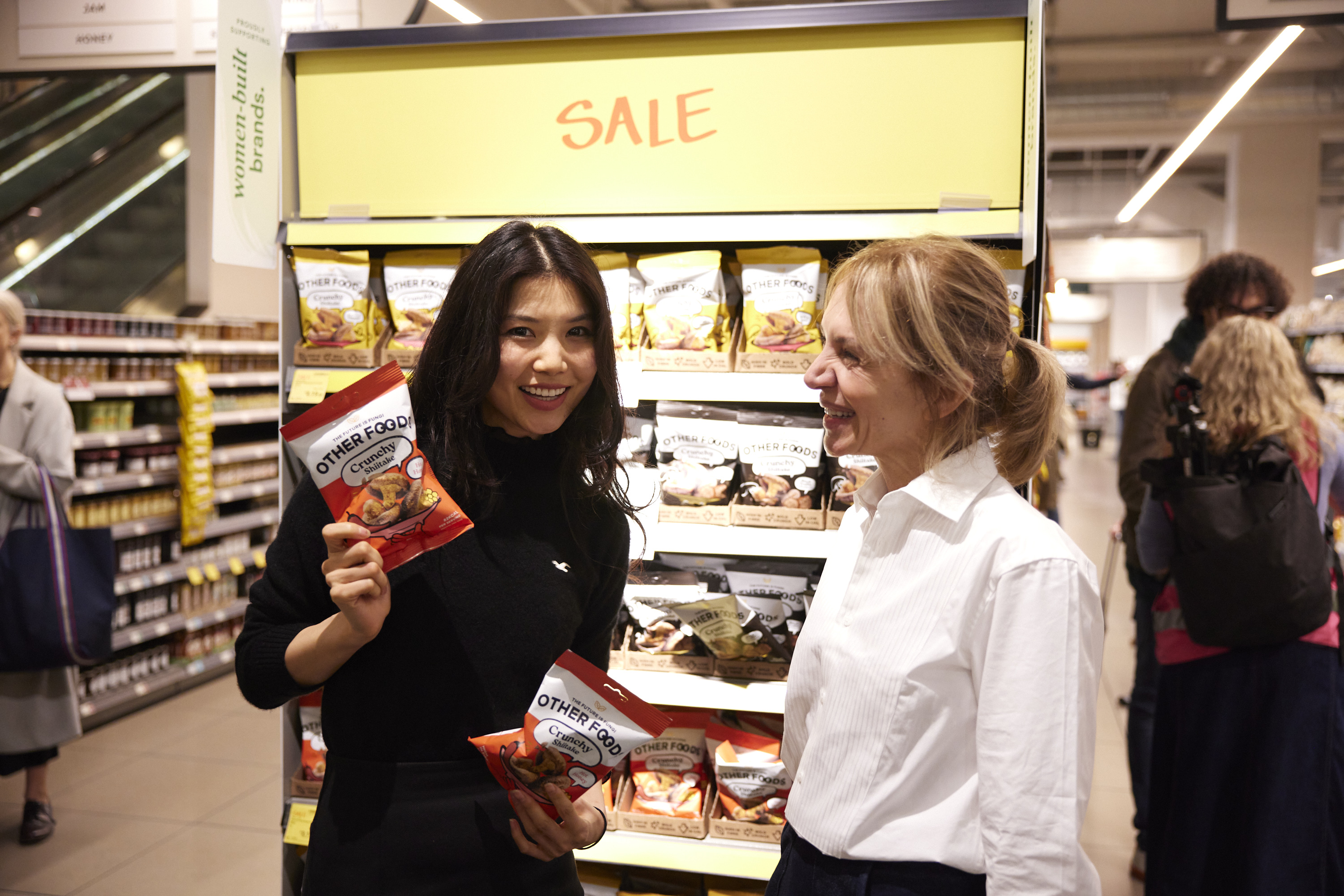
For Karen O’Flaherty, the founder of Pip Organic, being at the forefront of championing female-founded and independent brands is important. Over her 20-plus years in the business, she’s seen the food and drink industry change to become more inclusive and supportive of women-founded businesses, “but we aren’t there yet,” she adds.
Indeed, the UK’s female entrepreneurship rate lags behind peers like the USA, Canada and the Netherlands, costing us £200bn in lost output each year, according to data cited by BWB. What’s more, children today are still four times more likely to think of a man than a woman when they hear the word ‘entrepreneur’.
That’s why, even as an organic brand whose label must carry a number of required legal marks, there was no question Karen wanted to include the Buy Women Built logo on Pip Organic.
“We strongly believe,” Karen says, “that just as we’re working to make space for female-led brands in retail and the wider FMCG world, reflecting that message on our packaging is just as important.”
At Whole Foods in High Street Kensington, Pip Organic is one of several brands featured with shelf barkers and images of the women behind the brands ahead of International Women’s Day. “There are also end-of-aisle displays with BWB logos and quotes – it really feels like a full store takeover,” Karen says.
And Whole Foods isn’t alone in putting women-founded brands in the spotlight. “Retailers have been increasingly proactive,” Sahar says. “We’ve seen a permanent dedicated aisle online with Ocado, flagship window takeovers at Whole Foods Kensington, out-of-aisle feature space in Tesco, dedicated hours on QVC and feature displays in Planet Organic,” she says.
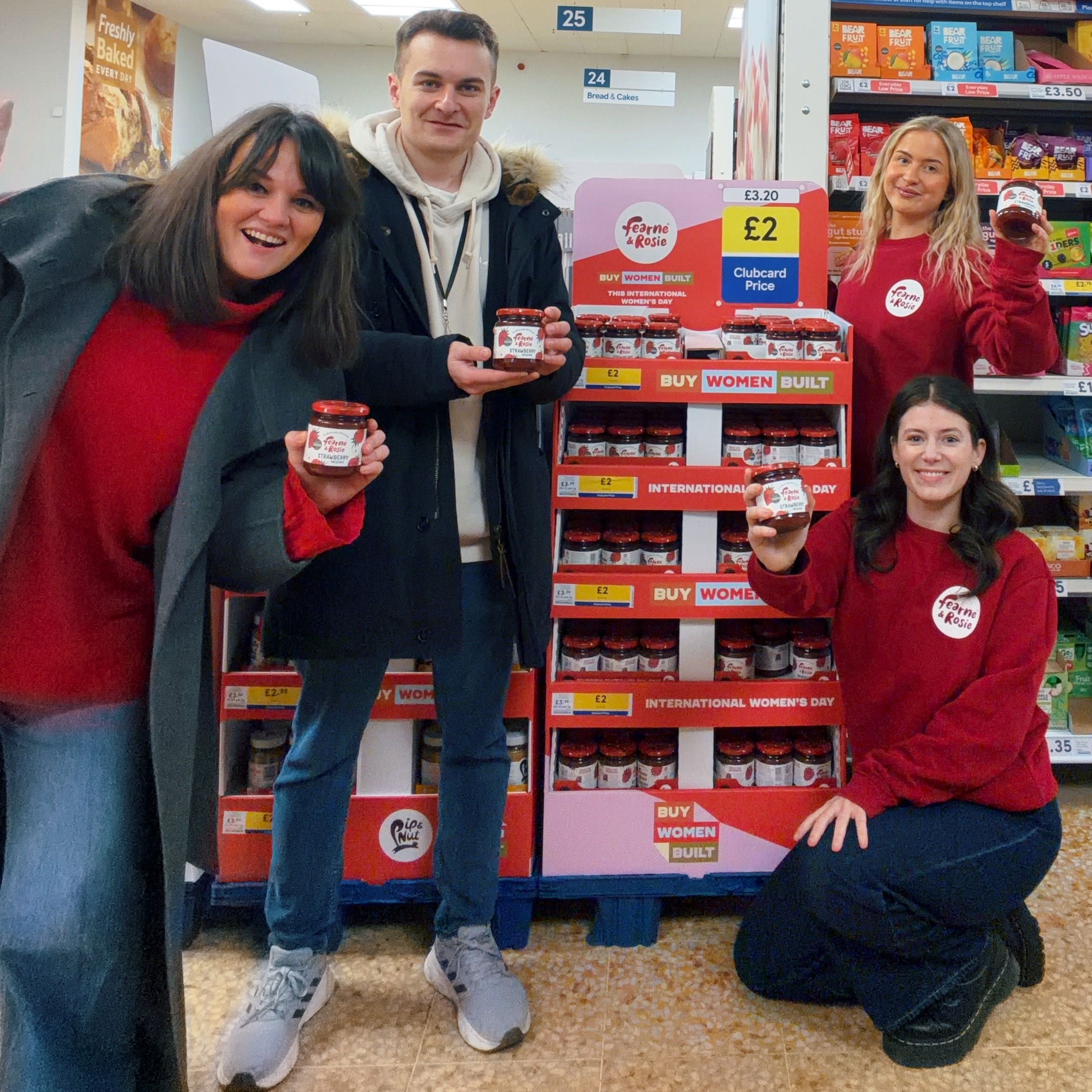
Jam brand Fearne & Rosie joined other female-founded products in its first ever shipper in 89 Tesco stores, and sales have jumped 178% versus the usual promotional performance, with the highest-ever sales day on the first day the shippers went live in store. “So far, we’re selling over 4x our usual stock levels, thanks to the shippers!” founder Rachel Kettlewell says.
What’s shifted, Sahar believes, is that shouting about female founders is no longer a ‘nice to have’ diversity initiative. “Retailers are recognising that this drives consumer engagement and incremental sales. When customers can clearly identify women-built brands, 64% actively choose them. We have data now,” she says.
“Retailers are starting to understand that this isn’t philanthropy - it’s commercially smart,” Sahar continues.
Fine food retailers, in particular, are perfectly placed to shout about women-built brands – and shift a lot of products in turn, Sahar says, because they “stock exactly the kind of high-quality, founder-led products that sit naturally within Buy Women Built. There is tremendous opportunity there.”
By working together, she believes retailers, brands and BWB itself can create a wider movement to support more women to start thriving businesses.
The bottom line for Karen? “Not everyone can invest in women-built brands, but we can all buy from them – most of these brands are independent and owner-managed, so every purchase really means something.”
As she points out, shoppers have a real power – not only on International Women’s Day, but every day – behind every purchase they make.
“Those small choices make a big difference not just to Pip Organic, but to the next generation watching what’s possible too. I think that consumers and buyers are starting to become more clued up with who the small brands are and those who are championing other women in the industry. I’m hopeful this will continue and excited to see it grow – watch this space!”