Free digital copy
Get Speciality Food magazine delivered to your inbox FREE
Get your free copy

Jumi really is a cheese shop like no other. Not only are the cheeses artfully displayed (they catch your eye immediately), but, incredibly, each of the around 80 or so varieties has been made with raw, sileage-free milk within a five-mile radius of Switzerland’s Emmental Valley.
The shop, says director Marcello Basini, showcases the wonder and incredible diversity of milk, and what can be achieved with it in just one small corner of the world.
Jumi’s origins go back generations, tracing the footsteps of founders Juerg Wyss and Mike Glauser’s cheesemaking families. Keen to bring these sensational cheeses to a larger audience, they went to market in Switzerland in 2006, meeting Marcello in 2011, and going on to open what he calls an “old school” stall in Borough Market.

Consumer interest in what they offered was staggering, ultimately leading to a permanent stand (more like a fixed shop) in London, and to the opening of their new home at Newington Green in 2018.
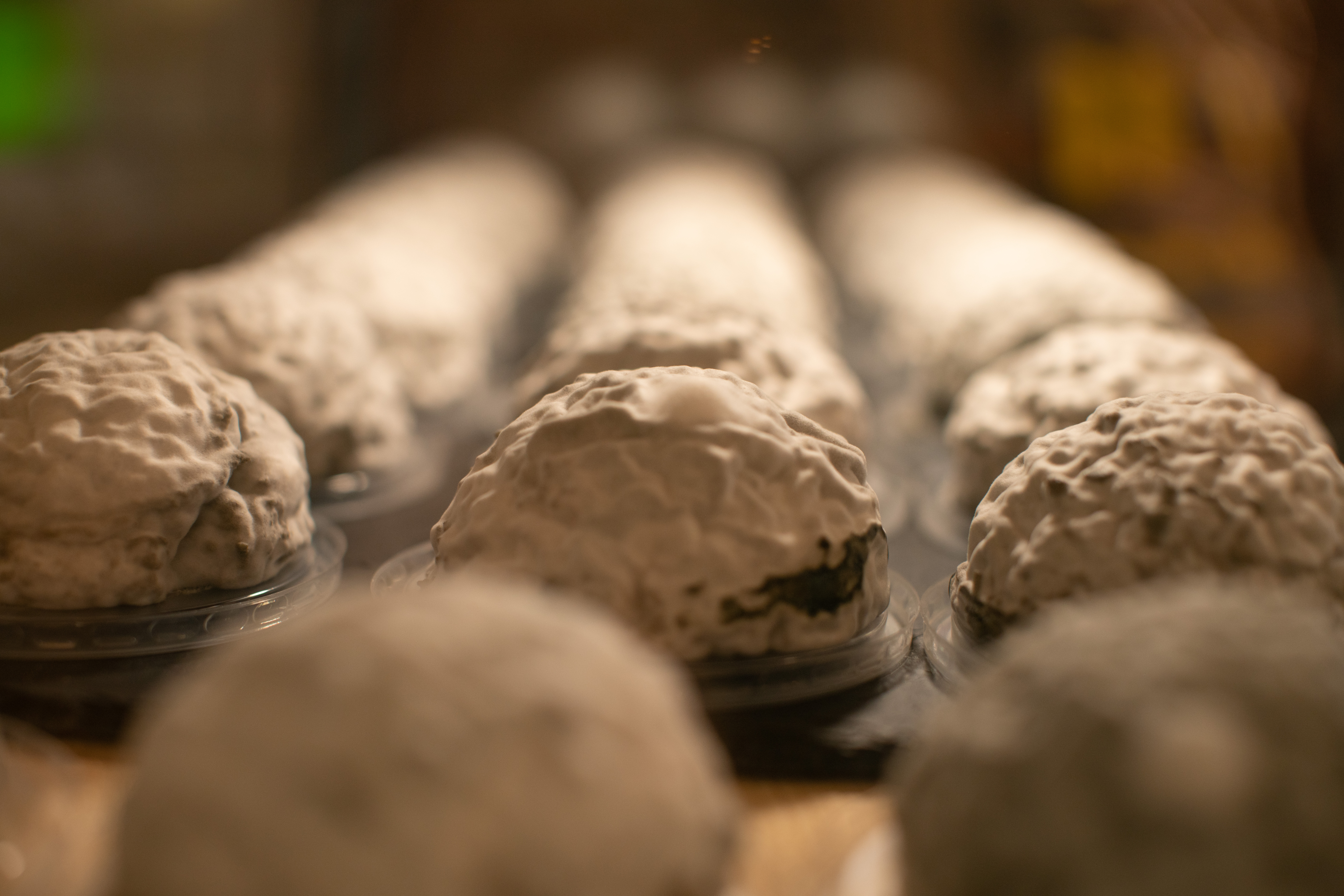
Formerly a cafè, the premises have allowed Jumi to grow. “It meant we could expand what we offer,” says Marcello. “We could do so much here and not be limited. We’re free to be 100% creative.” That includes being able to display quirky cheeses like the conversation-starting Blue Brain in their own little individual see-through domes, and transforming the kitchen into a bakery, churning out fresh sourdoughs and baguettes daily.
Jumi doesn’t carry any big brands or heavily commercialised products. All its cheeses are produced for them on micro farms, where herds of 20 to 30 animals are milked once or twice a day. There is complete control over quality. “It’s very common in Switzerland,” Marcello explains, “to go to a small village and find a little dairy producing fresh cheeses you can only find there.”
Case in point is Jumi’s Belper Knolle – a cow’s milk cheese fashioned into a small tennis ball shape, seasoned with garlic, pepper and Himalayan salt. “These are made in the village of Belp. When you look on the map, this is in the middle of nowhere – a tiny village with a creamery. They do a few cheeses and they’re pretty incredible.”
The team get so much satisfaction, Marcello adds, from having that direct connection with makers and, “because they are produced for us, we know what we’re getting”.
Customers are often surprised by the pure focus on Swiss cheese – it’s very unusual after all to see this kind of proposition in Britain – but they’re also, Marcello says, keen to experiment, swapping their favourite cheeses for similar ones they sample in the shop.
They’re drawn to the fact Jumi’s cheeses are all-natural, with nothing artificial added. “I think customers like the simplicity,” Marcello continues. “When someone emails in with a big spreadsheet of allergens they have to avoid, I reply back saying it’s just raw milk, rennet and salt. Three ingredients.”
Jumi’s purpose is to show consumers how expansive and extraordinary artisan Swiss cheese can be. “It’s nice to chat with customers and share our values,” says Marcello. “We actively sample here. Anyone can come in and browse and try anything, and we have a cheese for everyone, from mild and fresh, to strong, to blues.”
Raclette is a big deal for the business too, and has become a massive trend more broadly in the world of cheese. Every Friday from September to the end of May, Jumi hosts Raclette and fondue evenings, selling the cheese and tealight-operated Raclette machines year-round.” Their mission here, Marcello reveals, is to demonstrate Raclette isn’t just one variety of cheese. “We produce about 20 with all sorts of flavours – one with truffle, one with chilli, a smoked one. We’re quite nerdy and geeky about it. Every year we meet and test new flavours. I think this is something the British public don’t understand or know about.”
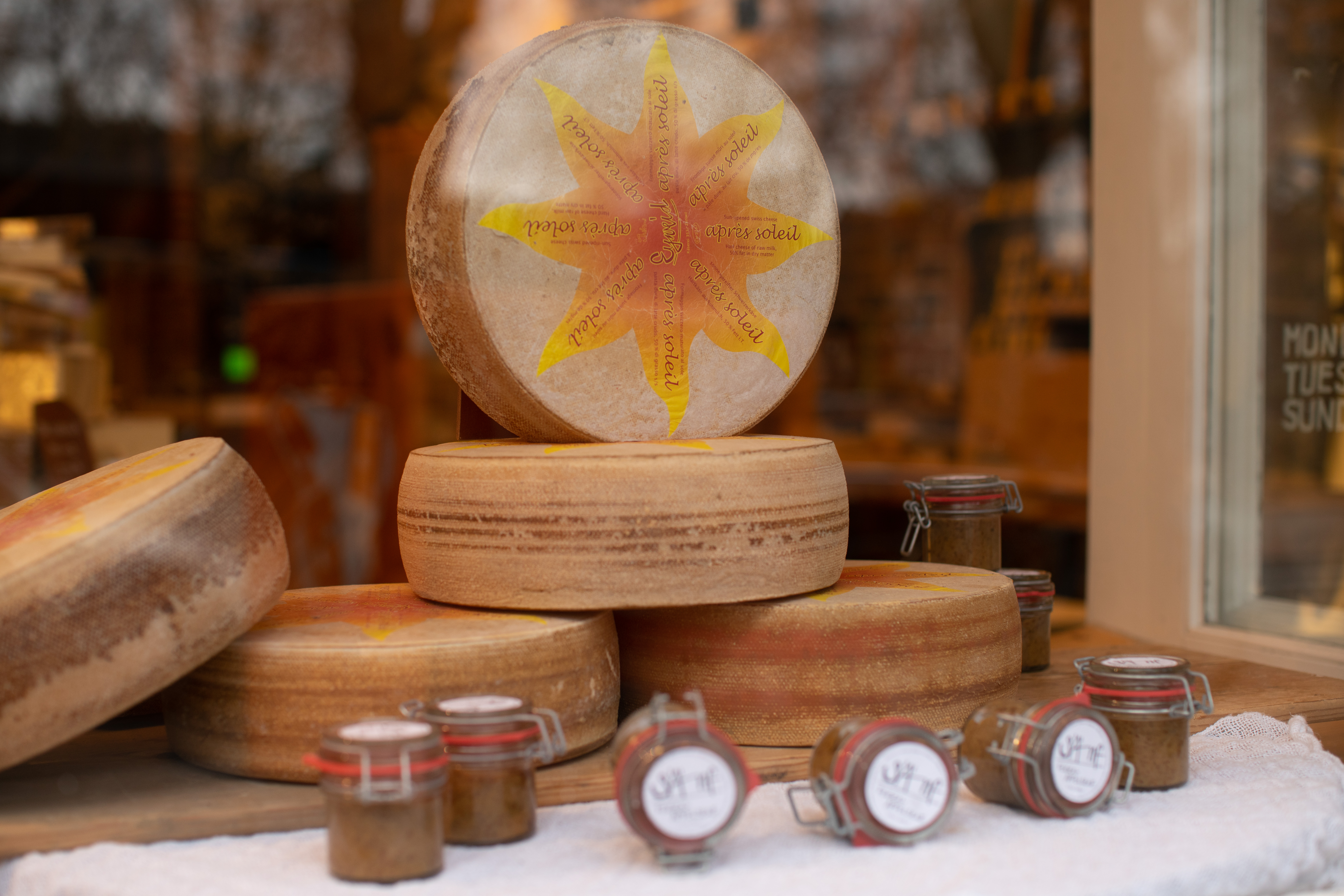
The popularity of Raclette is, he thinks, driven by its affordability as a meal to share at home. “It’s a sociable thing. You can put it in the middle of the table with some baby potatoes and you don’t have to run around, you can just enjoy yourself.”
Helping customers create these moments of joy around cheeses is what drives Marcello. “I love having contact with people, engaging with them. Fourteen years in, I would say it’s the most fun part of the job – being able to talk face-to-face about cheese.”