Free digital copy
Get Speciality Food magazine delivered to your inbox FREE
Get your free copy

What could be better on a summer’s night than a glass of wine and a perfectly crisp and gooey pizza? The unparalleled combination of creamy Mozzarella, tangy tomato sauce and fresh basil is a classic for a reason. Its simplicity also lends itself well to at-home cooks keen to expand their outdoor cooking repertoire beyond the barbecue.
Home pizza cooking has shifted from being a novelty to something people now build social occasions around, explains Barry D’Arcy, founder of Ocean Earth Chefs. “Pizza night has become an experience rather than only dinner. People enjoy the process of stretching dough, choosing toppings, and cooking outdoors together. It is interactive, relaxed, and works well for groups, which is a big part of why it has taken off.”
Outdoor dining in general has seen a significant rise in the UK over the past few years, with 82% of people enjoying meals in their gardens in the summer. What’s more, the UK’s pizza oven market is expected to reach $150.9m by 2030.
The cost of living has a role to play too, with more Brits keen to cut down on takeaways and dining out. “With UK searches for ‘pizza ovens’ now reaching 397,000 searches a month [in May], up 37% compared to last month, we’re continuing to see huge interest in at-home pizza making, particularly as consumers look to recreate more sociable, restaurant-quality experiences at home,” says Vickie Hawley, owner of Delivita, one of the UK’s leading British-made pizza oven brands.
What’s particularly interesting, she adds, is that demand surged well ahead of peak summer. “Comparing the first seven days of January to the most recent seven-day period, we’ve seen a 262% increase in total online sales, showing that consumers are preparing their outdoor cooking and entertaining setups earlier than ever this year.”
And with more people investing in their outdoor spaces and cooking areas, this is a trend that isn’t going away anytime soon.
Another reason behind the rise of home-cooked pizzas is the boom in quality pizza ovens. “The rise of specialist home pizza ovens has changed expectations around what people think they can achieve at home,” Barry says. “High-temperature pizza ovens capable of reaching restaurant-style heat levels have become increasingly popular in recent years, particularly as outdoor cooking has grown.”
Pop down to your local garden centre and they’re likely to have a range of pizza ovens set up next to their barbecues. “A few years ago, most people accepted that homemade pizza would never taste quite like pizza from a proper oven,” Barry continues. “Now people are getting much closer to that crisp base and blistered crust at home, so the interest has naturally grown.”
The growth of outdoor eating has fuelled makers like Firebloom to expand their ranges this year. Building on the success of their Fresco Outdoor Stove, Firebloom this year unveiled a fully developed collection, including three electric pizza ovens and one gas oven.
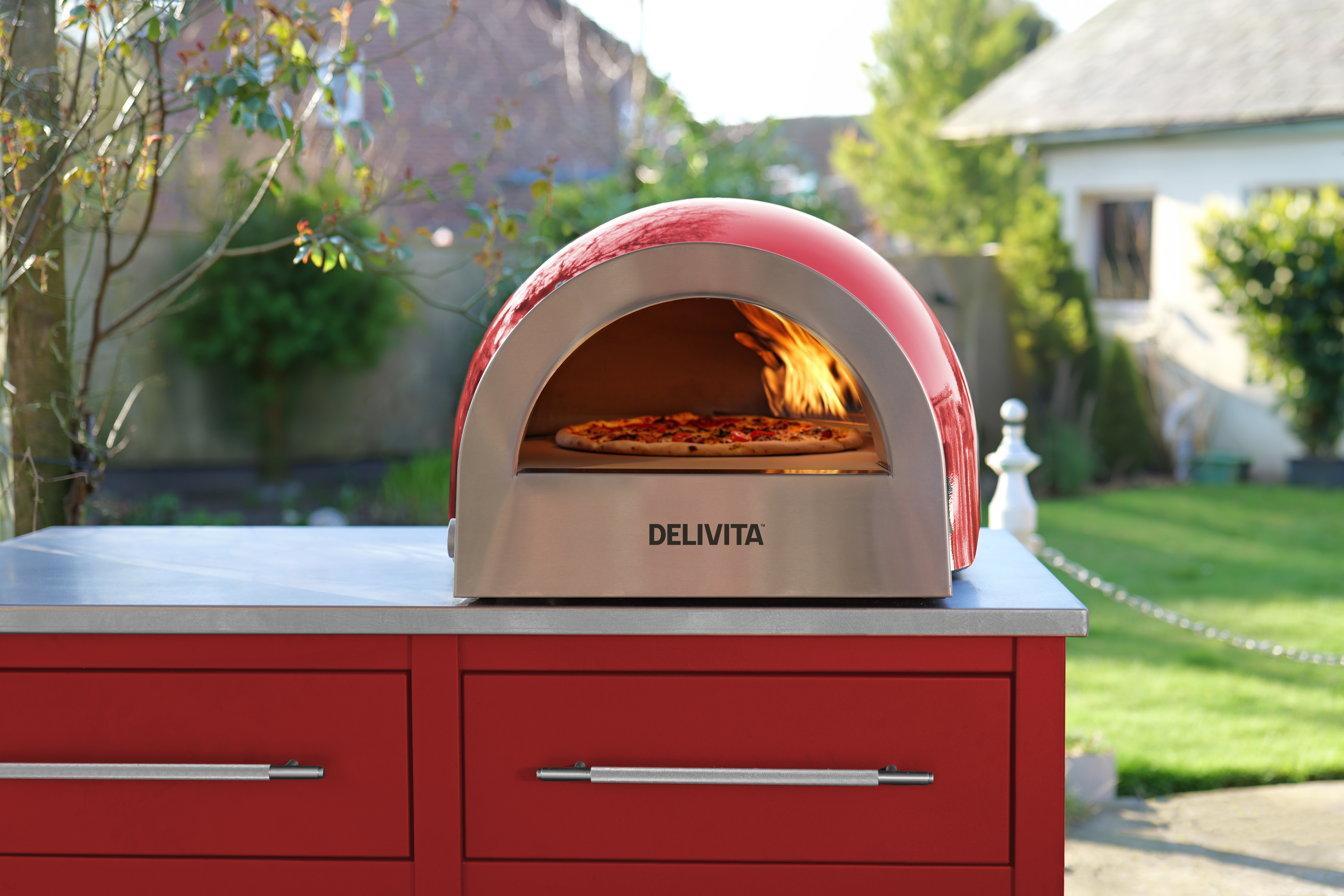
Delivita, meanwhile, sells a range of ovens including wood-fired, gas-fired and dual fuel gas.
The variety of options is only good news for retailers, as you can offer customers versatility and accessible entry points. “Not everyone wants a large outdoor oven,” Barry says. “Compact electric models and smaller kits are becoming more attractive because they work for smaller gardens, balconies, or even indoor kitchens.”
Despite a keen interest from some, there is still a learning curve to at-home pizza cooking. Vickie says education is key to boosting your sales, “particularly for first-time buyers, so retailers should focus on simple messaging around ease of use, cooking times, fuel types and versatility.”
Strong visual merchandising and experiential moments can go a long way in building confidence and inspiring purchases. “In-store demonstrations, tastings and recipe inspiration can be especially effective, as pizza ovens are naturally very sensory products,” Vickie continues. “The smell of fresh pizzas cooking, live demonstrations and the opportunity for customers to taste the end result can instantly draw people in and help them visualise recreating that experience at home.”
This includes thinking beyond the pizza oven itself, Vickie says. Providing complementary products such as pizza peels, chopping boards, and more “helps customers build the full outdoor hosting experience rather than simply buying a single appliance”.
Selling the full experience is essential, Barry agrees. “The shops doing this well are not only selling an oven, but also the idea of hosting. If you place dough flour, oils, cheeses, cured meats, and serving boards nearby, customers immediately start imagining the whole setup.”
Retailers can also give customers helpful hints on how to produce the best results at home. “One of the biggest mistakes people make at home is overloading pizzas,” Barry says. “Too many toppings release too much moisture and stop the base from cooking properly. A few good ingredients almost always work better.”
Selling ingredients and toppings that customers come back to time and time again is key to ensuring your customers’ pizza ovens don’t gather dust. “People tend to focus heavily on the oven, but the ingredients make a huge difference,” Barry says. “Good flour, decent tomatoes, proper mozzarella, and fresh herbs are usually what separate an average homemade pizza from a memorable one.”
Luckily, this is the bit that comes most naturally to food retailers. Sharing which cheeses will work best in different flavour combinations, the meats that will crisp up beautifully and the sauces you don’t want to be without will really make the difference – and it’s where delis, farm shops and foodhalls can really stand apart from supermarkets.
Most of the ingredients that shoppers will be hunting for to make their pizzas at home will already be on your shelves. Make sure you are stocking Italian 00 flour, which is key for making classic Neapolitan pizza bases (as well as fresh pasta), quality tomatoes, authentic olive oil and some fun, premium toppings, too, like nduja or oozy Burrata. Arranging these together can help customers connect the dots and pick up everything they need in one stop.
You may also find that getting into the nitty gritty can help fuel your customers’ passion for pizza making – especially those with a bit more experience. “People are becoming more curious about dough fermentation, flour types and regional pizza styles,” Barry says. “You are seeing more interest in things like Neapolitan-style doughs, Detroit-style trays and longer fermentation methods because people want to improve their results over time.”

“Outdoor hosting naturally comes into its own during summer, with warmer temperatures, bank holiday weekends and major sporting moments like the upcoming World Cup, creating the perfect environment for al fresco cooking and entertaining,” Vickie says.
“At the centre of it, homemade pizza works because it feels social,” Barry adds.
Indeed, as well as hosting occasions, social media is helping to fuel demand – something to take note of for your own social accounts. “Pizza is one of those foods people love sharing online because it is visual and customisable. Once people see friends making restaurant-style pizzas in the garden, it starts to feel achievable rather than specialist,” Barry says.
“Homemade pizza has become about much more than food,” Vickie continues, “it’s interactive, social and gives people a reason to gather.”
In today’s fast-paced world, making pizza “slows people down a bit,” Barry says. “You make the dough, people gather around the oven, and everyone eats together as the pizzas come out. That is what keeps people coming back to it.”