Free digital copy
Get Speciality Food magazine delivered to your inbox FREE
Get your free copy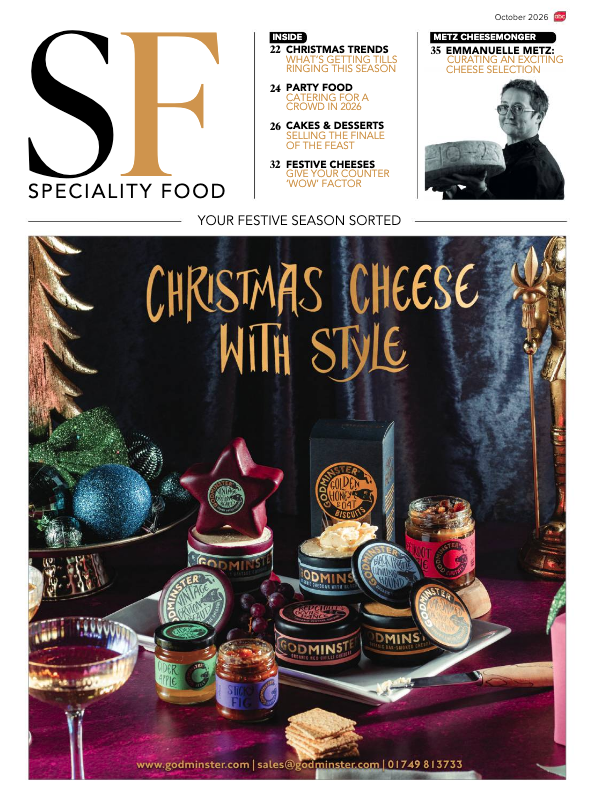

At Speciality Food, we’ve already reported on the ever-expanding low and no alcohol sector, which is experiencing unprecedented high demand, further fuelling innovation.
More Brits than ever are either eschewing alcoholic drinks when they go out, ‘zebra striping’ (alternating with soft drinks) or ‘bookending’ (starting and finishing an evening with non-alcoholic drinks. The trend has filtered into retail, becoming more than just the odd bottle or can here and there in the drinks aisle, as brands continue to premiumise and expand their ranges.
What about mid-strength drinks though? If you haven’t already heard the term, now’s the time to familiarise yourself with it, because this new wave of products doesn’t look like it’s going anywhere, with launches into the burgeoning space including Quarter Proof, Maison Sassy, Shandy Shack and Decemb, spanning beer, spirits and wines.
Earlier this year low and no alcohol specialist retailer and bar operator, Club Soda, put its clout behind mid-strength drinks brands, launching The Mid-Strength Collective, recognising the ongoing importance of this trend, and commissioning research from KAM Insight to demonstrate its commercial appeal.
Data showed mid-strength drinks are being sought out more frequently as an alternative to full and alcohol-free options, with 50% of consumers saying they would prefer two mid-strength drinks over one full-strength when they’re out. Of those surveyed, 13% said they choose to ‘coast’ their evenings, drinking only mid-strength products to reduce their overall alcohol consumption.
And 32% said they’d spend more time in venues offering these options, increasing to 40% amongst 25 to 34-year-olds.
Laura Willoughby MBE, founder of Club Soda, says, “Ultimately, moderation does not have to be a binary choice between drinking and not drinking. The goal is to encourage a more intentional drinking culture – one where we pay attention to what we drink, not just when we choose to abstain from alcohol, but also when we choose to enjoy it.
Blake Gladman, strategy and insight director at KAM said mid-strength isn’t just another category, it’s a movement. “Now is the time for businesses to adapt and lead the charge in shaping the future of mid-strength alcohol.”
These are exciting times, agree mid-strength category leaders.
Brad Crompton launched Session Spirit as a way to help people enjoy the taste/experience of full-strength gin at a lower ABV, saying he was inspired by the Mediterranean attitude towards slower, lighter drinking. He works with one of the UK’s oldest distilling families (who’ve crafted gin for more than 16 generations) to create a sessionable 25% ABV gin – so far the only mid-strength spirit to win awards in full-strength categories.
And James Gundy was hot on the mid-strength trend, founding Small Beer in South Bermondsey, London, back in 2017. “We saw a gap between 0% ABV beers, which often miss the depth and complexity of a great pint, and stronger beers over 5%. Our answer was to create a range that sits between 2% and 2.8% ABV – beers that are full of flavour, refreshing, and perfectly balanced for moderation.” The brand’s beers are brewed to full strength, rather than being diluted, and in 2019 Small Beer became London’s first and only B Corp certified brewery, pioneering the world’s first Dry Floor Policy, reducing water usage to just 1.5 pints for every pint of beer brewed, compared to the industry average at the time of eight to 10 pints.
Mid-strength beer is typically 2% to 2.8%, but some producers are taking this closer to 3%. Mid-strength wines sit at 3% to 9.5% ABV. And mid-strength spirits come in at around 20%to 30% ABV.
Richard Patrulei, an account manager at Speciality Drinks, says he’s seeing growth in bars broadening their ranges of wine and beer over spirits as customers look to moderate their alcohol intake. “Customers are acknowledging the ABV of the products they are consuming and choosing. For example, a beer with an advertised ABV over a cocktail which contains a range of sprits, means they can keep track of the amount of alcohol they are consuming on anyone occasion.”
We’re so much more aware of wellness, Richard continues, adding that to say people are looking to enjoy their time out of home at a cheaper and more conscious level for longer periods is an understatement. “Key brands that have been larger in the market are Botivo and Pathfinder. They champion the concept of bringing down a fully alcoholic drink into a more approachable serve that allows for guests to drink more with a lower consumption of alcohol in their system.”
Brad agrees with Richard that there’s a clear movement towards healthier lifestyle decisions, not just in the drinks sector, but across most FMCG categories.
“I believe modern drinks are simply looking to continue their ritual of enjoying delicious drinks with friends, but in a way that enables them to align with their new healthier way of life,” he explains.
“Until now, modern drinkers have had to flex or shift to all or nothing options in bars or shops. What they really want is convenience and not having to compromise with drinks that don’t hit the mark, or skipping rounds to keep the total ABV low.”
James attributes three words to consumer desires in the lower alcohol drinks market at the moment: quality, craftsmanship and balance.
“There’s a growing awareness that enjoying a drink shouldn’t mean compromising on health, productivity or flavour,” he thinks. “Mid-strength beer delivers that. It has far more character and satisfaction than many alcohol-free options, while still being light enough for a lunchtime service, an afternoon event, or an evening where you still want to be at your best and wake up with a clear head the following day.”
Those within the industry certainly think so, with Brad saying mid-strength is “absolutely on an upwards trajectory”, adding that he thinks it will become the majority choice for consumers. “The huge rise in alcohol free options created a big gap in the market for those who don’t want the restrictions of an all or nothing menu. Mid-strength is ‘middle strength’. It’s the space in between full strength and alcohol free – a happy medium. To me, mid-strength is freedom without compromise. It’s the missing piece of the puzzle for consumers.”
Drinking cultures are ever evolving, adds Richard, saying the low/no alcohol market has grown to a level of sophistication that other categories have previously achieved, but at an impressively rapid speed.
“Consumers can now feel inclusive in their experiences rather than just being given a soft drink.” He thinks this means we will see lower ABV choices hanging around for the foreseeable.
James says there is still huge potential to be untapped, especially in mid-strength beer, with the moderation trend here to stay, and awareness constantly building. “The way forwards is through education and experience,” he explains. “Helping people understand that mid-strength isn’t a ‘half measure’ but a premium and mindful choice in its own right.”
“In our view, positioning mid-strength alongside fine food and drink is key – and currently our beers are available in Waitrose, M&S, Majestic and Ocado in retail, and the likes of Mondrian hotels, Riding House Cafe, Ronnie Scott’s and BRAT in hospitality,” continues James. “Telling the story through tastings, food pairings and in-store activations can help shift perceptions and spark curiosity. The more that retailers embrace the category, the more it will thrive, and they will experience the benefits of this change in drinking behaviours within society.”
The mid-strength category, James adds, opens up a wealth of new sales opportunities for retailers, appealing to a wide range of customers. “It’s a chance to differentiate their range with category leading innovation, appealing to a wide range of customers. Maybe those moderating for health reasons, and those looking for something they can enjoy at more times of day – but ultimately, the global shift we’re witnessing is from drinkers who still want to enjoy the sociability, but no longer the sore head.”
By offering mid-strength options, “you’re giving customers more reasons to purchase, and showing that you’re ahead of the curve in meeting evolving tastes.”
“Shout about it” Brad says of retailers who’ve already started embracing the mid-strength market. “You’re solving a problem for your customers, and you’re filling a gap in the market. Education is key at this stage of an emerging category, so try and work with the brands.
“Take Session Spirit, for example. We work with retailers to host sampling sessions, and we host staff workshops. This is an exciting space. A movement that is building pace. So use that to your advantage and have fun with it.”