Free digital copy
Get Speciality Food magazine delivered to your inbox FREE
Get your free copy

Despite the challenges modern farmers face, with changes to inheritance tax rules, and fewer grants available to transform their businesses, Britain’s growers remain resilient.
It’s a great testament that many of them continue to work and innovate in the farming industry, determined to provide food for the nation now and in the future, whatever the weather, and whatever the government might throw at them.
Looking inwards to look ahead is very much part and parcel of farming in 2026 and beyond. Farmers are thinking about ways they can maximise resources, regenerate, and recirculate to make their practices even more environmentally friendly.
It’s a necessity to make changes now, says Philip Rayner, co-founder and MD of Glebe Farm Foods. “UK farmers now face unprecedented disruptions from rainfall and the erratic seasons of 2024 (which produced the second worst harvest on record) to frequent droughts like the one witnessed last summer. These aren’t isolated incidents anymore. They’re becoming the new normal.”
Glebe Farm has already put a number of measures in place to futureproof its operations, including incorporating regenerative farming techniques, such as dual cropping, natural reed bed filtration, and using cover crops and crop rotation.
The milling machines used to process their oats are powered by carbon neutral biomass boilers fuelled by steam generated from oak husk residue, mitigating food waste, and creating a circular manufacturing process.
“Equally ground-breaking,” adds Philip, “is our upcycling of oat milk by-products into a high-protein, high-fibre bran ingredient. Typically these co-products are lost to anaerobic digestors within hours due to rapid fermentation, rendering them unusable for food or feed. Glebe has innovated a new, hygienic, food-safe drying system to stabilise and convert this material into long-life rusk. This can be milled into flour, or used directly in baked goods.”
With fibre (and lack of it in British diets) a top concern, this is a step in the right direction for the business, and a bold and unique way of handling and recycling food waste – the kind of project, he thinks, that should be acknowledged by the government, which must recognise the value and capabilities of British farmers, providing them the means to innovate in these ways, putting more homegrown food on British plates. “The UK government claims to import half of British food already, although some analysts suggest the true figure may be closer to 80%. Either way, the level of foreign dependence is staggering. Relying more heavily on imports will drive up domestic food prices, intensify the cost-of-living crisis, and leave Britain dangerously vulnerable to supply chain disruptors.”
Another business thinking in similarly circular, and ever-evolving ways, is Fairfields Farm Crisps in Essex, where co-founder and owner Robert Strathern says one of their core values is to leave the land in better shape than they found it, ensuring the potatoes grown and crisps cooked on the farm have as little impact on the environment as possible. To this end, the brand is proud to be carbon neutral, with much of the off-setting activity taking place on-farm, and with a goal to be net zero by 2033.
Growing, processing and packaging their product on site plays a big part in Fairfield Farm’s sustainability journey. They have control over the raw ingredient (making them less vulnerable to produce market fluctuations), use regenerative techniques including no-plough methods and cover crops to capture carbon (meaning healthier spuds), and have invested in reservoirs, closed-loop water systems and an anaerobic digestor to reduce energy and water use.
The benefits, Robert says, have been tangible, especially when it comes to soil structure and health, which is contributing to robust yields. Tracking and using data have become integral in the farm’s journey to net zero. “We’re tracking energy and carbon savings closely in partnership with Green Growth Ltd, and results show a marked reduction in our on-site emissions and resource use per product produced. It’s not just good for the planet, it’s good for business too, with demonstrable energy savings.”
This all feeds into being a responsible steward of the land, he feels. “We see being sustainability-driven as an integral part of being a modern farmer.”
As we’ve already said, there’s an enormous amount of innovation happening on farms across the UK. From greater reliance on hydroponic cropping, to wild seaweed farms, there’s more to growing today than ever before.
At the forefront of vertical growing is Urban Farm Produce (formerly Urban Farm-It) founded by Elliot Webb in 2019 as a direct response to years working in fish farming.
He became acutely aware of the environmental impact and food quality challenges the industry is facing, and wanted to find practical, inclusive solutions.
Elliot did this by launching a grow-your-own brand, but has now expanded to become a producer, specialising predominantly in growing organically-produced Lion’s Mane mushrooms in a vertical system – choosing the fungi because they’re nutrient-dense, sustainable and require minimal energy, land and water to grow.
His vertical growing approach uses an anaerobic digestor for spent mushroom substrate, turning it into energy, while creating a product that can be used by other, local farms, as a soil improver. Thanks to the business’s newly opened solar powered farm, it can also operate entirely off grid during the day.
Being organic is a big thing for Elliot, and a huge part of the draw towards growing mushrooms. “Lion’s Mane mushrooms themselves are inherently sustainable,” he says. “They require no pesticides, use minimal water, and have a low energy footprint. We continually refine our processes to reduce waste further, increase efficiency, and strengthen our contribution to the communities we operate in.”
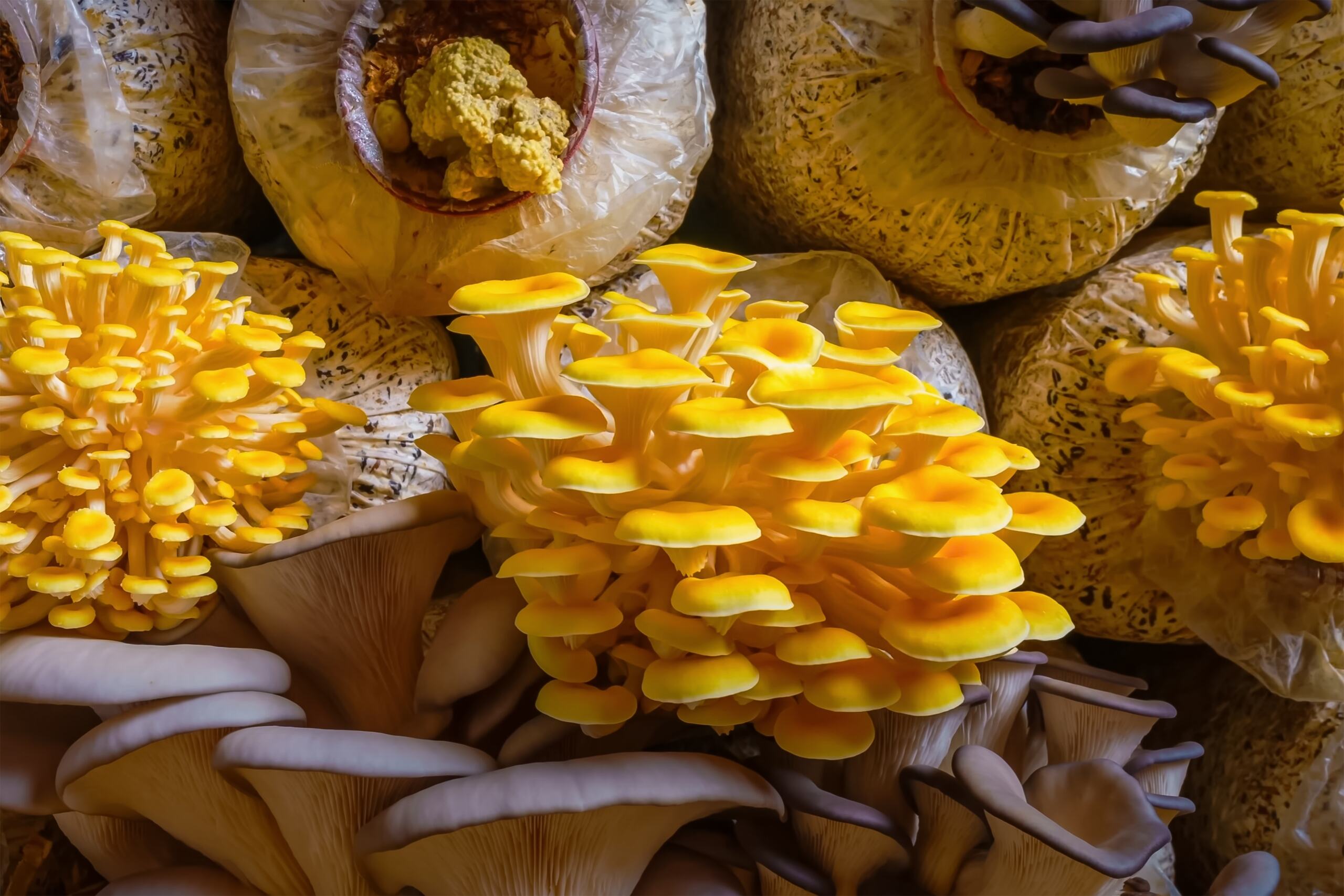
It’s certainly paying dividends, with the system using 15,000 less litres per kilogram than meat production, with a 99% smaller carbon footprint.
Elliot thinks the vertical farming model is not only achievable, but a more sustainable way of securing the future of the industry, as traditional methods of growing become more and more vulnerable.
“For British farmers, thinking outside the box isn’t just an opportunity, it’s become a necessity. Diversifying into innovative, resource-efficient systems like mushroom cultivation can help strengthen food security, reduce environmental impact, and build a more future-proof industry.”
Tiptree Farm in Essex (growing fruit to fill the nation’s – and world’s - jam pots with its Wilkin & Sons products) has spent many years perfecting its own modern farming systems and, like Urban Farm Produce, considers new ways of working as utterly essential. Co-director, Chris Newenham, says it’s their responsibility to think greener.
The Tiptree sustainability journey has its roots in water. Fruits need a lot of it, but their site is scarce, with no ground water abstraction available. To address this and ensure future water resilience, they invested in a groundbreaking and UK-first (in 2017) NGS system for strawberries, which has improved yields, reduced input requirements, and created better working conditions for staff.
In the oscillating system, alternating rows are raised or lowered so pickers and growers can tend to the plants either side of them. Recycled coir keeps the plants in place. And the system collects water, which is then filtered and used to irrigate the crops.
The closed system saves 10% on picking costs compared to tabletop growing, and 40% compared to growing berries in the ground. Crops are available earlier and later into the season. Mildew has been reduced. Insects are kept out through fine mesh. And the overall land footprint required is lower. It’s been a win-win, and revolutionises how strawberries could be grown across Britain.
As we’ve already established, vertical farming could play a big part in the future of food security. But what about looking up – or out into more unusual locations for growing? This is exactly what The Culpeper Family group of gastropubs in London has done, demonstrating what small-scale farming and growing within hospitality could look like.
The group’s first pub, The Culpeper in Spitalfields, has its own rooftop garden, producing vegetables and herbs, with further investment has taken place in the form of a little urban farm in Deptford, which enables chefs to get more hands on with ingredients, while shortening supply chains.
Co-founder, Nico Teguer, says they have a lot of fun varying the plantings while improving biodiversity, growing more than 200kg of produce in 2025, from tomatoes to edible flowers.
“We are very aware that we will always need the farms in the countryside to feed the people, and that urban food growing is only part of the puzzle, but who does not want to live in a more natural environment with shorter distance covered from field to fork?”
As well as inspiring the team, they hope can be a catalyst for change, Nico adds. “We continue to believe in a network of small urban growing spaces to surround ourselves further with nature. We are really passionate about the role that business and hospitality as an industry can play in society to reconnect people with nature, and we want The Culpeper Family to lead the way to show it is possible to have a great business, respectful of the land for now and future generations.”
To this end, the group has set up its own not-for-profit organisation, Ethical Land CIC, aimed at supporting urban growing and organic and regenerative farming in the UK, while promoting wild natural environmental conservation.
They’re open to speaking to other hospitality venues about how they can make urban farming work, and Nico says it would be great to see others adapt to grow even a small amount of products themselves, but change, “can simply be to use shorter supply chains, purchasing from local growers who work organically with nature. More local and more tasty, with less money going in the wrong pockets. It’s a genuine win for all.”
Being nature-friendly, rather than using methods which actively push back against the environmental order of things, is how we would have farmed in the past. Increasingly farmers are looking back to look forwards, reintegrating sound, time-honoured traditions into their practices alongside the latest tech.
Winemaking is on the up across Northern Europe, but especially England, as warmer climates increase yields and produce sweeter fruits. This growing market has the opportunity to learn from the successes and mistakes of established peers, particularly when it comes to sustainability – not something the industry is widely known for.
Roebuck Estates in West Sussex recognises the challenges, and has made it its mission to be as supportive of nature as possible, even employing an ecologist.
Everything they do, says CEO Michael Kennedy, is with an eye on producing the best quality fruit for winemaking, while managing the vineyards in a way that’s as healthy as possible.
“One of the biggest decisions we took was going herbicide free at the beginning of 2023, so we’re now going into our third year. It was very much with the view to reduce the use of chemicals and manage the soil more naturally. That was quite a big deal for us, and it’s been a learning process.”
It may sound counter-productive, but a benefit of taking herbicides out of the system has been reduced vigour in the vines, meaning they don’t have to strip the canopy so much, saving time and energy.
Tracking across the estate shows there are more earthworms in the soil – an indicator of health, and something the Soil Association has praised the business for.
Bringing in ecologist Matt seemed like an organic step for the winemakers, who were encouraged not to focus on attracting one species, but instead to think holistically about their site. The changes made, including extending hedgerows, adding wildflower meadows and installing bat and bird boxes and a pond, have increased the bee population to around 1 million across the vineyards, and seen an influx of bats, which has been a revelation for Michael. “Matt’s been very keen to encourage them. They’ll eat 1-2kg of insects a night, which really helps us in terms of pest control.”
“We’re also doing things to encourage slow worms and grass snakes. And we put trail cameras in to track a number of species. One thing we noticed last year was someone saw a weasel in the vineyard for the first time – now we’ve had a dozen sightings. They’ve helped with the rabbit population.”
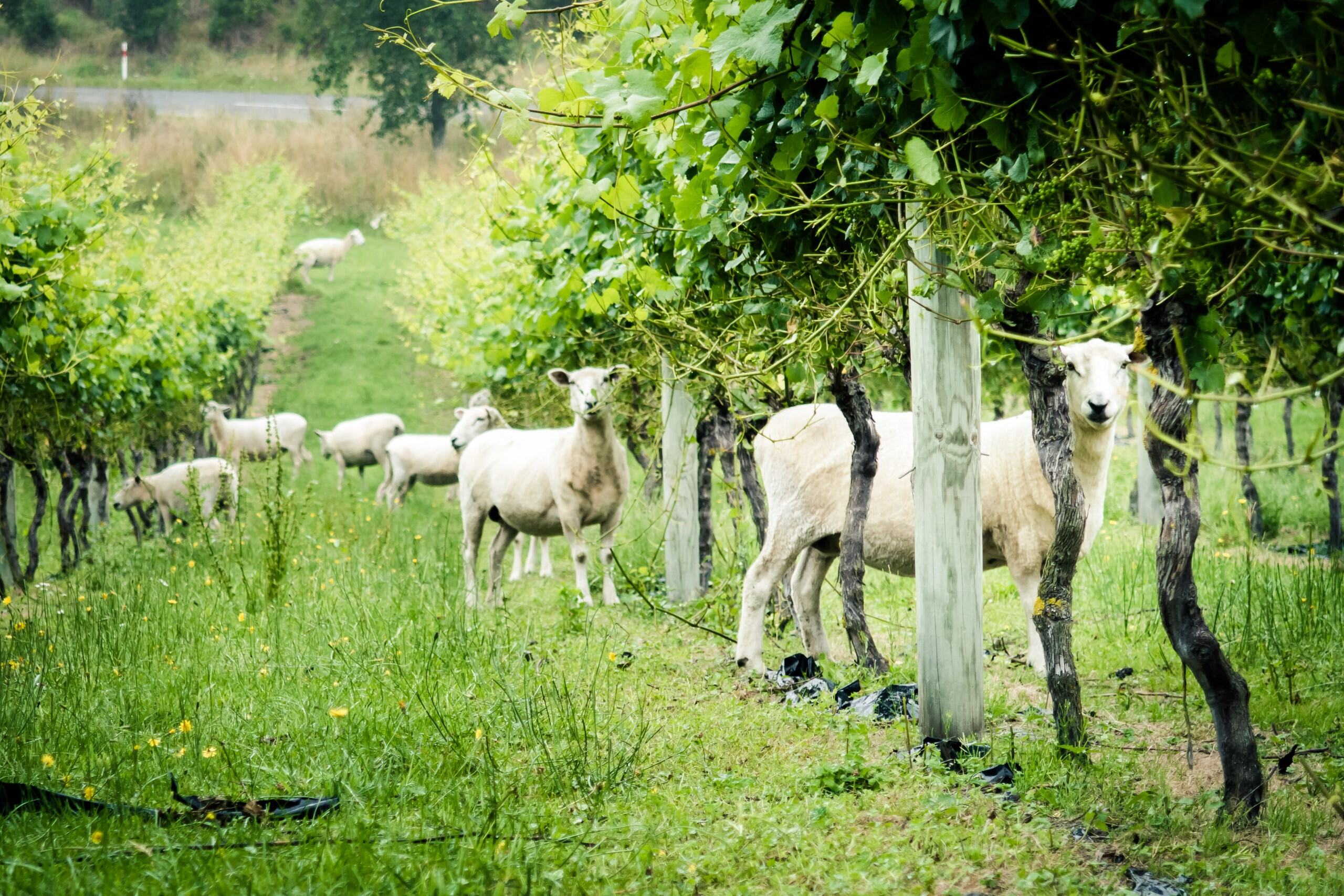
Grazing 800 sheep across the vineyards in winter provides natural organic fertiliser. Chemicals are further being reduced by breaking the vineyards into ‘blocks’ and using data to track is spraying is required. “It’s really working,” Michael says.
Food waste, as we know, is a massive part of the conversation in sustainability. According to the Food Foundation, around 2.7 million tonnes of is thrown out by producers, businesses and householders every year. Globally, it’s thought a jaw-dropping third of all food is wasted.
In farming, could modern freeze-drying techniques be the saviour of so-called ‘wonky’ produce that’s otherwise rejected by many larger retailers, or used as a way to preserve an overly abundant yield?
Very possibly. The latest in food tech is helping Hampshire’s New Forest Fruit Company to not only grow its strawberries more sustainably, but turn them into snacks in a canny way that paves the way for others.
The idea, to make crispy strawberry snacks, is as much a commercial decision as a way to deal with waste, says owner Sandy Booth. “We are a strawberry producer,” he says. “That is our bread and butter, but that is a seasonal business. We grow strawberries shall we say, nine months of the year, and that other ‘dead time’ eats at money. You have to have some other form of income coming in. Ten per cent of our strawberry yield on average is classed as waste due to being too big or too small or the wrong shape, wonky as some put it. That would usually go to jamming or, in the past, to the bin. Since launching New Forest Fruit Snacks, 5% is going into the snacking business and the rest into jamming.”
No preservatives are added. It’s just the pure taste of berries, thanks to the clever pulse and freeze-drying technique used at the farm. Strawberries are picked and their tops removed before they’re pulsed and bagged then frozen until they go on to be freeze dried. This keeps the flavour and structural integrity of the berries intact.
“Pulsing allows us to leave the nutrition in and get the water out,” Sandy explains. “Otherwise, when they get freeze dried the cells can crush. When you open the pack you get a lovely aroma, as if they’ve just been picked.”
Other very interesting deployments on the farm include robotic UV light systems, which has reduced mildew on-farm (and is to be expanded due to success from 1 hectare to 60 hectares this year), with hopes this will help the business take chemicals out of the system; and the coir used to grow the strawberries is recycled to grow pesticide-free asparagus on site, which crops much earlier than anywhere else in the UK, and with higher sugar levels, giving the vegetables an unparalleled flavour favoured by some of nation’s top chefs.
This same coir, as well as recycled strawberry tunnels, is being used in the company’s winemaking business, B58 Winery, enabling them to grow sweet, succulent grapes not usually associated with English wine, such as Merlot, Shiraz and Grenache. Already these are turning heads at awards.
One thing’s for certain. Britain’s farmers, through necessity, are leading the way in their interpretation of how the industry will look in the next five, 10 or even 15 years, and with support, their efforts could be very fruitful indeed.