Free digital copy
Get Speciality Food magazine delivered to your inbox FREE
Get your free copy

In recent years, the lunch-to-go market has evolved significantly. Alongside the premiumisation trend in food more generally, lunch to-go is “moving well beyond simply offering a quick, convenient meal,” says Tash Jones, commercial director at Fairfields Farm crisps. “Today’s consumers are looking for food on-the-go that is convenient, while also delivering higher quality, better ingredients, stronger provenance and good value.”
And as Lumina Intelligence’s UK Food to Go Market Report 2026 says, while convenience stores naturally win on scale, there’s a big opportunity for independent players, with coffee shops and sandwich and bakery specialists winning for turnover outlet growth.
With both office attendance and travel on rail and air growing, on-the-move meal occasions are only becoming more popular, the report finds. This year, Lumina Intelligence predicts growth of 3.4%, with a strong mentality to trade up, as those who are more money-conscious opt for packed lunches and those with money to spend choose to trade up.
“Retailers are recognising that a successful lunch-to-go offer is about the overall experience, not just the food itself. Grab-and-go merchandising, premium meal deals and flexible formats are helping retailers compete with cafés and quick-service restaurants,” Tash says.
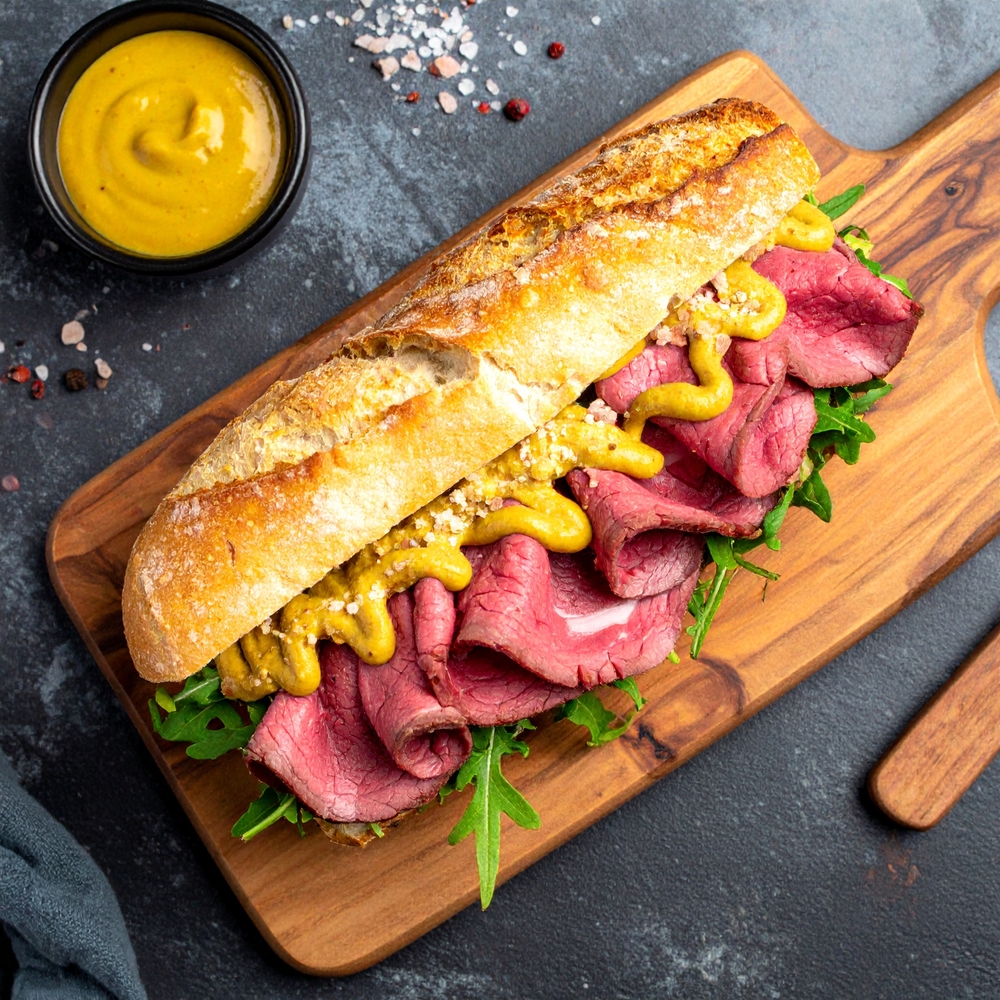
The Sea, The Sea is a seafood bar and fishmongers in Chelsea founded by Alex Hunter in 2019. Recently, the shop began selling freshly prepared lunch boxes for those on the move, featuring sashimi sets and shellfish rolls, as well as oven-ready options like miso black cod and Singapore chilli crab.
“When we opened the restaurant, we realised there weren’t many quality takeaway options on Pavilion Road or in Chelsea in general,” Alex explains. “We wanted to create something that’s fresh, healthy and full of flavour, while making seafood feel more accessible. Fish can sometimes seem daunting, so these are an easy way for people to enjoy it without having to cook.”
Far from the usual grab-and-go options, The Sea, The Sea’s menu focuses on fresh, high-quality seafood, with top-selling dishes including octopus salad, crab Caesar salad and prawn soba noodles, all priced under £20. “It’s about offering restaurant-quality food in a convenient format,” Alex says. The format offers flexibility, too. “Although they’re called lunch boxes, they’re just as good for a light dinner, a picnic or those days when you want something great to eat but don’t have time to cook.”
People want convenient food, Alex says, “but they also care more about quality and where it comes from. There’s a real opportunity to offer something fresher and more interesting than the standard lunch options.”
Tash agrees that there’s a gap in the market for premium lunch-to-go. “While the traditional meal deal remains a cornerstone of the category, shoppers now expect greater choice, including premium tiers and higher-quality components.”
Shoppers are also placing greater importance on provenance, transparency and traceability, she says, “wanting to know where ingredients come from, how products are made and the values behind the brands they buy.
“For fine food retailers, this presents a natural opportunity to champion local suppliers, artisan producers and products with authentic stories, while showcasing quality and craftsmanship,” Tash continues. A brand like Fairfields Farm, where the potatoes are grown and produced into crisps on site, can offer full traceability and authentic farm provenance.
“Many are also purchasing with later consumption in mind, often eating their main meal immediately while saving snacks for later, making premium snack options an increasingly valuable part of the offer,” Tash adds.
Indeed, snacks are becoming a more central part of on-the-go lunches, agrees Cathy Moseley, founder of gut-friendly snack brand Boundless Snacks. “‘Snackification’ has been on the rise for some time, this isn’t a new trend, albeit accelerated with the use of GLP-1s and a return to the office,” Cathy tells Speciality Food.
Increasingly, snacks are becoming a mealtime format in their own right as ‘picky tea’ culture takes off. “95% of us snack daily and Waitrose Food & Drink Report found that 57% of shoppers replace meals with snacky food.”
This trend has rippling effects, says Cathy. If snacks are becoming meals, consumers expect them to work harder nutritionally. “With a reduction in mealtimes, the demand for functional snacking has overtaken a need for the traditional ‘better-for-you’ category,” Cathy says.
The growing demand for nutrient-dense snacking is leading more options to become available in meal deals. “Rather than a bag of potato crisps, high-fibre bars and crisps like ours are now more widely available, driving category growth and outperforming their mainstay brands,” Cathy says. “Boundless as an example is growing 58% faster than the functional category, which is already the fastest-growing sub-category in snacking: a clear illustration for consumer demand and the results driven in-store from meeting them.”
‘Health-washing’ is becoming a thing of the past, with consumers more educated than ever on their personal health goals and what is truly better for them, Cathy says. “A need for key macronutrients to be met has surpassed the craze for low calorie / low fat / low sugar.
“This runs in tandem with a wider understanding for the need to hit a 30g fibre target per day; when it comes to snacking, 70% of shoppers want fibre prioritised, yet 31% of consumers report issues finding healthy snacks in store (Boundless data). The demand is there, and it is now a priority for the retailers to catch up.”
According to Mintel’s UK Consumer Snacking Report, 54% of snack eaters consume snacks specifically to boost their daily nutritional intake, while 59% seek snacks offering specific health benefits, rising to a whopping 78% among 16-34 year olds.
QSRs remain the most popular lunch channel due to their convenience, Lumina’s report says, but even here you can see “a huge shift across the board when it comes to menu choices and snacks available in QSR sites,” Cathy says. “Even Greggs has recently introduced protein-focused mains, ginger shots and kombucha in their fridges.”
Yet real innovation is coming from challenger brands, Cathy argues. “Challenger brands are where function is truly delivered, rather than the frequent HFSS reformulations by conglomerates, and this is why they’re so intensely backed by the general public in repeat purchase rates. It is paramount that function continues to grow and expand the category to meet consumer demand.”
The trend for world flavours in food encompasses lunch-to-go as well as home cooking, with Lumina’s market report noting that food-to-go is increasingly becoming a ‘culinary destination’ rather than simply a functional ‘quick meal’ option. Even supermarket brands are focusing on flavour innovation.
“Global flavours offer both excitement and a point of differentiation, helping to bridge the gap between grab-and-go and foodservice, while encouraging consumers to see sandwiches and wraps as worthy of a higher spend and more considered choice,” the report says.
While lunch-to-go consumers are focused first and foremost on convenience, sustainability is not far from their minds, Tash says. “Sustainability is also becoming an increasingly important purchasing consideration. Consumers are looking at responsible sourcing, packaging, farming practices, and processes when deciding which brands to support.
“Retailers that can communicate a genuine sustainability-focused story alongside strong provenance credentials are likely to build greater trust and long-term loyalty,” she continues.”
While premium options are taking off, many consumers are still financially squeezed, meaning a more ‘deliberate’ approach is emerging.
“Consumers are still participating, but the decision to pick something up on the go or replace a meal with smaller bites is increasingly influenced by value, Andy Newman of tastecard writes in a recent Speciality Food column.
“What we’re currently seeing at tastecard is that loyalty schemes, meal deals and membership-led offers are increasingly acting as a bridge between what consumers want to do and what they feel they can afford to do,” he says.
“What this ultimately reflects is a shift from impulse to intention, where participation is still there, but increasingly shaped by whether it feels accessible in the moment.”
From premium indulgence and healthier everyday choices to global flavours and sustainability, there are numerous ways retailers can refresh their lunch-to-go offering.