Free digital copy
Get Speciality Food magazine delivered to your inbox FREE
Get your free copy

The aroma of freshly brewed coffee could bring customers through your doors.
Over the last year, the independent coffee and cafe sector grew by 3.3%, reaching 13,211 outlets across the country.1 In the first half of 2026, cafe and coffee shop spend grew by 5%, while restaurant spend fell 3% in the same period.
Whether you’re weighing up a counter, or trying to get more out of one you already run, the question is how to turn one-time customers into regulars.
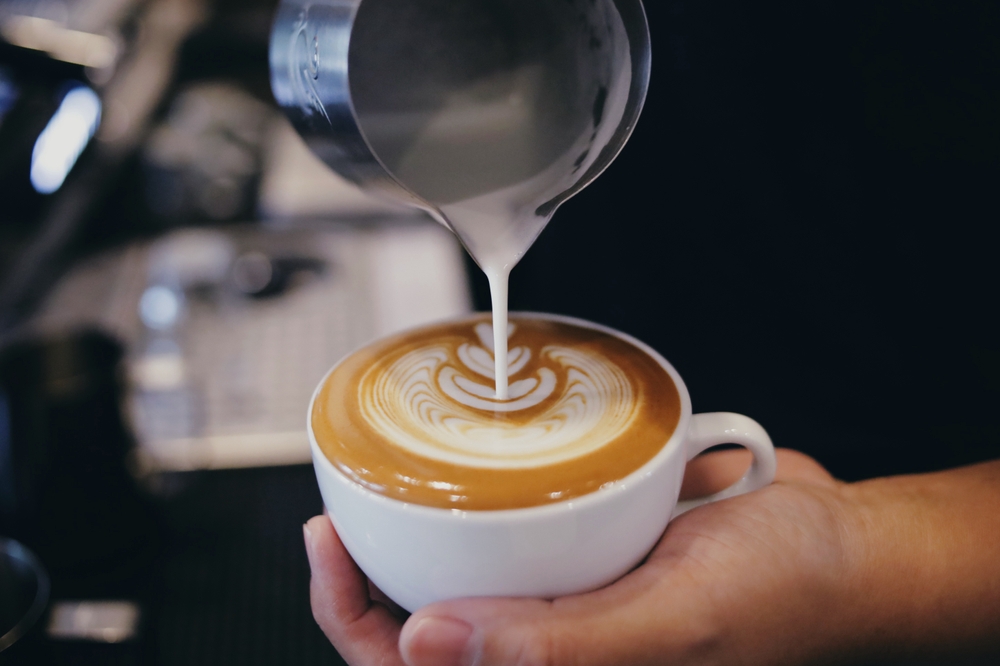
That’s the conundrum Matteo Bragazzi has been solving for over two decades. When he and his brother opened Bragazzi’s in Sheffield in 2003 as a food shop, the single-group espresso machine tucked away in the corner was never supposed to be the main event.
However, when demand for coffee grew and the opportunity to buy the neighbouring unit came up in 2004, Bragazzi seized it. Within a year, the two spaces had been knocked through into a dedicated cafe. The balance between the two sides of the business has since shifted. Coffee soon became the dominant trade, with the shop even releasing its signature house blend.
“We were lucky enough that one of the people who worked for Darkwoods, worked for me for many, many years,” explains Bragazzi. “So when he left to Darkwoods, we were able to curate our own blend specifically for us. Ours is a very traditional, medium to darker roast counter to many of the lighter roasts out there. I wanted something traditional and in line with the vision.”
By choosing someone who already understood the ethos of the shop, over simply picking a blend off a supplier’s standard list, Bragazzi was able to deliver on customer expectations.
The shop was built on fine Italian fare, and locals wanted the same quality in every cup. Bragazzi’s advice to retailers looking to build a firm customer base is markedly straightforward. “Don’t try to be all things to all people all the time. Just stick to what you do, and do it really well,” said Matteo Bragazzi from Bragazzi’s, Sheffield.
With 78% of food-to-go customers now describing themselves as “quality driven,” retailers who prioritise this stand to win over buyers. For Yas Wyatt, co-founder of Baked in Bungay, this has always been a guiding principle. “Before anything else, we ask ourselves, is this something we’re genuinely proud to put our name to? If the answer isn’t a definite yes, it doesn’t make it onto the counter.”
Of course, holding your offering to a high standard means staying close to the product — something of which Wyatt is immensely proud. “We taste everything, we notice the small details, and we can make changes immediately if something isn’t quite right,” she adds.
Walk down any city street and you’ll spot the same coffee chains on every corner. For independent retailers, that scene can feel like real pressure to compete with big-name brands. But as Nicola Woods, Event Manager at the Speciality & Fine Food Fair, explains, the competition isn’t as one-sided as it may first appear.
“The human side of hospitality is more important than ever for independents. Chains often prioritise speed of service for busy commuters, consistency of their offering and, increasingly, the freedom of self-service and personalised choices,” explains Woods.
“On the other hand, independents are valued more than ever for the curation of products on offer and the in-house experience. Customers gravitating to independent cafes want to see the personality of the business and want to benefit from the expertise of the team.”
While curated stock and a clear point of view have always set fine food retailers apart, the counter offers a chance to express what the shop already stands for. Staff who know the provenance of a bottle of olive oil should be equally knowledgeable about the coffee they serve.
“Customers gravitating to independent cafes want to see the personality of the business and want to benefit from the expertise of the team,” said Nicola Woods, Event Manager at the Speciality & Fine Food Fair.
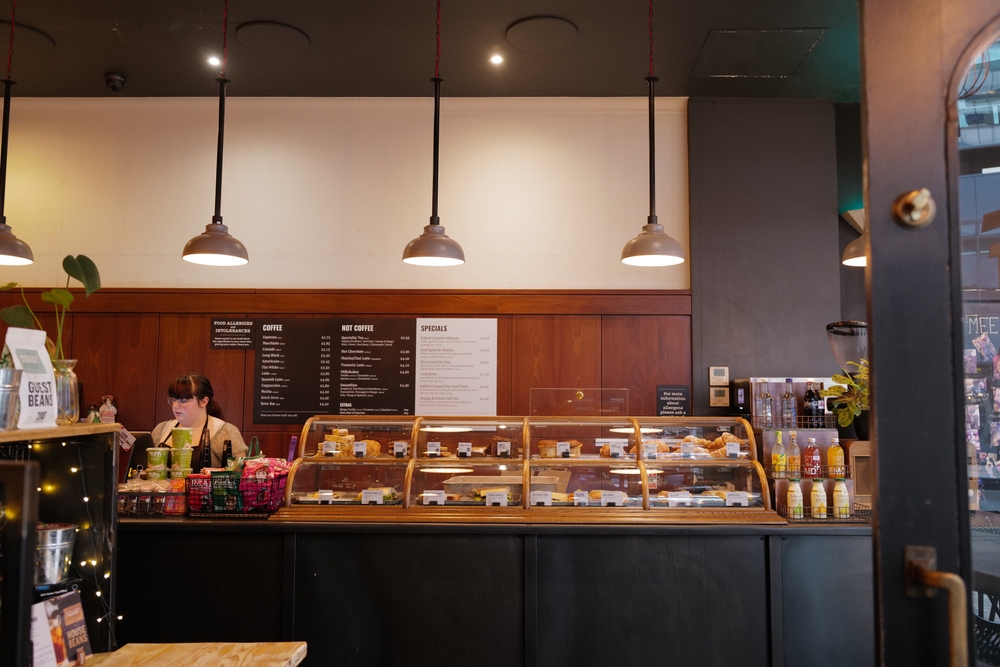
Once retailers have established a coffee service, the space itself can become an asset. Jade Leeper, co-owner of 65 MM Coffee in Tonbridge, found this out almost by accident. Regulars would often comment on the inviting lighting of the shop, remarking that it would make a great evening venue. When a local chef approached them about starting a supper club, it felt like kismet. However, as Leeper explains, there was an initial element of trial and error.
“It took us a while to get an idea of what people were looking to get from a supper club and how often it would serve them, but now we roughly do them every three months with a constant chef, and do a few other ones with different chefs from time to time between those,” she says.
The success of the clubs has in itself become self-sustaining. “Usually the chefs get in touch with us about doing a supper club,” explains Leeper. “They have heard about us through social media and usually reach out via Instagram or in person.”
For operators tempted to try a similar setup, Leeper suggests starting small. “Make sure you don’t try to do too much too soon,” she says. “We don’t have much storage space at the cafe so we have to collect our glassware and extra tables and chairs to accommodate the amount of seats sold, along with ordering alcohol. This all adds extra work outside of the event.”
From pistachio-flavoured lattes to fibre-fueled extras, trends move faster than ever in 2026. A clear advantage independent retailers have is speed. While a national chain spends months developing a new product, an independent can have something on the board by the weekend.
“We have the ability to change things very quickly, our menus, our specials, we can keep up with trends, design and launch a new dish or drink and have it available within a few days,” explains Natalie Perry, co-founder of Tamper, a Sheffield cafe known for its Kiwi-inspired food and coffee. “As the owners we are always in and out of the business, this enables us to ensure the high standards we set are followed.”
Nicola Woods from Speciality & Fine Food Fair shares her top cafe trends:
1. “Quirky” takes on classics. Iced coffee is moving well past the standard cold brew, with retailers experimenting with a twist on classic flavours. Woods says to expect the quirkier serves to keep showing up in the months to come.
2. Functional ingredients. Customers are increasingly considering the wellness benefits of coffee. Functional extras like Lion’s Mane mushroom or turmeric speak to this trend.
3. Asian-inspired additions. Coffee menus are starting to borrow from Asian flavour traditions, with matcha now a firm favourite.