Free digital copy
Get Speciality Food magazine delivered to your inbox FREE
Get your free copy

With shoppers seeking more than points and discounts, successful strategies now blend emotional rewards, genuine value and transparent data practices to build lasting brand relationships.
According to Upside’s Escaping the Loyalty Plateau report, today the average consumer belongs to 17.4 loyalty programmes, up 60% over the past decade. However, active participation has increased 8%, to 8.4 programmes. It asks: have loyalty programmes peaked and hit their growth ceiling?
Well, perhaps not. Dotdigital’s Customer trend index 2026/27 results show that more than half (53%) of customers consider loyalty programmes “important” or “extremely important” to their future relationship with a brand.
Plus, opportunities exist. The grocery sector could strengthen and grow its loyalty programmes. According to 2026 Progressive Grocer data, almost two-thirds (63%) of shoppers say they are enrolled and actively use a grocery loyalty programme, while another 4% are enrolled but inactive. Interestingly, 14% said they would join if their preferred grocer offered a loyalty programme.
Today’s consumers aren’t necessarily rejecting loyalty programmes then. But they are becoming more selective about what makes a programme worth participating in.
Loyalty programmes are generally built around three core areas:
Points and rewards that focus on rewarding the behaviour you want to see, so the more a customer spends, the more they get back. Personalised offers based on what customers buy. These use insights to reward them on products they already love while also introducing them to products or categories they are likely to enjoy but do not currently buy from that retailer.
The emotional connection with the brand. Freebies and giveaways can be particularly powerful, as a free product can create a feeling of being valued and recognised that a conventional discount does not always deliver.
In food and drink retail, something relatively low-cost to the retailer, such as a cake, coffee or other treat, can feel like a meaningful reward. Successful giveaways revolve around what genuinely feels free and like a gift. “Offering a tiny discount on a product a customer has to purchase does not have the same emotional impact,” Thomas Hill, Co-founder of HyperFinity, a retail data software company, told Speciality Food.
Retailers can also work with brands to fund giveaways. “If a brand funds a reward that gets its product in front of the right customer, it can create a win for the brand, the retailer and the customer,” Thomas added.
Freebie and giveaway loyalty strategies are a significant part of the marketing mix, used to attract new customers through giveaways or to retain customers through loyalty programmes, savings programmes and freebies. “Never underestimate the power of free,” said Thomas.
As for what consumers think about freebies and giveaways in the independent food and drink sector, Mark Kacary, Managing Director of The Norfolk Delicatessen Co, told Speciality Food: “I’m not convinced they are really about generating customer loyalty. More often, they are about getting heard above the noise created by the supermarkets and larger retailers.”
For an independent business, a giveaway can provide a moment of visibility. It says: “Stop. Look at us. Follow us, engage with us, and you might get something for free.” It creates a point of difference and gives consumers a reason to notice a business they may otherwise have passed by. The same applies to smaller, particularly new, food and drink producers. Giving away a product can introduce it to a new audience while also generating exposure for the retailer. “Used well, therefore, giveaways can be a useful promotional tool,” said Mark.
However, it does raise a question mark over what loyalty is. “I think we need to be careful about calling that loyalty,” Mark shared. Someone following you because they might win something is very different from someone choosing to spend their money with you repeatedly.
“For us, genuine loyalty comes from the whole customer experience,” Mark noted. It relates to the quality and provenance of products, the knowledge and service behind them, and trust in the business, giving customers a reason to come back when nothing is being given away.
“Competition is increasing substantially, and price ‘fights’ among supermarkets have had a significant impact on the food supply chain,” Professor Dr Ilona de Hooge, Chair of Marketing and Consumer Behaviour at Wageningen University & Research, told Speciality Food.
Freebies can attract attention and potentially introduce new customers to a business. “The real test is what happens afterwards,” Mark said. If the only reason someone engaged with you was the chance of getting something for nothing, have you gained a loyal customer—or simply attracted someone who likes a freebie?
“A good loyalty giveaway should be that classic win/win scenario,” said Mark. A giveaway that resonates well with consumers needs to feel like a genuine reward that is enjoyable and ideally something the customer can benefit from immediately.
“The best giveaways are relatively low-cost or low-margin for the retailer but have high perceived and emotional value for the customer,” said Thomas. Consumers will see through a retail push that seems like it’s trying to clear excess stock.
“A good giveaway also respects privacy expectations,” Andy Chesterman, Managing Director of Privacy Helper, told Speciality Food. Customers generally accept personalisation when it is proportionate, transparent and clearly beneficial. “Problems arise when retailers use data in ways customers did not expect or that they do not adequately explain,” Andy noted.
Achieving sustainability within the freebie and giveaway market is increasingly vital. “We unfortunately often see loyalty programmes that either harm the market (e.g., through price discounts) or lead to more waste (e.g., through small gifts that people do not value),” Ilona shared.
And the return doesn’t have to be financial, immediately. It could be a significant increase in social media followers, growth in an email database, greater engagement with a particular product or introducing the business to consumers who hadn’t previously encountered it.
“But I think the most valuable return is data—and, more importantly, what you learn from it,” Mark shared. Have you grown your potential customer base? Have you learnt something about what those customers are interested in? Have they given you permission to continue the conversation with them? And, having attracted their attention with the giveaway, can you subsequently turn some of that interest into genuine customers?
Data that answers these questions separates a useful loyalty giveaway from simply giving something away. The prize might create the initial interest, but the value to the business comes from what happens next.
To personalise an offer effectively, alongside knowing what is being bought, you need to know who is buying it, how often they buy it, what else they buy alongside it, whether their purchasing changes seasonally and potentially what might persuade them to buy something different. “The more data you have, the more intelligent and personalised the offer can become,” said Mark.
Modern Electronic Point of Sale (EPOS) systems can collect enormous amounts of transactional data, but for many small independent retailers there’s a missing link: they know what was bought, but not necessarily who bought it.
“That’s where the supermarkets have such an advantage through their loyalty schemes,” said Mark. A loyalty card connects the individual customer to their shopping basket and, over time, creates a detailed picture of purchasing behaviour.
“For a very small independent business such as ours, operating a sophisticated loyalty-card scheme on that scale simply isn’t realistic,” Mark shared. “Our turnover and margins don’t allow us to continually give away margin simply to acquire the volume of data that a supermarket can generate,” Mark noted.
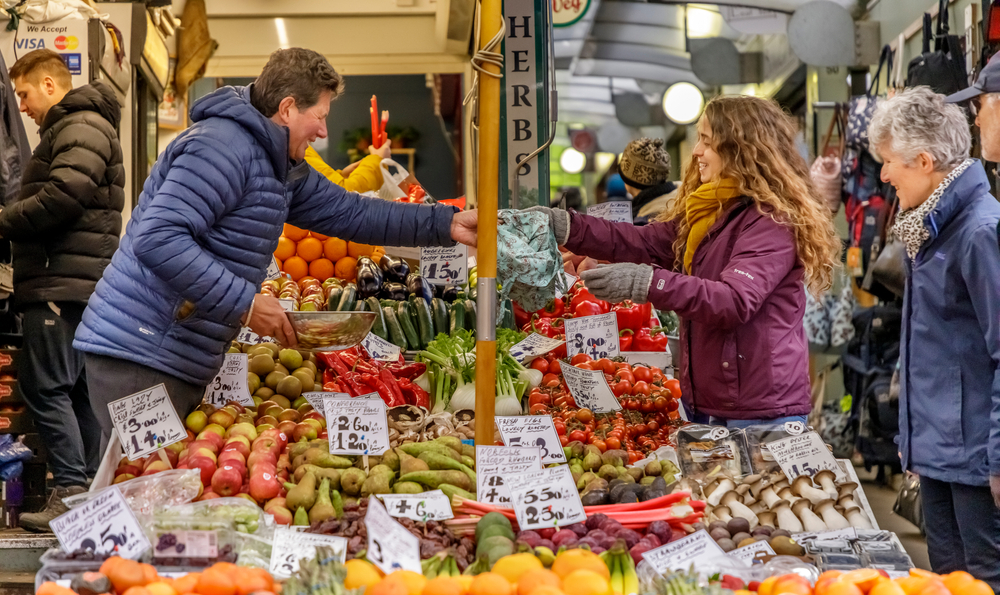
But independents have a different advantage. “We may not have millions of data points, but we actually know many of our customers,” said Mark. Independent retailers talk to them, know the products they enjoy and can recommend something based on a conversation rather than an algorithm.
From a data protection perspective, transparency is a key challenge in freebie and giveaway strategies. “Customers should clearly understand what data is being collected, how it will be used, and whether it will influence the offers they receive,” said Andy.
Supermarkets can achieve personalisation through scale, technology and data. A good independent can achieve it through knowledge, relationships and human interaction. In many ways, both are trying to achieve exactly the same thing: making the customer feel that an offer has been chosen for them rather than simply sent to everyone.
“There is still relatively limited personalisation available for free giveaways,” said Thomas.
Interesting examples of personalising freebies and giveaways exist in food and drink retail, such as Lidl’s previous approach of allowing customers to add a free product to their basket, often introducing them to a product or category they did not normally buy.
However, there is an opportunity to combine the power of free with personalisation. If retailers can use customer intelligence to identify a free product that is genuinely relevant to an individual customer and prove that it drives incremental sales or loyalty, the economics become much more compelling.
Brands and retailers can also jointly fund such rewards. The brand gets its product in front of a relevant customer, the retailer drives incremental value, and the customer gets something genuinely useful or enjoyable. “That’s a much more powerful proposition than simply giving something away at random,” Thomas shared.
“Personalisation is almost only possible for online shopping (after all, you need to know quite some things about every customer to make something personalised), and that is quite challenging in an offline and an online setting,” said Ilona. Consumers generally appreciate relevant recommendations, but they can become uncomfortable if offers appear overly intrusive or suggest excessive monitoring.
Under the UK GDPR, retailers need a lawful basis for processing personal data and must clearly explain profiling activities when used to personalise rewards. “Transparency and trust are becoming as important as the rewards themselves,” Andy noted. “The biggest GDPR risk for loyalty giveaways isn’t the free coffee or complimentary product itself, it’s the customer data collected to deliver it.”
Retailers must ensure that any data-gathering, profiling and marketing activity remains transparent, proportionate and fair. “Customers are generally happy to share information when they see value in return, but trust can be lost very quickly if businesses collect more data than consumers expect,” Andy added.
“We will inevitably see much greater use of AI within loyalty programmes, and, in turn, much greater personalisation,” said Mark.
Hyperfinity’s research shows that customers are ready for loyalty programmes to increasingly tap into the personalisation trend and are comfortable with AI being used to deliver personalised loyalty offers. “But the technology is only valuable if it delivers greater relevance and better value for the customer,” said Thomas.
Using customer intelligence and AI to understand what consumers genuinely love and buy, rewarding them with those products while also identifying products they buy elsewhere will become core strategies. “We’ll gradually move away from the fairly blunt loyalty model of ‘spend £X and receive Y points’ towards something much more predictive,” Mark said.
Rather than simply rewarding what you’ve already bought, loyalty programmes will increasingly try to anticipate what you might want next. That’s potentially far more valuable to the retailer because loyalty stops being simply about discounting existing behaviour and becomes a way to influence discovery and broaden the customer’s relationship with the business.
However, there is a potential danger. “The more sophisticated the technology becomes, the easier it is for loyalty to become entirely automated and transactional,” said Mark. Customers don’t necessarily feel loyal to a business simply because an algorithm has become very good at predicting what they’ll buy next.
For independent retailers, therefore, the opportunity is slightly different. “We are unlikely to compete with supermarkets on the quantity of data they possess or the sophistication of their loyalty technology,” Mark added. But AI should increasingly give smaller businesses access to capabilities that previously required significant resources—helping them understand purchasing patterns, segment customers and communicate with them more intelligently.
“The challenge will be using that technology without losing the human relationship that is one of the reasons people choose independent businesses in the first place,” Mark shared.