Free digital copy
Get Speciality Food magazine delivered to your inbox FREE
Get your free copy

For Speciality Food readers, Christmas drinks offer an opportunity to do more than simply fill shelves with familiar festive favourites.
In 2026, consumers are looking for drinks with personality, provenance and a sense of occasion – whether that means an unusual liqueur, a richly flavoured whisky, a distinctive mulled drink or a beautifully packaged bottle that feels worthy of giving.
The key, according to Dawn Davies of The Whisky Exchange, is to look beyond predictable seasonal products and give shoppers something they cannot easily find elsewhere. “I think liqueurs are one to watch this year, particularly quirky liqueurs,” she says. “There’s quite a lot of really fun options out there.”
Dawn believes the trend reflects a wider desire for drinks that feel elevated but remain playful. “People just don’t want a Bailey’s anymore. They want something different,” she says, pointing towards products with genuine provenance and quality rather than simply unusual flavouring.
For independent retailers, this creates an opportunity to use the drinks fixture as a point of discovery. Unusual liqueurs, distinctive world whiskies and characterful spirits can provide the theatre that encourages customers to browse, ask questions and ultimately spend more.
The festive period also changes consumers’ attitudes towards price. A bottle of something special that might feel like an unnecessary purchase during the rest of the year can become much easier to justify when it is connected to entertaining, gifting or a few weeks of seasonal indulgence.
“Christmas is that moment,” says Dawn. “It’s about bringing people together. It’s about that time by yourself when you’re wrapping presents. It’s about the colder nights, when you want comfort and something that you just wouldn’t buy normally.”
That willingness to trade up is particularly relevant for fine food independents. Davies says that “at Christmas we think, £70 to £80 sounds fine”, compared with a lower everyday price point.
For retailers, the message is not simply to stock more expensive bottles, but to give shoppers a reason to spend more. Provenance, craftsmanship, flavour, packaging and the story behind a product can all help communicate value.
“We’re really happy to spend as long as we know that there’s quality and we’re getting value for money,” Dawn says. “When you open that bottle you really want it to deliver for you.”
Classic, full-bodied styles have an important role to play in festive drinking. Dawn reports strong interest in heavily sherried whiskies, richer styles and smoky spirits as consumers look for drinks capable of standing up to the flavours of the festive table.
“We’re definitely seeing an uptick in those richer styles and big smoky beasts coming in because people are eating richer foods,” she says. “Consumers feel like they need that kind of envelopment of flavour at this time of the year.”
This is an opportunity for retailers to make food-and-drink recommendations rather than treating alcohol as a standalone category. Whisky with Christmas pudding, a rich spirit alongside chocolate, or a warming drink alongside a cheeseboard can turn a product recommendation into a festive occasion.
Teal’s is also looking to strengthen this approach, with Ash Sinfield, founder, highlighting plans to improve cross-selling alcohol with cheese. “It’s an area where Somerset excels,” she says, suggesting bitter-sweet Somerset Cider Brandy Company Ice Cider as “a great alternative to Port” alongside a Christmas cheeseboard.
That kind of pairing plays directly into the strengths of the independent retailer: expertise, curation and the ability to connect products across the shop.
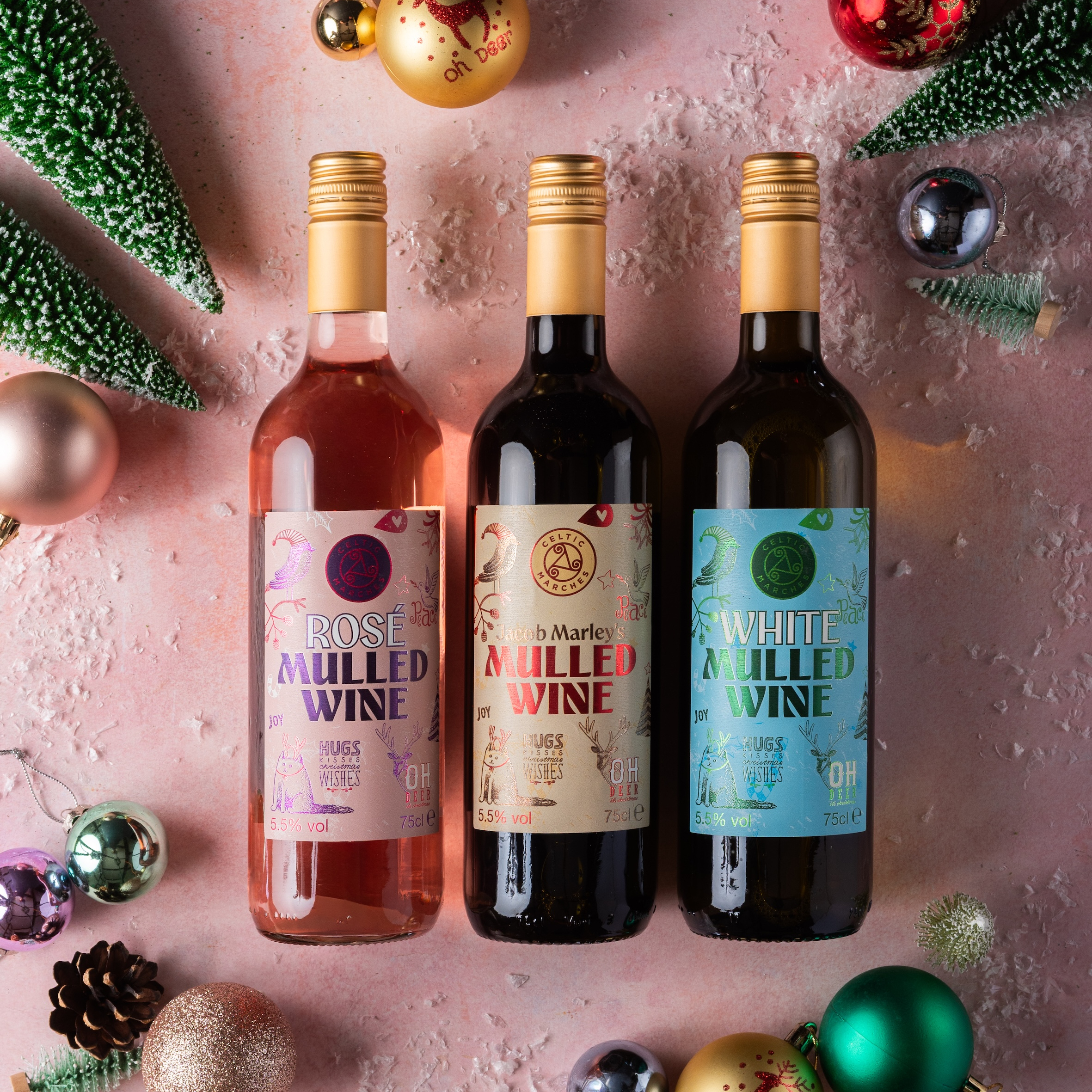
Mulled wine remains a festive staple, but the category is evolving. Celtic Marches says consumers are increasingly open to alternatives to traditional red mulled wine, with rosé, white wine and mulled cider helping to refresh the category.
“The mulled wine market has expanded exponentially in recent years, with a new openness to enjoying mulled wine outside of only red varieties,” says Susan Vaughan, director. She adds that mulled wine has “lost its slightly kitsch status” and become “a fixture of the festive drinks aisle”, appealing to a new generation of drinkers.
Celtic Marches has responded with Mulled Rosé and Mulled White alongside its established Jacob Marley’s Mulled Red and flavoured mulled ciders. Interest in mulled products is continuing to grow, inspiring retailers to offer the category more space and variety rather than relying on a single traditional option.
Make the bottle part of the experience: Packaging is increasingly important, particularly when drinks are being bought as gifts. Giftable bottles should be easy to identify and, where possible, displayed in a way that allows their packaging and provenance to do some of the selling.
Avoid novelty: There has been a shift away from products that are overtly Christmassy towards those which promote ‘winter’ with subtle, seasonal cues. Avoid wastage in the new year by minimising stock which is heavily and exclusively geared towards Christmas.
Give customers confidence: By grouping products by price point, providing tasting notes and samples, and training staff to make recommendations, retailers can give their customers confidence when it comes to purchasing drinks at Christmas – which can often be higher ticket items.