Free digital copy
Get Speciality Food magazine delivered to your inbox FREE
Get your free copy

We are all familiar with concept of Christmas being a bit… overdone. Mariah Carey’s most famous hit being blasted out at full volume, tinsel as far as the eye can see, and extravagantly packaged food and drink products that will look old hat and frivolous the moment the clock turns midnight on Boxing Day. While that might be favourable to some, to others it doesn’t scream fine food.
Instead, you may opt for more subtle touches of the season. Stacks of panettone, effortlessly attractive in their gift-ready boxes. Cheese counters piled generously high, with a showstopper cheese as their centrepiece. And opportunities to connect your customers with the people who crafted the treasures they are purchasing which may not be available at other times of the year.
We spoke to retailers who are experts in the field of festive merchandising for their tips and tricks to make both spirits and tills sing this festive season.
At its heart, “the best merchandised spaces inspire the customer and sell the product,” says Cat Pound, visual merchandising manager at Westmorland Family, home to Gloucester and Tebay services. “At a motorway service station, customers often arrive with preconceptions of what they’re walking into; that’s where visual merchandising works its magic. A customer can walk in wanting a sandwich and a drink and walk out with a whole basket of delicious treats, or an unexpected sheepskin.”
Few independent fine food establishments would have the space to bring in swathes of new display units in order to ramp up their displays come Christmas time, so smart operators have learned how to work with what they have. “Tabletop displays are one of the most powerful tools,” suggests Cat. “They are a platform within a retail space to shout about a product and bring a supplier’s story to life through aesthetic scene setting, props and texture. But they must be practical too. You need to create foundations that are easy to replenish and maintain, with commerciality at the forefront, from product placement to maximum and minimum stock holding on a display. Ultimately, you want a space to speak to the customer as they walk by. A wow moment at every turn.”
Cat’s ideal festive merchandising set-up would be “an immersive Christmas Feast space; grand but rustic, full of lights, a plethora of greenery and vegetable chandeliers. Giant cheese rounds piled high, cascading fresh produce, handcrafted chocolates on towering cake stands, magnums of fizz stacked into Christmas trees,” but this is far beyond the means of many of us…
“On a smaller scale,” she suggests, “you could invest in beautiful reusable fixtures, elevate a rotating selection of producers, and use sampling and high-level decoration to create that immersive experience without overcomplicating what’s underneath.”
Stephen Fleming, founder of George & Joseph, has found that the festive season brings ample opportunity for creative merchandising – and generosity, in-person experiences and enjoyable connections are part and parcel of his offering. “Christmas is when independent food retailers can really make sampling part of the theatre of shopping,” he begins. “Customers are more open to trying something new and are actively looking for inspiration, so one taste can completely change what ends up on their Christmas cheeseboard.”
In terms of making the cheese counter a destination for the festive season, Stephen has a valuable suggestion. “Last Christmas, we had a huge wheel of Gorgonzola Dolce on the counter, which we scooped straight from the wheel into little pots to order. It looked incredibly indulgent and festive, but it also created a real talking point,” he says. “Customers could taste it, watch it being served and ask how they might enjoy it at home. It turned buying cheese into an experience rather than simply another transaction.”
Also making the shop a must-visit come the Christmas season are opportunities for customers to connect with the people behind the food they’re buying. “In the run-up to Christmas, we invite cheesemakers into the shop to meet customers, explain how their cheeses are made and, of course, offer samples,” he explains. “That personal connection is one of the real strengths of independent retail. A cheese stops being just another product on the counter: customers hear its story and meet the person behind it.”
Sampling is a key selling tool at any time of year but comes into its own at Christmas when shoppers are leaning on staff for assistance in building a cheeseboard. “Sampling gives the team a natural way to start a conversation. We can find out what someone already enjoys, introduce them to a cheese they might not otherwise choose and help them put together a balanced Christmas cheeseboard. From there, we can suggest the right crackers, chutneys, charcuterie or wine to serve alongside it,” he says. “That personal guidance is genuinely useful to the customer and can increase basket spend without it ever feeling like a hard sell.”
“For me, festive merchandising isn’t just about making the shop look Christmassy. It’s about creating a sense of abundance and occasion and making the whole experience of shopping feel special,” Stephen continues. “A busy counter, generous samples, cheesemakers talking to customers and people discovering a brilliant cheese for the first time all help to create that. It’s something independents can do exceptionally well, giving customers a reason to make the visit part of their Christmas tradition.”
At Nottingham’s Delilah Fine Foods, owner Sangita Trynor works hard to create a festive feel the moment customers walk through the doors. “We have a vibrant entrance during the festive season, with people arriving straight into the gifting section and the area with panettones, Christmas puddings and stollens,” she says, from which point they can “see the cheese counter in front of them and move from the biscuit section through the savouries, oils and vinegars, and then condiments.”
Stock rotation is also vital at this time of year, she advises. “Nothing deserves to be on the bottom shelf hidden from sight, so we work to the famous saying ‘eye line is buy line’. We keep everything in their categories so people know where they’re going if they’re looking for something in particular, but keep the stock moving and keep an eye on the sales.”
A little trick that has proved invaluable to the Delilah’s team is making it clear if a product is the final one in stock. “It never hurts to let people know, and more often than not they’re going to be tempted to buy it!”
1. Great merchandising starts with abundance; inspiring, full displays that draw customers in, says Cat Pounds, visual merchandising manager at Westmorland Family.
2. Stock should be pulled forward, rotated regularly and presented to the highest cleanliness standards throughout the day.
3. Clear, consistent signage and pricing removes friction and lets the product story do the talking.
4. Consider flow and product placement carefully. Grouping similar products, creating impulse spaces and cross-merchandising opportunities.
5. Always assess what’s earning its prime position. Underperforming displays shouldn’t take up valuable space, and availability should always be addressed.
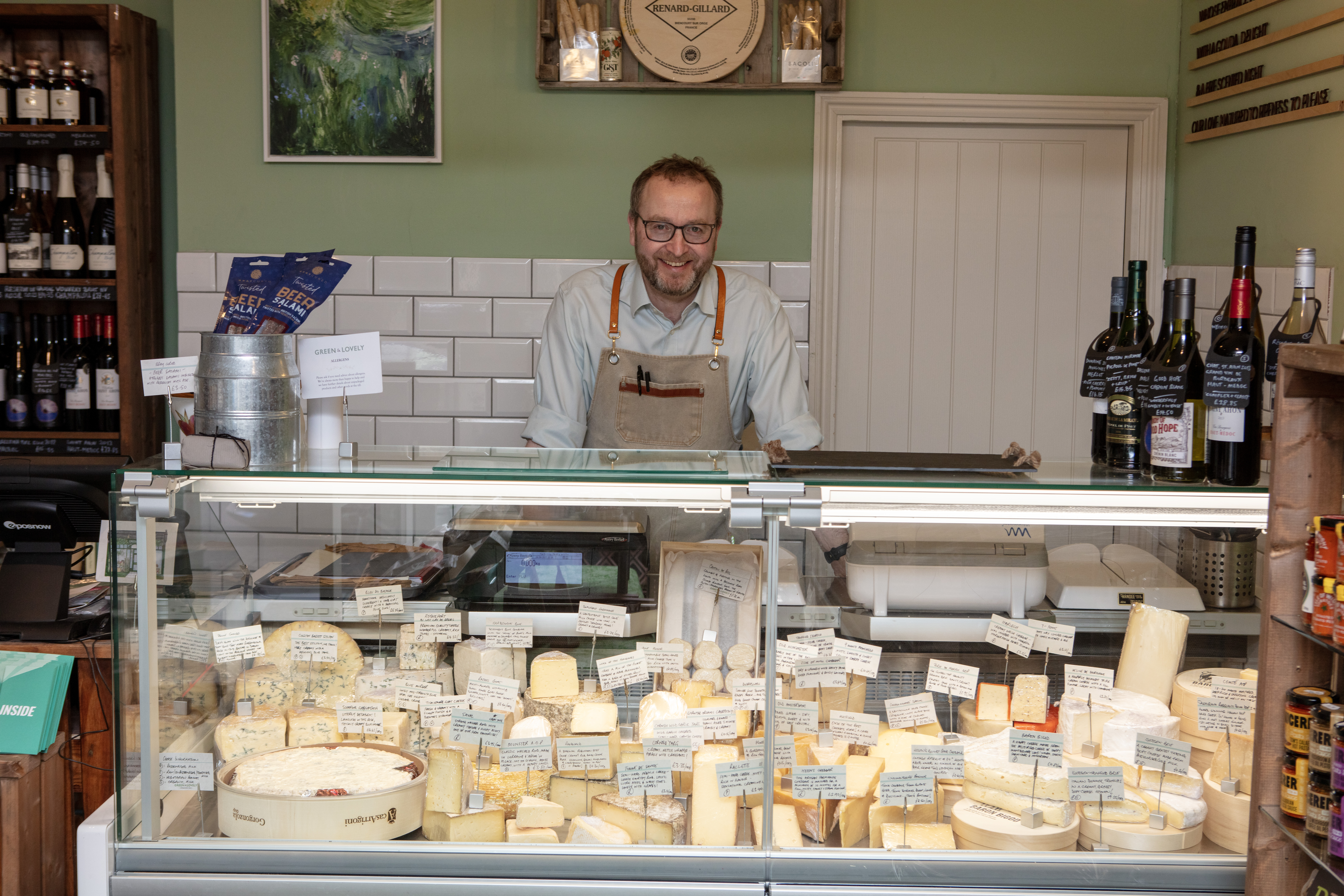
Paul Donoghue, founder of Green & Lovely
“Our key philosophy, which is amplified at Christmas, is generosity. Rather than stocking up on a lot of products that scream Christmas with themed packaging, we pile high the products that we know will be popular but work to a ‘once it’s gone, it’s gone’ mentality so that people know that if they want something they have to come to get it. We decorate the shop tastefully and opulently - absolutely no tinsel – so that when people walk in it feels Christmassy without the need for Jingle Bells to be playing in the background.”