Free digital copy
Get Speciality Food magazine delivered to your inbox FREE
Get your free copy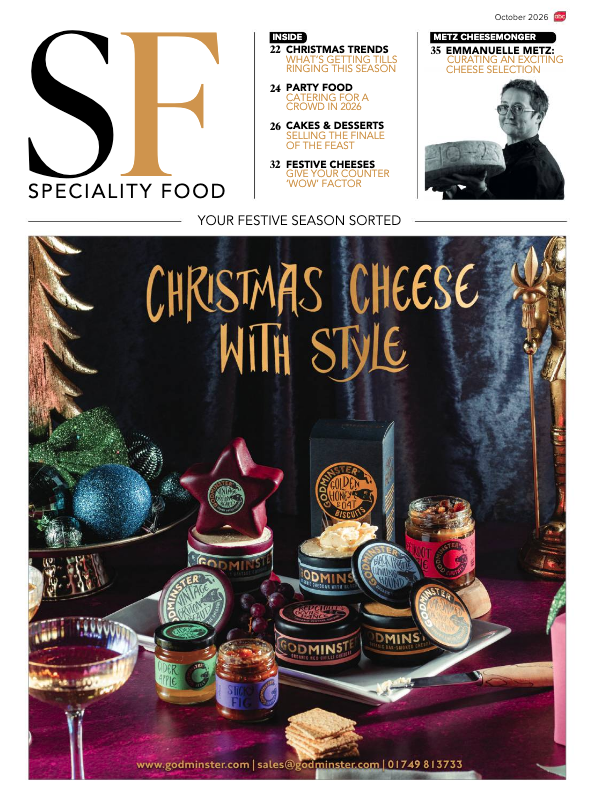

There are many ways to give back. From funnelling investment into your local farmers and producers to helping lift up the communities around the world that grow the raw ingredients used in your products, it all helps to create a more sustainable food industry for the future.
These five businesses made it onto our Sustainable Champions 2026 list by doing just that - and much more. Read their stories to see how companies in the food and drink sector can make a real difference.
Missed the first part of our Sustainable Champions 2026 series? Read it here.
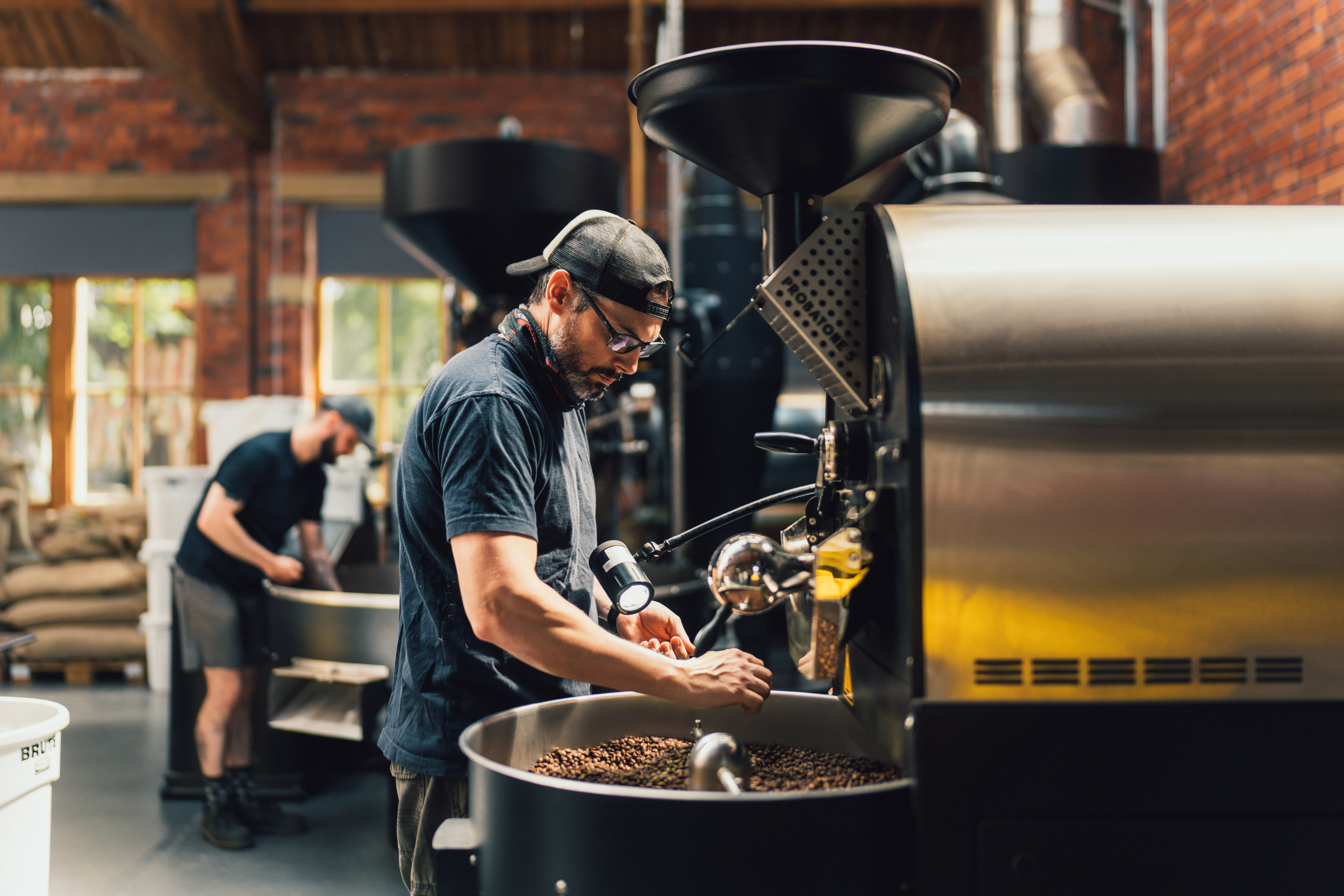
A passion for doing good through great coffee drives the Dark Woods team, and is evident throughout the business. At the heart of its mission is the triple bottom line business model, which demonstrates that carefully balancing social and environmental responsibility with financial performance not only sustains the business itself but also a healthy future for the global coffee industry.
In 2020, Dark Woods became a certified B Corp and have gone on to become one of the world’s leading B Corp businesses through a combination of social and environmental practices.
“These take many forms within Dark Woods,” begins Damian Blackburn, director. For example, the Dark Woods Foundation was set up to promote and support domestic and global sustainable development. “The Foundation is our way of giving back to the communities and producers we rely on, locally and around the world,” explains Damian. “It will have the resources and capability to support innovative programmes that contribute to the global sustainability goals that we have signed up to.”
Dark Woods gives back to the communities it works with in Ethiopia, Peru and Panama, not only by making donations and providing support to community groups and charities but also by maintaining longstanding relationships with its suppliers. “These are mutually beneficial partnerships; 99% of our coffee buying is agreed through forward-contracts, providing the certainty and trust that enables our partners to invest in their farms and communities, and secures us the quality and supply security for our customers,” explains Damian.
The business has embraced circular economy principles, including using home-compostable material to house the excellent coffee in its food service and retail range and rethinking delivery and on-site waste. Plus, the team is dedicated to supporting both local and international communities. “We donate at least 2% of our annual turnover to charities and community groups,” says Damian, “and run a local community grants program, providing support to small grassroots charities and groups in and around our local town of Huddersfield while funding the running of a childrens home and orphanage in southern Ethiopia, in partnership with Ardent Coffee.”
.png)
“First and foremost, the whole ethos behind the Biona brand is centred around the belief that organic food has a positive impact for the environment, for wildlife and for those that eat it,” says Carmen Ferguson, brand manager at Biona’s parent company Windmill Organics.
“We are a family-run business led by Noel and Donata, who live and breathe the sustainable lifestyle and ensure our delicious products will never come at the expense of our values, so despite the tough economic climate we have remained 100% organic and haven’t introduced any conventional lines which have higher environmental impacts.”
The health of people and planet is at the heart of Biona’s values. “Our mission remains to make it easy for people to choose food that’s good for them and great for the planet, so all our products are grown on organic land to the highest welfare and environmental standards,” Carmen continues. “This means Biona’s customers know that they’re investing in all the benefits organic brings to the environment, from reduced greenhouse gas emissions to greater biodiversity and soil healthy enough to feed the world for generations to come.”
“But our sustainability credentials are not just around our product range. We focus on sustainable sourcing so, for example, all our soy comes from deforestation-free sources, we use only a very small amount of palm oil (all of which is RSPO certified), and where possible we only use plastic-free packaging across our portfolio, such as in our pasta range which is sold in paper bags.
“Despite an extensive catalogue of over 400 products, we never use air freight and also optimise transportation and logistics to reduce the number of shipments we’re bringing in and only work with third parties who are moving towards EV’s. In 2025, we measured our full carbon footprint for the first time which confirmed very low Scope 1 and 2 emissions of greenhouse gasses, largely due to our environmentally conscious office which is run on clean energy. Finally, in 2025 we donated 9,553kg of short-dated stock (around 24,000 portions of food) to City Harvest to reduce food waste and support local communities.”
The future looks green for Biona. “The brand will continue to put its money where its mouth is, so as Biona grows, the company continually reinvests in spreading our mission to convert farmland to organic land across the world, to the benefit of everyone.”
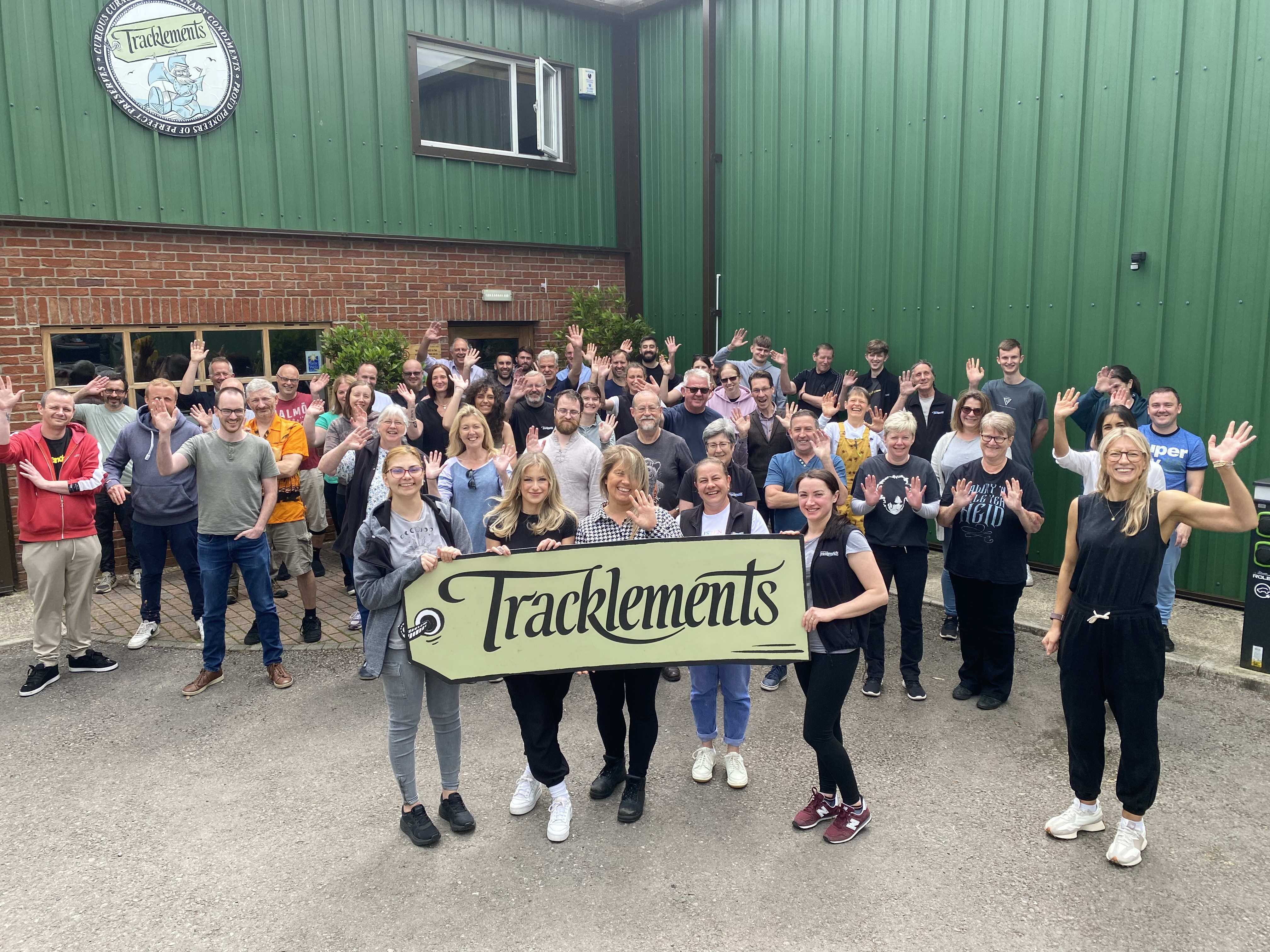
As one of the few B Corp accredited food manufacturers in the UK, Tracklements, makers of best-tasting, best-quality condiments, take a holistic approach to sustainability – making good food, whilst doing things the ‘right way’.
Manufacturing businesses are typically associated with having a higher social and environmental impact and Tracklements have been actively tackling this perception head-on for over 50 years, working to an ethos of ‘putting more back in than they take out’, all so that retailers can sell, and shoppers can eat, Tracklements with a righteous glow.
“From the big things like sourcing ingredients from farmers and growers in Britain where possible and achieving zero waste to landfill, through to the daily habits like getting milk delivered in glass bottles so they can be recycled, we are on a journey to being better every day,” says Liz Cuff, marketing director.
Tracklements source best-quality, happily wonky, ingredients from the UK where possible, to reduce food transport and support British farmers, growers and suppliers, whether it’s 40,000kg of fresh horseradish from East Anglia or 170,000L of Cider Vinegar from Aspall in Suffolk.
“We extend their high-sourcing standards through to materials too,” she continues. “For example, we get our glass jars (made from 30% recycled glass) from a British glass manufacturer to avoid transporting empty glass around the world.” As pioneers in the ESG (Environment, Social and Governance) space, when building their purpose-built HQ in Wiltshire back in 2008, Tracklements happily bucked the trend by installing windows throughout the factory – despite the advice of building industry experts, keen to stick to the ‘norm’ of food factory standards – to ensure Tracklementeers had daylight throughout the factory whilst working, creating better working environment, simply because it was the right thing to do.
“At HQ, Tracklements have used only renewable electricity for the last decade, part derived from 10,000 square feet of solar panels (with a 150kW capacity), and with the exciting development of extra warehousing space at HQ, we will soon be incorporating more solar panels to generate a further 210kW of green electricity, and adding an additional 10 electric car charging points taking their total up to 14 and facilitating electric car usage for their 70 employees.” Tracklements’ commitment to sustainability is always at the forefront as the business continues to grow from strength to strength.
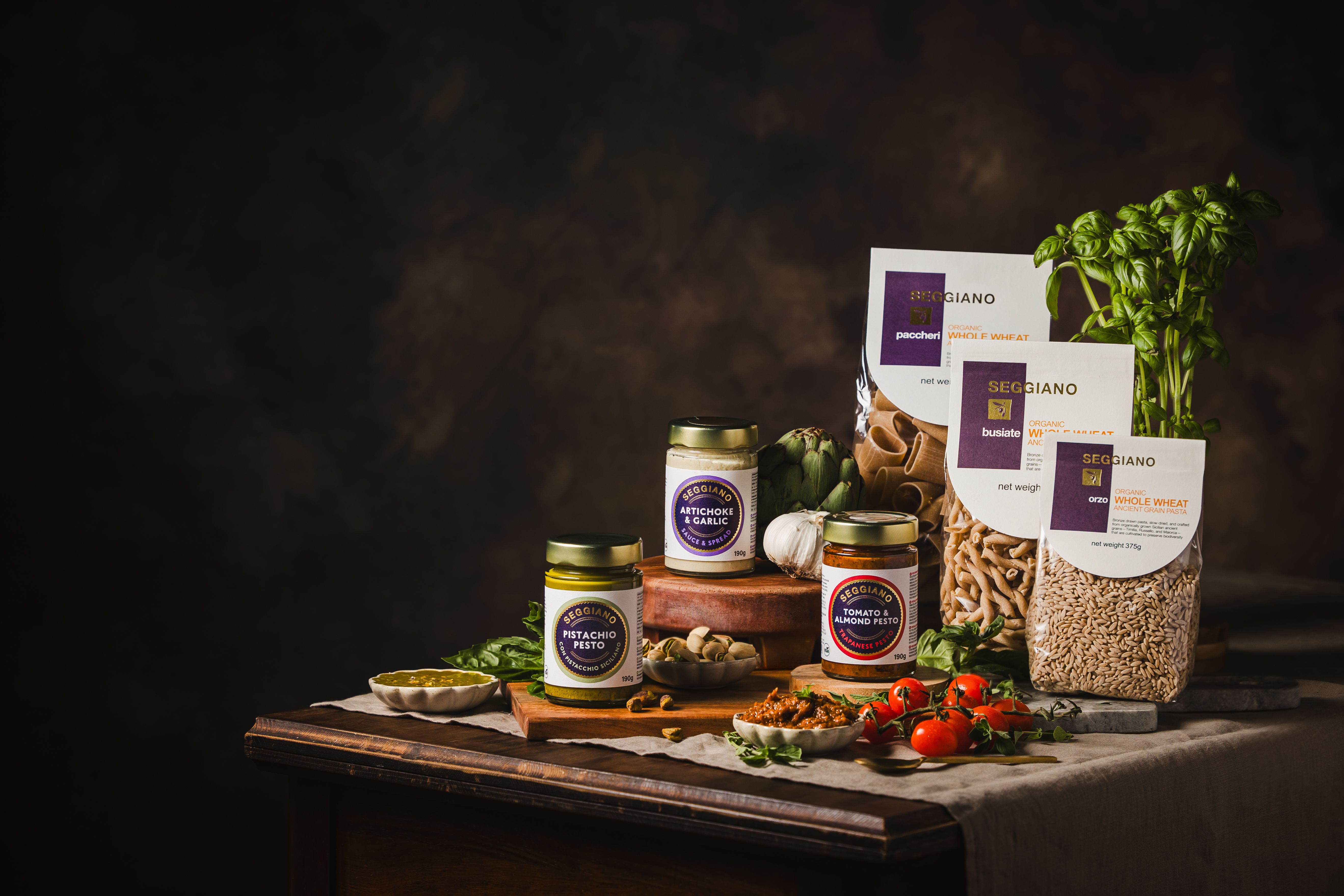
Seggiano’s approach to sustainability starts with how it sources. “We work with small, specialist producers across Italy and build long-term relationships that prioritise quality, traceability, and responsible farming and production practices,” says Winette Winston, president and managing director.
In practical terms, that means ingredients with integrity (often organic where it makes sense for the product and region), careful provenance, and simple recipes that avoid unnecessary additives and over-processing.
Where Seggiano stands out is that sustainability isn’t treated as a bolt-on claim – it’s built into the way the team chooses partners and develop ranges. “We focus on craftsmanship and seasonality, and we look for producers who protect the character of their landscapes and raw materials (soil health, biodiversity, water stewardship and low-intervention methods, where applicable),” says Winette.
That commitment to slower, more considered production helps keep supply chains transparent and supports rural communities and traditional food-making skills. In 2026, Seggiano’s focus is on measurable improvements and “less-but-better” choices.
Key initiatives include: packaging optimisation (light-weighting where possible, reducing plastic components, and improving recyclability across formats); supply-chain visibility (deepening supplier data capture around farming practices, certifications, and continuous improvement targets); and logistics efficiency (further consolidation and planning to reduce avoidable freight emissions).
“Ultimately,” says Winette, “we want sustainability to show up in the everyday decisions customers can feel: authentic ingredients, fewer compromises, and a supply chain that respects the people and places behind the food.”

“From the very beginning of our biscuit-baking business in 2001 we set out to operate in as environmentally conscious way as we possibly could,” begins Dawn Reade, director.
“Some of the things we do, such as being an organic producer, we were able to do at the outset, but others have followed incrementally, such as when we built our new bakery in 2012 to be powered by sustainable, local renewable energy from wood and from wind and water electric turbines operated by our family at Isle of Mull Cheese on their farm next door to us.”
Over the years Island Bakery has replaced plastic trays inside the biscuit packs with paper ones and eliminated palm oil from their recipes. “We are a certified organic producer demonstrating high animal welfare and full traceability, and use no artificial fertilisers, preservatives, or colours in our range. This leads to more nutrients in the product and healthier farm ecosystems.”
Island Bakery’s product range is also palm oil-free, meaning there is “no uncertainty about environmental impacts on endangered species’ habitats,” says Dawn. They also only use essential plastic packaging. “We still use a plastic film to give an airtight seal to our products and keep them fresh for the duration of their shelf life,” she explains. “So-called compostable films do not yet perform adequately for this and the colossal amounts of energy used to produce them may outweigh the benefit of their use.”
Island Bakery is powered by renewable energy, generated locally, and its ovens are heated with locally grown wood chip while electricity is locally generated by wind and water. “We are currently investigating the installation of solar panels at the bakery,” says Dawn.
“This was something we had hoped to do at the time we built the new bakery in 2012, but our budget just didn’t allow it at that time. The cost of solar panels relative to their power output has fallen significantly since then and we hope we can make this a further addition to our sources of renewable energy in the coming year.”