Free digital copy
Get Speciality Food magazine delivered to your inbox FREE
Get your free copy

There are many ways to create a more sustainable business, from tackling your carbon emissions to carefully choosing your suppliers.
One aspect that’s impossible to ignore for any producer is packaging. Thoughtful packaging that’s easy to recycle, reuse or compost is key for today’s consumer. The following five businesses made it onto our Sustainable Champions 2026 list by taking an innovative approach to packaging as just one part of impressive wider sustainability goals.
Missed our Sustainable Champions 2026 series? Read part one here and part two here.
“Sustainability has been at the heart of Emilia’s since we opened our first restaurant nine years ago, and our retail pasta carries forward the same values,” begins Becky Gill, national account manager at Emilia’s Crafted Pasta.
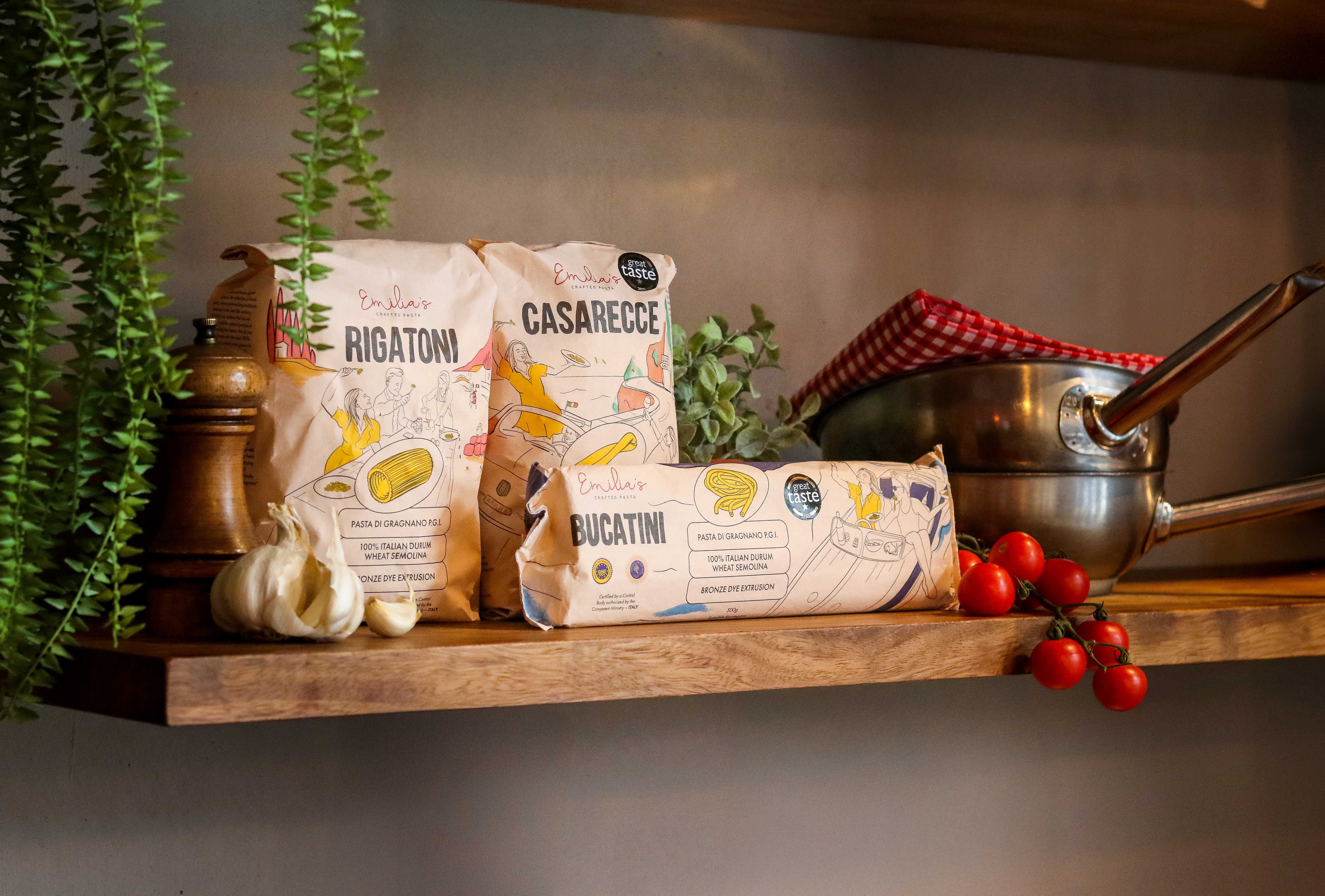
“One of our strongest sustainability credentials is our 100% recyclable paper packaging – designed to offer an environmentally responsible alternative in a retail market where mixed-material, hard-to-recycle packs are still the norm.”
As well as being visually appealing, the range’s packaging ticks a lot of sustainable boxes. “Our packaging has no plastic windows, no laminates and no hidden films, ensuring it can be recycled in standard household paper streams.”
The paper itself comes from responsibly managed forests, and the design uses minimal material and low-coverage printing to reduce waste and environmental impact.”
The pasta inside reflects the same care. It is crafted in Gragnano using traditional bronze dies, which maintain quality without industrial shortcuts; slow-dried at low temperatures, avoiding the high-energy, high-heat cycles used in many industrial pasta plants; made with Italian durum wheat sourced from growers who prioritise soil health, responsible fertilisation, and sustainable farming practices; and produced by a facility committed to minimising waste, recycling offcuts and continually reducing energy usage.
“The result is a retail pasta that mirrors the values we’ve upheld in our restaurants for almost a decade: minimal waste, simple high-quality ingredients, responsible sourcing, and respect for tradition,” says Becky.
Emilia’s sustainability philosophy is built on the same three pillars that have guided the restaurants since day one – and now shape the retail pasta too: simplicity is inherently sustainable; transparency and integrity across the supply chain; and long-term thinking over quick wins. “In short: sustainability isn’t a trend for us,” says Becky. “It’s a continuation of the standards we set nine years ago, now reaching even further as we continue to grow our retail business.”
.jpg)
“At Fieldfare, sustainability has always been about helping shoppers make smarter choices with their food,” says Matt Whelan, MD.
Frozen is naturally aligned with the needs of the environmentally conscious shopper (numbers of which are increasing), because it gives households more time to enjoy what they buy, without it going to waste.
“Nearly five decades on since Fieldfare began, our loose frozen model continues to empower shoppers to take exactly what they need, whether that is a single portion, meal makers for a smaller household meal or enough for a bigger family, making it easier to plan, store and enjoy food fully.”
Food waste remains one of the biggest environmental challenges. In the UK, half of all food wasted each year is residential [Numan]. “I firmly believe that in the food industry we have a responsibility to help address that and support our consumers to live more sustainably,” says Matt.
“Scoop-your-own is a format that works well in frozen, allowing retailers to manage stock more efficiently in store and of course giving the consumer incredible flexibility, which they love, while reducing potential food waste they might have incurred when shopping in other categories.”
Like most producers Fieldfare are on a journey to do more. “While most of our range is packaging free, we are committed to further reducing unnecessary packaging,” says Matt. “Currently 92% of our range is sold loose and we only launch new products in an unpackaged format. “In 2026 I would love to see more fine food and speciality retailers consider how loose frozen ticks so many boxes for their consumer, while making a tangible difference to their environmental impact.
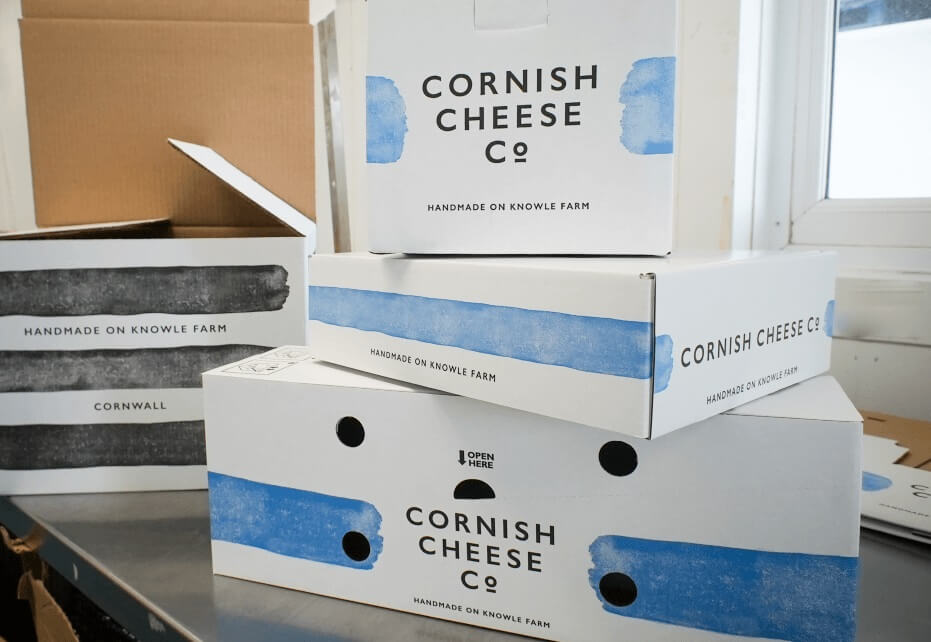
Smurfit Westrock is a global leader in sustainable packaging, combining renewable materials, circular design, and low-carbon operations to help brands perform better today while preparing for tomorrow.
In 2024, the company issued over US $2 billion in green bonds to accelerate its environmental goals and contracted nearly 700,000 MWh of renewable electricity to power its operations worldwide. Its commitment to innovation and impact was recognised with 106 awards, including Innovation of the Year and Sustainability Award of the Year at the North America Paperboard Packaging Competition for developing sustainable alternatives in the multipack beverage segment.
Prior to merging, together, Smurfit Kappa and WestRock have earned some of the industry’s most respected awards, recognising their leadership in sustainability, innovation and responsible business. These accolades reflect real customer value.
Smurfit Westrock partners closely with customers to solve complex packaging challenges, combining proven innovation, technical expertise and sustainability insight to deliver regulation-ready, rigorously tested solutions that protect products, reduce environmental impact and perform across demanding supply chains.
“Sustainability at Smurfit Westrock is a shared purpose that motivates our people,” says Suzy Gedney, UK marketing manager. “Our global teams design circular, lower-impact packaging, invest in renewables and communities, and continually improve through collaboration, creativity and care.”
This people-led approach is powered by advanced platforms including Design2Market and SupplySmart, helping customers optimise packaging performance, improve efficiency and reduce carbon. As regulations such as EPR and carbon reporting tighten, Smurfit Westrock supports compliance, risk reduction and measurable progress without compromising performance or brand impact.
“Our commitment to collaboration is reflected in award-winning partnerships with retailers, manufacturers, and communities, driving scalable change and shared value,” says Suzy. “Together, we’re shaping a more sustainable future – one box, one innovation, one partnership at a time.”
.jpg)
At Two Farmers, sustainability is more than a goal, it’s woven into every part of what they do. The team have built a closed-loop model to show how crisp production can operate responsibly, efficiently, and in harmony with nature.
“Our crisp facility in Herefordshire is powered entirely by renewable energy generated on site using solar panels coupled with anaerobic digestion (AD). Thanks to this integration, we are able to operate as a carbon-neutral producer, with our verified annual carbon footprint (around 350 tonnes CO₂e) fully offset through our renewable systems,” explain Sean Mason and Mark Green, co-founders.
“All the potatoes we use are grown on our own farms adjacent to the factory,” they continue. This proximity minimises transport emissions, ensures full traceability, and supports a truly local supply chain.
“In packaging, we’ve embraced innovation: our crisp packets are made from compostable, plant-based materials, printed with biodegradable inks and glues. After use, they can be collected, shredded, and fed into our AD process, breaking down fully to generate both renewable electricity for our operations and nutrient-rich digestate. That digestate is returned to our fields to nourish the next crop of potatoes, completing the loop from soil to packaging and back to soil.”
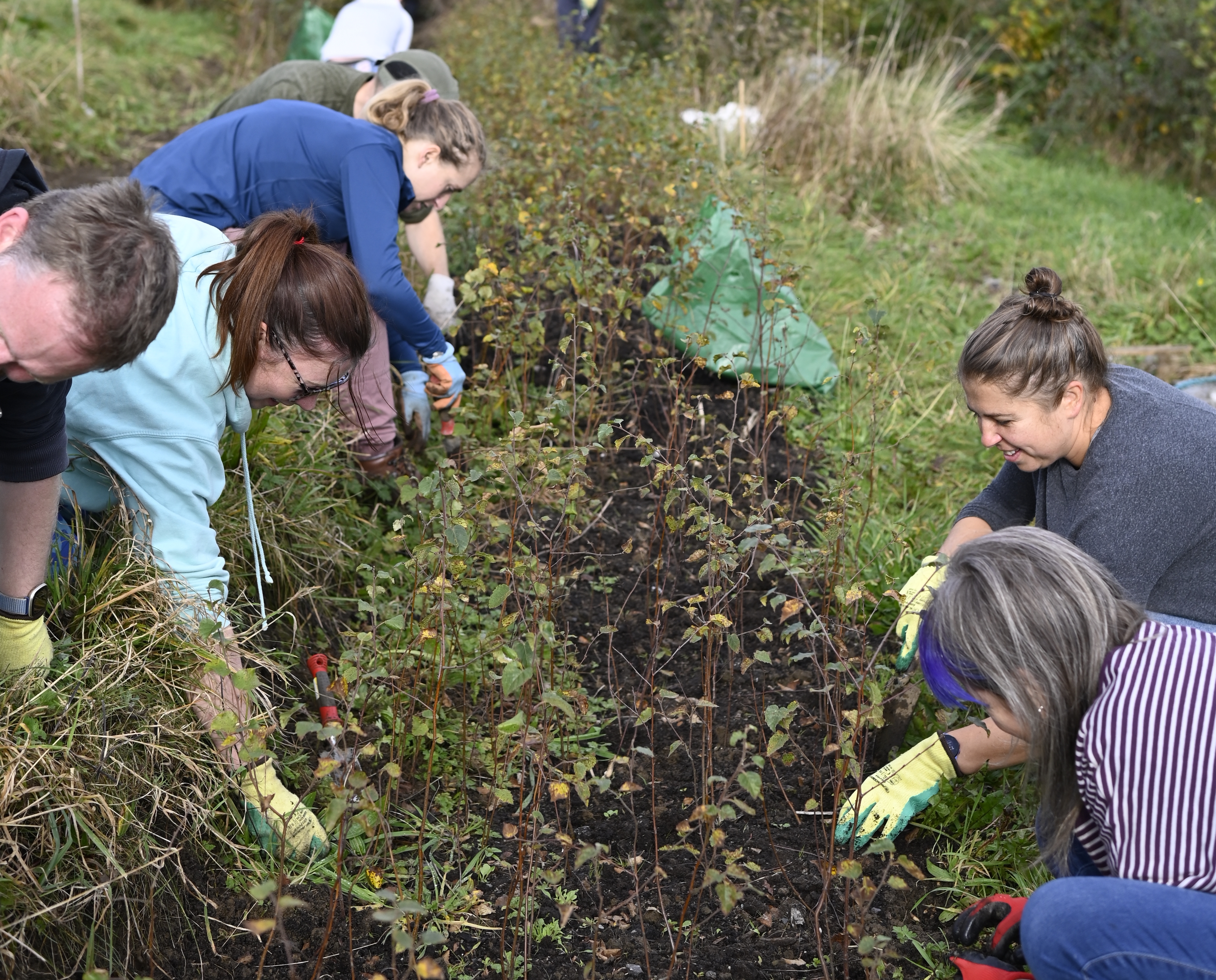
But Two Farmers’ commitment extends beyond operations, say Mark and Sean. “In partnership with the Herefordshire Wildlife Trust, we are actively restoring natural ecosystems through tree and hedge planting, regenerative soil practices, cover cropping, and organic soil amendments. These practices enhance soil health, support biodiversity, and contribute to natural carbon sequestration over time.”
The Two Farmers approach proves that you can combine business success with environmental responsibility. “Our closed-loop solution is a replicable, future-ready model, one that helps organisations align with net-zero ambitions, reduce supply chain emissions, and demonstrate genuine sustainability across every stage of food production.”
Suma has had sustainability at its core since it began in 1977. It has been vegetarian since day one, promoting a cruelty-free lifestyle which the Vegetarian Society claims generates 2.5 less carbon emissions than a carnivore diet.
“We were founded on selling bulk products too, reducing plastic waste and promoting refills before they became the trend! Everything we do is done through a sustainability lens, from our packaging to our trucks, even the food waste from our canteen is sent to anaerobic digestions,” says Rebecca Kinnard, marketing and brand product development cooperative member.
Last year this total amounted to 7.55 tonnes of food. In 2023 Suma launched their Sustainability Strategy. “Key highlights so far include completing our Scope 3 assessment,” begins Rebecca. “We partner with Carbon Footprint Ltd to collect and analyse our data, and were able to establish a baseline for our carbon footprint, and set reduction targets.
“We are very proud our absolute emissions are falling from our direct operations. Our Scope 1 + 2 emissions reduced by 3.7% (62 tCO2e) last year 23/24 compared to the previous year 22/23. We have two biogas trucks now, which emit 84% fewer emissions than diesel trucks.”
Packaging is a huge area for Suma. “We’re proud of our partnership with Prevented Ocean Plastic. This brilliant organisation collects plastic waste found close to rivers and oceans that would otherwise be destined to pollute waterways. Instead, the waste is recycled and made into new products. Suma has been able to move over to using Prevented Ocean Plastic™ in many of our Ecoleaf and ALTER/NATIVE bottles.”
The business also promotes bulk buying, refills and plastic reduction across our Suma brand, and last year launched its own range of bamboo kitchen utensils, as zero waste plastic-free alternatives. “Our co-operative credentials allow us to stand out from other brands; being an equal-pay worker co-op is pretty unique for an organisation our size,” Rebecca explains.
“We’ve been recognised for this too. Ethical Consumer ranked Suma joint top of their supermarket category, and a huge range of our own brand products now carry the Ethical Consumer Best Buy logo, and the list is growing.”